Foreign medical students come to Nepal but twice as many Nepalis pursue medicine abroad
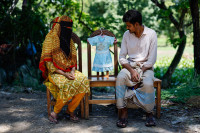
MBBS enrolment by foreign students has risen by 35 percent in three years, yet 80 percent undergraduate seats reserved for them went unfilled last year. To attract more foreign students, Nepal must first ensure the quality of medical education and the adequacy of infrastructure, experts say. Post file photo
Nepal is attracting a growing number of foreign students to its medical colleges, particularly for MBBS and postgraduate programmes, even as thousands of Nepali students continue to leave the country to study medicine.
Data from the Medical Education Commission show that a total of 1,859 foreign students enrolled in medical education programmes in Nepal between 2024 and 2026. During the same period, as many as 4,741 Nepali students obtained approval from the commission to pursue medical education abroad.
Arjun Dhakal, information officer at the commission, however said that the figure of students approved to go abroad should not be read as the actual number who left Nepal, because not everyone who receives approval necessarily travels abroad for study.
MBBS (bachelor of medicine and bachelor of surgery) accounts for the largest share of movement in both directions. In the three-year period, 1,766 foreign students enrolled in MBBS programmes in Nepal, rising from 572 in 2024 to 770 in 2026. The figures suggest that Nepal’s medical colleges are becoming more attractive to foreign students, but not enough to fill the seats reserved for them.
The contrast is especially clear in other health programmes. Foreign students have been allocated seats in BDS (bachelor of dental surgery), BNS (bachelor of nursing science), BSc Nursing, BAMS (bachelor of Ayurvedic medicine and surgery), BPH (bachelor of public health) and B Pharm, among others, but not a single foreign student enrolled in these programmes in 2026. Even Nepali students did not fully occupy seats in some of these courses.
India is both the largest source of foreign students coming to Nepal for medical education and the leading destination for Nepali students pursuing medical studies abroad, according to data from the commission.
Nearly half of the Nepali students who obtained permission to pursue medical education abroad—from undergraduate and postgraduate programmes to doctoral studies—went to India. Over the three-year period, 1,677 students received approval to study in India, including around 1,350 pursuing MBBS and nursing.
Dhakal attributed the high number partly to Nepal’s recognition of India’s National Eligibility cum Entrance Test (NEET), which makes it easier for Nepali students to seek admission to Indian medical institutions. The open border and relatively easy movement between the two countries are other factors, he said.
“India is more accessible because of the open border and the ease of travel between the two countries,” said Dhakal.
Bangladesh was the second-most popular destination. More than 450 Nepali students went there to study medical education during the three-year period. Australia, China, the Philippines, the United States and the United Kingdom followed, with more than 100 students going to each of these countries for medical studies.
Most of those going abroad enrolled in undergraduate programmes, although some received scholarships, Dhakal said. The number of Nepali students receiving approval to study abroad fluctuated over the three years. In 2024, 1,515 students obtained permission, compared with 1,815 in 2025 and 1,411 in 2026.
Overall, only 26.59 percent of the seats set aside for foreign students were filled, according to commission data. The Medical Education Act 2019 allows up to one-third of total seats in undergraduate and postgraduate medical education to be allocated to foreign students.
According to undergraduate enrolment data, enrolment increased by 34 percent between 2024 and 2026. In 2024, medical colleges had 7,606 seats, of which 6,343 were filled. The number of seats rose to 8,070 in 2025, with 7,196 students admitted. In 2026, a total of 8,550 students enrolled against 9,273 available seats.
Shreekrishna Giri, a former vice-chairperson and current member of the Medical Education Commission, said Nepal had considerable potential to attract foreign medical students and that their numbers were gradually increasing. However, he cautioned against compromising academic standards in the drive to expand enrolment.
At postgraduate level, enrolment rose by around 22 percent over the three-year period. In 2024, 1,467 students enrolled out of 1,724 available seats. The number of seats increased to 2,086 in 2025, when 1,750 students enrolled. In 2026, 1,789 students enrolled out of 2,056 seats.
Although both the number of seats and total enrolment have increased, medical colleges have continued to struggle to fill all the seats approved by the commission. According to the commission, between 700 and 1,200 undergraduate seats and roughly 250 to 325 postgraduate seats remained vacant in the three years.
A particularly large number of seats reserved for foreign students remain unfilled. In 2026, 2,428 undergraduate seats were allocated to foreign students, but only 476 were filled, leaving 1,952 vacant. Under the existing provision, seats left vacant by foreign students can be offered to Nepali students.
The Private Medical and Dental College Association has called for an increase in the quota for foreign students. The association submitted a memorandum to Health and Food Safety Minister Nisha Mehta on July 30, seeking an expansion of the seats allocated to foreign students.
Association president Dr Gyanendra Man Singh Karki said the government should increase the quota if it wants to attract more foreign students. He said Nepal could enrol large numbers of foreign students in MBBS programmes if the government introduced clear policies and programmes.
Karki said Nepal could attract a significant number of Indian students if the government took the initiative to reach an agreement with India. Sri Lanka and the Maldives could also be potential sources of students for MBBS and MD programmes, he said.
“The Nepal government has made no real effort to attract foreign students. The entrance examination and admission process here have also become cumbersome. If the process is made easier, we can bring in as many foreign students as we want,” said Karki. “Foreign students also bring foreign currency which contributes to the country’s economy.”
Stakeholders and medical education experts, however, say increasing the number of seats alone should not be the priority. They argue that Nepal must first ensure the quality of medical education and the adequacy of infrastructure.
Giri said the number of foreign students could increase significantly if Nepal secures recognition from the World Federation for Medical Education (WFME), which would strengthen the international credibility of its medical education.
“Nepal has already moved ahead with the process of obtaining recognition. A team from the federation has also visited Nepal and made suggestions for some improvements. If those recommendations are addressed, Nepal can obtain recognition,” said Giri. “Once that happens, the credibility of Nepal’s medical education will increase internationally, and foreign students will be more interested in coming here.”
Giri warned that increasing seats beyond established standards simply to attract foreign students could undermine quality. “Medical education directly affects the health of every citizen. We must ensure minimum standards. Medical education is different from other disciplines. We cannot run medical education merely to produce people who obtain a licence,” he said. “Quality cannot be compromised. Medical education should not be viewed only in terms of money.”
Medical college operators, meanwhile, argue that seat numbers should be increased gradually in line with the availability of infrastructure and compliance with prescribed standards.
Karki said the state should adopt a clear policy to attract foreign students while ensuring that the necessary legal and administrative procedures are in place. “By educating foreign students, Nepali students also receive scholarships equivalent to 10 percent of the seats,” said Karki.
Dr Rajendra Koju, a professor at Kathmandu University School of Medical Sciences, said any increase in seats should be based on demonstrable improvements in quality. “If quality is improved continuously, the number of students will increase on its own. If we focus only on increasing numbers without paying attention to quality, our credibility will decline,” said Koju.
He said seat numbers could be adjusted after assessing the number of patients available for clinical training and the physical and academic infrastructure of medical colleges. “Whether seats should be increased or reduced is directly linked to quality. That must always be considered when making such decisions,” he said.
Dr Manoj Humagain, dean of the Kathmandu University School of Medical Sciences, also said seat expansion should follow the fulfilment of infrastructure and other regulatory requirements. He said the relatively lower cost of MBBS education in Nepal compared with neighbouring countries had helped increase foreign students’ interest in Nepali medical colleges.
“Seats can be increased once the required infrastructure and standards are met. There is interest among foreign students. If their quota is increased, the scholarship quota for Nepali students can also be expanded,” said Humagain.




 22.56°C Kathmandu