We don’t have enough stories that speak to children from diverse cultural backgrounds
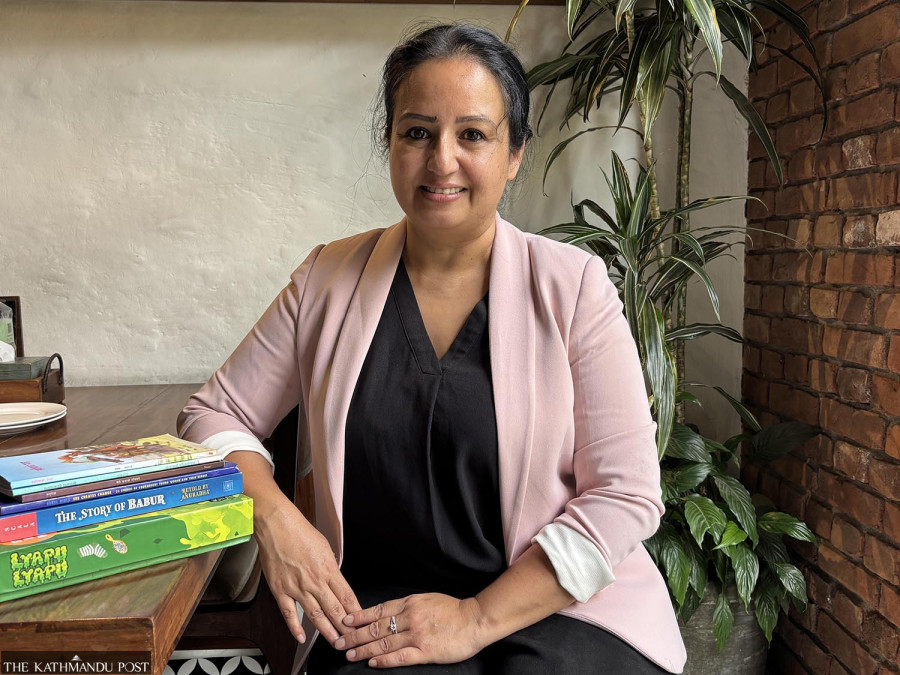
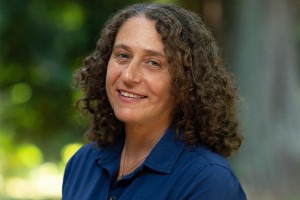
Writer Anuradha argues that Nepal needs stories featuring illustrations of kids who look like them, the places they belong to, the names they recognise and plots they can call their own.Aarati Baral/TKP
Anuradha, a creative writer, editor and translator based in Kathmandu, believes in the power of children’s literature for development. She has penned over 30 picture books and acclaimed chapter books like ‘Mero Kathako Alien’ and ‘Yeti Bhetne Keti’, dedicating her career to writing for children. Her internationally acclaimed book ‘The Story of Babur: Prince, Emperor, Sage’ (2022), which is translated into eight languages, was listed in The Guardian’s best new picture books and novels in 2022, and was long-listed for the 2023 Young Quills Award. She is a lifelong member of the Nepalese Society for Children’s Literature (NESCHIL).
Her contribution to children’s literature has brought her several honours, including the Excellence in Education Award (2025), the Premdhoj Pradhan Foundation Samman (2023) and the Paarijaat Baal Sahitya Bishesh Puraskar (2009, 2010). In this interview with The Post’s Aarati Baral, Anuradha discusses her journey as a writer and the state of children’s literature in Nepal.
How did you discover the love for reading, and what inspired you to become a writer?
When I was little, my father would make me sit on his lap and read comics such as ‘Asterix’ and ‘Tintin’ to me. Reading was encouraged at home. My father’s job involved frequent transfers, so I changed schools often. Looking back as a writer, travelling from one place to another and changing schools was a great experience because it helped me craft stories with the children of those places in mind. However, as a young student, I couldn’t make many friends; I spent much of my time in hostels and grew introverted, which drew me into books.
As for writing, I rarely wrote anything beyond the school magazine. One day, my mother urged me to enter a ‘Parijat writing competition’. After some typical mother-daughter bickering, I wrote a story just for her and ended up winning a special award! I also won the award the following year, which made me realise I could actually write.
I didn’t start with a grand vision for children’s literature, but I naturally gravitated towards it. Today, I focus exclusively on picture and chapter books for children. I cannot seem to write for adults; even when I try, the narrative inevitably ends up as a children’s story.
Many children today spend more time on screens than with books. How should children’s literature respond to this shift?
I dislike framing this as a competition. When TVs first emerged, people raised the same alarms about kids being ruined. We must accept that times are changing. I am less concerned about screens, television or movies than about video games. Research demonstrates clear risks of brain rewiring and intense addiction to video games.
Reading offers something technology cannot, but as writers, we must evolve alongside our audience. Today’s children live in a world very different from ours. We must incorporate digital realities into our writing to match their developmental level. It isn’t about competing with screens, but about ensuring our books carry an equal pull.
How important is it for Nepali children to read stories rooted in their own language, culture and folklore?
In children’s literature, books serve as both a “window and mirror”. As a mirror, stories allow children to see themselves reflected, helping them build their identity. As a window, they show children the world beyond their immediate surroundings. Windows are important; “mirror stories” are a necessity. The reality is different in our case. Existing stories often fail to represent the broad spectrum of indigenous cultures and lack necessary social inclusion. Where are the stories for children from the Tarai where they can see their own lives? They need stories featuring illustrations of kids who look like them, the place they belong to, names they recognise and plots they can call their own.
Should children’s books address difficult issues like migration, climate change and inequality, or protect childhood innocence?
I believe that shielding children from reality is wrong. People used to argue that heavy topics belonged exclusively to adult literature. Yet children witness pets dying, lose family members and experience floods and landslides firsthand. We shouldn’t hide these everyday realities from them.
It comes down to presenting matters in an age-appropriate way. Children observe these issues daily, and they are the ones who will shape tomorrow’s society. Giving them the right awareness now prepares them to distinguish right from wrong and solve these problems later in life.
Children’s books are often dismissed as trivial. Why should even adults read them?
CS Lewis said that a children’s story enjoyed only by children is not a good children’s story. When adults read children’s books, they can grasp complex issues with striking clarity. Reading a children’s book about grief, for instance, can help an adult reader heal by offering a direct, comforting perspective.
Simplifying complex human truths into concise language is remarkably difficult. You cannot feed children cheap fabrications like telling them everyone turns into a star when they die. Striking that delicate balance between truth and simplicity makes these books vital for adults, too.
How can Nepali authors avoid reproducing stereotypes related to gender, caste, ethnicity or disability while portraying society honestly?
Respecting culture doesn’t mean following it uncritically. We must retell our traditional stories. But in doing so, we don’t have to follow outdated tropes blindly. For example, the princess doesn’t have to sit around waiting for a prince.
Historically, picture books depicted mothers cooking in the kitchen while fathers arrived home in suits carrying briefcases. I emphasise the need for a realistic balance, depicting a father cutting vegetables while the mother cooks, or sharing responsibilities. Our literature must evolve just as global children’s media is correcting representations of skin colour and gender roles.
Is children’s literature in Nepal reaching the children who need it most, or is it confined to urban readers?
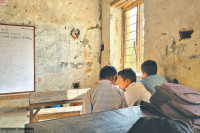
Children’s books are needed everywhere. However, books rarely reach children in remote regions. Even basic textbooks fail to arrive on time there; children’s literature becomes a secondary priority. Although the government allocates funds for libraries, money is frequently mishandled. Even in schools with libraries, books are locked inside damp cupboards to be ruined by termites. While some organisations actively distribute books to villages, coverage is far from complete.
Some private schools mandate extra reading programmes from grade one onwards. However, this is rare in government schools, though the interest is certainly there. Furthermore, even in cities, while they build futsal fields and skating parks under the guise of becoming ‘smart cities,’ they neglect public libraries, which are accessible to everyone. A city cannot be smart without accessible libraries.
How do you research and authentically represent communities outside your lived experience?
Drawing from experience is ideal. Having lived in Tarai during my childhood, writing about it feels natural. But when writing about regions I haven’t lived in long-term, like the mountains, I keep settings simple to maintain authenticity without overstepping. For example, my book ‘The Girl Who Met Yeti’ uses a simple premise about a mountain girl who meets a yeti that loves chhurpi, supported by basic observations and research on Google.
When tackling culturally intricate topics, extreme care is mandatory. For my upcoming book on the traditional Lakhé dance, I am reading extensively and directly consulting community members. Proper research is non-negotiable.
Aarati Baral is an Op-Ed editor at The Kathmandu Post. She joined The Post as an Op-Ed intern in 2021 and later became a full-time Assistant Senior Sub-Editor in the newsroom. She holds a degree in English Literature.




 23.65°C Kathmandu