We’ve been best friends with dogs for thousands of years. Here’s how it began
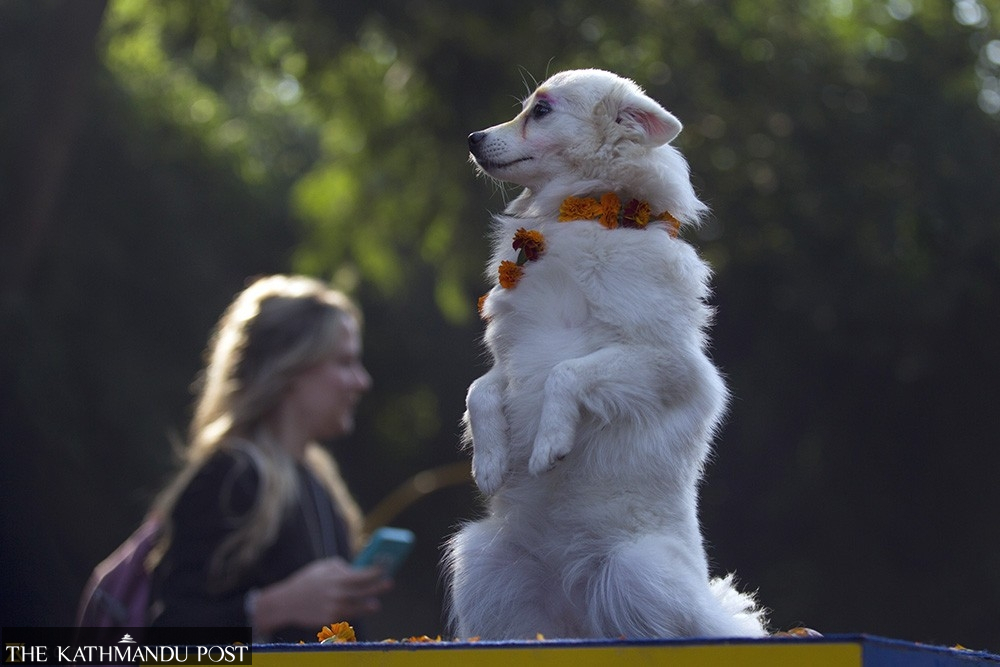
Long before religious texts and myths celebrated them, dogs had forged an enduring bond with humans, becoming hunters, protectors and guides to the afterlife. In Hindu traditions, dogs are associated with Bhairav, a fierce manifestation of Lord Shiva. Post file photo
We can hound for an answer not just in ancient bones and DNA but also in the religious texts, myths and burial practices of ancient civilisations. The man-canine relationship, however, is far older than its appearance in written traditions.
Over thousands of years, this companionship found its way into religious beliefs, mythology and cultural practices. In some traditions, dogs became the mounts of deities. In others, they served as guides to the afterlife.
Humans began their association with dogs long before they learned to farm or established permanent settlements. A study published in Nature journal in March 2026 identified the oldest genetic evidence of domestic dogs yet discovered. Researchers analysed ancient DNA from remains dating back 15,800 years found at Pınarbaşı in Turkey and 14,300 years found at Gough’s Cave in Britain.
Further analysis of remains from archaeological sites in Germany, Italy and Switzerland showed that dogs had spread across parts of Europe and Anatolia, the region around present-day Turkey, by about 14,300 years ago.
Interestingly, dogs found thousands of kilometres apart were genetically similar, suggesting that they travelled alongside human communities as people migrated and interacted.
Scientists believe dogs evolved from their wolf ancestors between 20,000 and 40,000 years ago, during the last Ice Age. Their relationship with humans began when people were still hunter-gatherers, surviving on wild fruits, tubers and hunted animals.
Humans became friends with dogs long before they learned to farm. Post file photo
How wolves became human companions remains uncertain. One theory is that some wolves began approaching human settlements to feed on discarded food. As they grew accustomed to human presence, they gradually became more comfortable around people. Generations of coexistence eventually produced a close relationship. Other researchers argue that early humans may have captured wolf pups and raised them. Neither explanation has been conclusively established.
Anthropologist Suresh Dhakal says dogs became particularly important companions in hunting.
“One reason humans and dogs were able to establish a relationship was that neither posed a threat to the other,” Dhakal says. “They did not compete for the same resources, and they ate different kinds of food.”
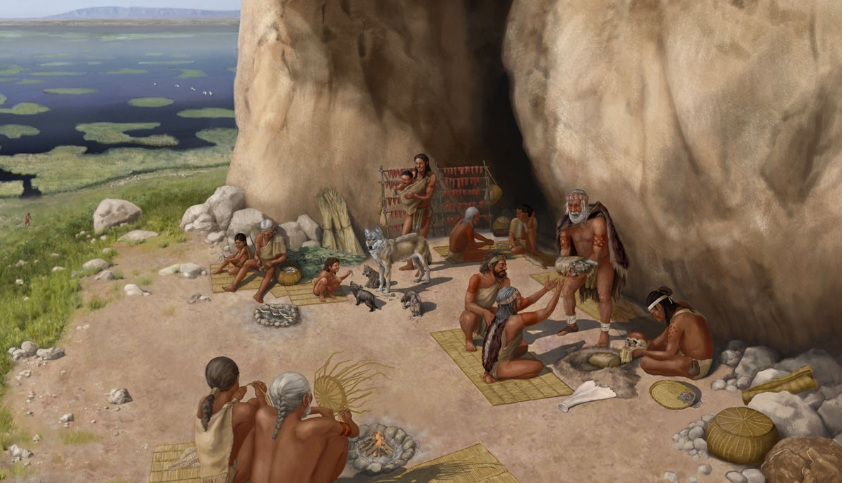
The relationship went beyond hunting and protection. An analysis of human and dog bones found at Pınarbaşı suggests that people may have fed fish to their dogs. Since fish was also part of the human diet, this indicates that the animals shared food sources with their companions.
A relationship older than myth
The association between dogs and humans extended beyond everyday life to beliefs about death and the afterlife. One of its oldest religious references appears in the Rigveda.
The man-canine association extends beyond everyday life to beliefs about death and the afterlife. Post file photo
Hymn 14 of the 10th Mandala mentions the two dogs of Yama, the god of death. Known as the Sarameyas, or sons of Sarama, they are described as having four eyes and a mottled appearance. They guard the path taken by the dead to the afterlife. Another verse prays that Yama entrust the deceased to their care, while a subsequent verse describes them as his messengers, wandering among humans.
Nepal’s tradition of worshipping dogs during Kukur Tihar, when they are honoured as messengers of Yama, is often linked to this Vedic tradition. Dogs are adorned with garlands and tika and offered special food. The practice extends to street dogs as well as household pets.
Dogs are also associated with Bhairav, a fierce manifestation of Lord Shiva, and are worshipped as his mount in some Hindu traditions. A 13th-14th-century statue at the Konark Archaeological Museum in Odisha, India, depicts Batuk Bhairav riding a dog.
Dhakal says the importance of dogs in mythology emerged from a relationship that had already existed for thousands of years.
“The importance of dogs had already been established long before they were mentioned in religious texts,” he says. “Because of this ancient relationship, dogs later began to receive significance in mythology as well… Almost every religion has stories about the relationship between dogs and humans.”
Across the world, civilisations incorporated dogs into their religious beliefs, myths and burial practices. In some, they were protectors or guides to the afterlife. In others, sacred animals associated with healing and death.
In ancient Mesopotamia, around present-day Iraq, dogs were considered sacred to Gula, the goddess of healing. Figurines of dogs were offered at her temples, and archaeologists discovered 33 dog burials near her temple in Isin.
In Zoroastrianism, the ancient Iranian religion, dogs were regarded as sacred animals. A funerary ritual known as sagdid required a dog to look at the body of a deceased person. Religious belief held that the dog’s gaze helped drive away the impure forces associated with death.
Artistic reconstruction of Pınarbaşi, circa 15,800 years ago. Photo: Courtesy of Natural History Museum
Dogs also played a role in ancient Egyptian beliefs. Anubis, the god associated with death, was depicted with the head of a dog or jackal. Dogs were kept by both royalty and ordinary families, and some families mourned their deaths as they would those of human members. In certain cases, dead dogs were mummified and buried in family tombs.
In Aztec civilisation, the god Xolotl was associated with dogs. They were believed to guide the souls of the dead on their journey to the afterlife, and some communities buried dogs alongside deceased people.
Ancient Greek mythology, meanwhile, featured Cerberus, a three-headed dog guarding the underworld. The goddess Hecate, associated with the night, magic and the underworld, was also linked to dogs. They were sometimes regarded as creatures connecting the world of the living with the realm of the dead.
Across different geographies, languages and civilisations, humans have given dogs a special place in beliefs surrounding life and death. They have been protectors, guides and sacred animals. Although not worshipped as gods everywhere, dogs have occupied an extraordinary place in human religious and cultural imagination.
Their role has changed over millennia, but their companionship has endured. Even today, dogs remain among humanity’s most faithful friends.




 12.8°C Kathmandu