Thapathali hospital cuts neonatal deaths by over two-thirds in five years
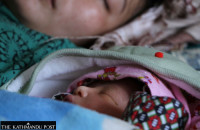
Additional doctors and nurses, better neonatal care, and wider use of mothers’ milk helped reduce deaths from eight to 2.5 per 1,000 live births. More than 24,000 women deliver babies at the Thapathali Maternity Hospital every year. Post File Photo
Neonatal deaths at the Paropakar Maternity and Women’s Hospital, Thapathali have fallen by more than two-thirds over the last five years, thanks to a series of measures the hospital has implemented to improve newborn care.
According to the hospital administration, neonatal deaths at the hospital stood at around eight per 1,000 live births five years ago. The number has now declined to around 2.5 percent.
“Due to various preventive measures taken by our hospital administration, we have been successful in reducing newborn deaths,” said Dr Shree Prasad Adhikari, director of the hospital. “Our success shows that neonatal deaths can be reduced further and there is still room for improvement.”
Neonatal means the first 28 days of a baby’s life. More than 2,000 neonates are estimated to die every year in Nepal.
A recent Nepal Multiple Indicator Cluster Survey carried out by the National Statistics Office in partnership with UNICEF shows that neonatal deaths are still 17 per 1,000 live births.
According to data provided by the Health Information Management System under the Department of Health Services, 2,630 perinatal deaths were recorded in 130 hospitals of 57 districts in the fiscal year 2025-026.
Officials acknowledge that the actual number of perinatal and neonatal deaths could be much higher, as the data covers only hospitals with the Maternal and Perinatal Death Surveillance and Response programme.
Maternal and child health experts say multiple factors — infection, birth asphyxia, premature birth, hypothermia, low birth weight, poor maternal health during pregnancy, inadequate postnatal care, and a shortage of trained human resources — are responsible for the country’s high perinatal and neonatal deaths.
“We have taken various measures to reduce neonatal deaths in our hospital, including appointing additional doctors and nurses, introducing newborn screening and treatment, improving the management of birth asphyxia, hypothermia, strengthening infection control, and replacing formula milk with mother’s milk,” Adhikari said. “Eight deaths per 1,000 live births at the central hospital were alarming. We have reduced the number to 2.5, but even that is still high.”
More than 24,000 women give birth at the Thapathali hospital every year.
Doctors said that, in the past, a nurse had to look after 10 sick newborns admitted to the neonatal intensive care unit. Now, one trained nurse looks after only three babies.
“In developed countries, one nurse provides care to one patient in intensive care, but we cannot afford that level of staffing,” said Dr Sailendra Bir Karmacharya, a senior consultant paediatrician at the hospital. “The number of trained doctors and nurses has increased in recent years, and this has helped prevent avoidable newborn deaths.”
Previously, many newborns developed bloating and intestinal infections after being fed formula milk. But since the hospital established a human milk bank, such infections and related complications have declined markedly, Karmachary said.
The hospital has also improved hygiene standards and introduced a newborn screening programme, enabling healthcare providers to identify health risks early and begin treatment promptly.
Instead of formula milk, preterm and low-birth-weight babies are now fed their mothers’ milk, which reduces the risk of infections and improves their chances of survival, according to Karmacharya.
One of the Sustainable Development Goals is to reduce neonatal mortality to 12 per 1,000 live births by 2030.
The SDGs, a follow-up on the Millennium Development Goals (MDGs), aim to end poverty, hunger, and all forms of inequality in the world by 2030.
Arjun Poudel is a health reporter for The Kathmandu Post. Before joining the Post, he worked for Sagarmatha Television, Naya Patrika, Republica and The Himalayan Times.




 24.58°C Kathmandu