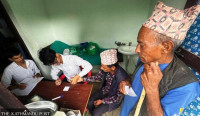
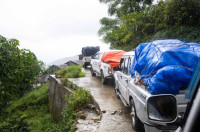
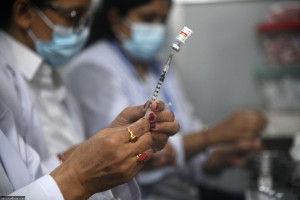
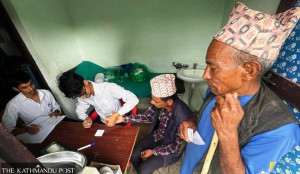
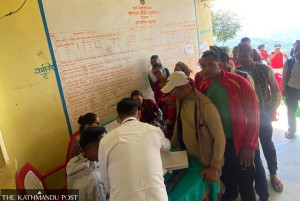
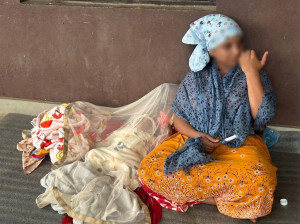
As many as 53 people have died, and 716 others have been injured from venomous snakebites since May 14. At least 53 people died and 716 others have been hospitalised after venomous snakebites since May 14 this year, according to data from the National Disaster Risk Reduction and Management Authority. Post File Photo
Amid the peak snakebite season, hospitals and snakebite treatment centres across the country are facing critical shortages of anti-snake venom. As a result, hundreds of snakebite victims are at risk of being left without the live-saving antidote.
The failure of the authorities to replenish anti-snake venom stocks has left medics and health facilities struggling to treat critically ill snakebite patients.
“We don’t have a single dose of anti-snake venom and haven’t received any supplies for hospitals and snakebite treatment centres,” Ujjwal Yadav, information officer at the Provincial Health Logistic Management Centre in Madhesh province, told the Post over the phone from Janakpur. “The number of venomous snakebite incidents has risen significantly of late, but we don’t have any anti-snake venom to supply.”
Snakebites and related deaths are common in Nepal during the summer.
At least 53 people died and 716 others have been hospitalised after venomous snakebites since May 14 this year, according to data from the National Disaster Risk Reduction and Management Authority.
However, figures from individual snakebite treatment centres suggest the actual number of cases is much higher.
In Kapilvastu, the Gorusinge-based treatment centre alone has treated over 500 snakebite cases since mid-April, including over a dozen involving venomous snakes.
The antidote cannot be purchased from pharmacies, as it is supplied free of charge by the government.
There are 27 snakebite treatment centres in the Madhesh province. Hospitals also provide treatment to the snakebite victims, meaning the centre has to supply the antidote to hospitals also.
“Most snakebite treatment centres in our province have exhausted their stocks,” said Yadav. “Some have only five vials left, others 11. We receive dozens of phone calls from health workers requesting anti-snake venom every day, but we don’t have any.”
Health officials say they have repeatedly asked the federal health ministry to replenish stocks, but to no avail. Madhesh alone needs 800 to 1,000 vials each year.
“The risk of patients dying increases if anti-snake venom is not available,” said Salik Ram Kalathoki, information officer at Rapti Academy of Health Sciences. “In such cases, there is also a greater risk of medics and health facilities being attacked by victims’ relatives.”
Officials say that the academy has run out of anti-snake venom and has asked nearby snakebite treatment centres to provide supplies if critically ill patients need to be referred.
Almost all snakebite treatment centres and health facilities in Lumbini province have run out of anti-snake venom, according to officials at the Provincial Health Logistics Management Centre in the province.
“The responsibility for supplying anti-snake venom to the provinces lies with the federal government,” said Dr Rajendra Kumar Giri, director of the centre. “This year, the [federal] Ministry of Health and Food Safety has not supplied us with the required quantity of anti-snake venom.”
“We even brought some doses from the Karnali provincial government’s agency because their demand is lower than ours,” said Giri.
Meanwhile, officials at the Epidemiology and Disease Control Division said they have supplied 60 vials of anti-snake venom to Lumbini province on Monday.
“We know this is not sufficient, as there are over 40 snakebite treatment centres and hospitals in the province,” an official at the division said, asking not to be named as he is not authorised to speak to the media.
Health workers in the province said that in some cases, a single patient needs more than 20 vials of anti-snake venom, particularly if bitten by a king cobra or a krait.
Officials at the division said it may take over two weeks for fresh supplies to reach treatment centres, even if suppliers deliver within the promised timeframe.
In recent days, venomous snakebites have increasingly been reported from hilly and mountain districts. Experts attribute the spread of snakes beyond the Tarai to rising temperatures driven by climate change. Warmer conditions may be pushing them to the hilly and mountainous districts, where they were previously not found.
Nepal is among the countries vulnerable to the climate crisis and has witnessed multiple extreme weather events over the past decade and a half.
Evidence suggests that maximum temperatures in Nepal are rising at a faster annual rate of 0.056 degrees Celsius, compared to the global average rise of 0.03 degrees Celsius each year.
Compared to the districts of the Tarai region, those in the hills and mountains have been witnessing a more rapid increase in daytime maximum temperatures, which could have helped venomous snakes survive there, according to the experts.
According to a report published in The Lancet, a leading international medical journal, in March 2022, around 2,700 people, mostly children and women from the plains, die from snakebites in Nepal every year.
Experts say many snakebite deaths are preventable and blame the high death toll on shortages of anti-snake venom, a lack of trained physicians, poor health infrastructure, delays in reaching health facilities, lack of intensive care and dialysis services.
The government has committed to halving the deaths and disabilities caused by snakebite envenomation by 2030, a national target aligned with the World Health Organisation’s ‘Snakebite Roadmap’.
Arjun Poudel is a health reporter for The Kathmandu Post. Before joining the Post, he worked for Sagarmatha Television, Naya Patrika, Republica and The Himalayan Times.




 19.27°C Kathmandu