



 18.62°C Kathmandu
Tue, Sep 29, 2026
Health
Health facilities short of essential vaccines, medicines for months
Anti-snake venom is running out during peak snakebite season, while shortages of iron and folic acid, as well as anti-rabies and JE vaccines, are putting vulnerable patients at risk.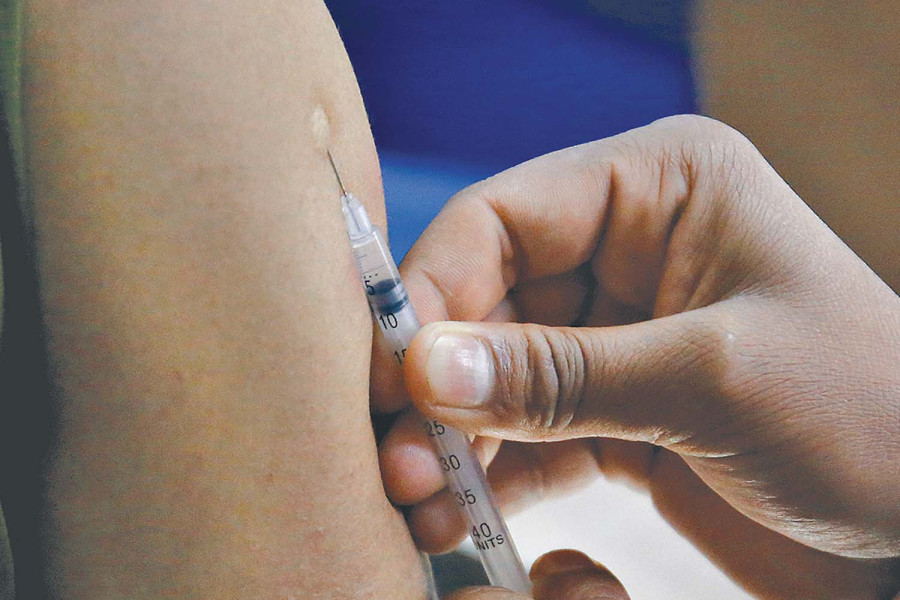
bookmark![]()
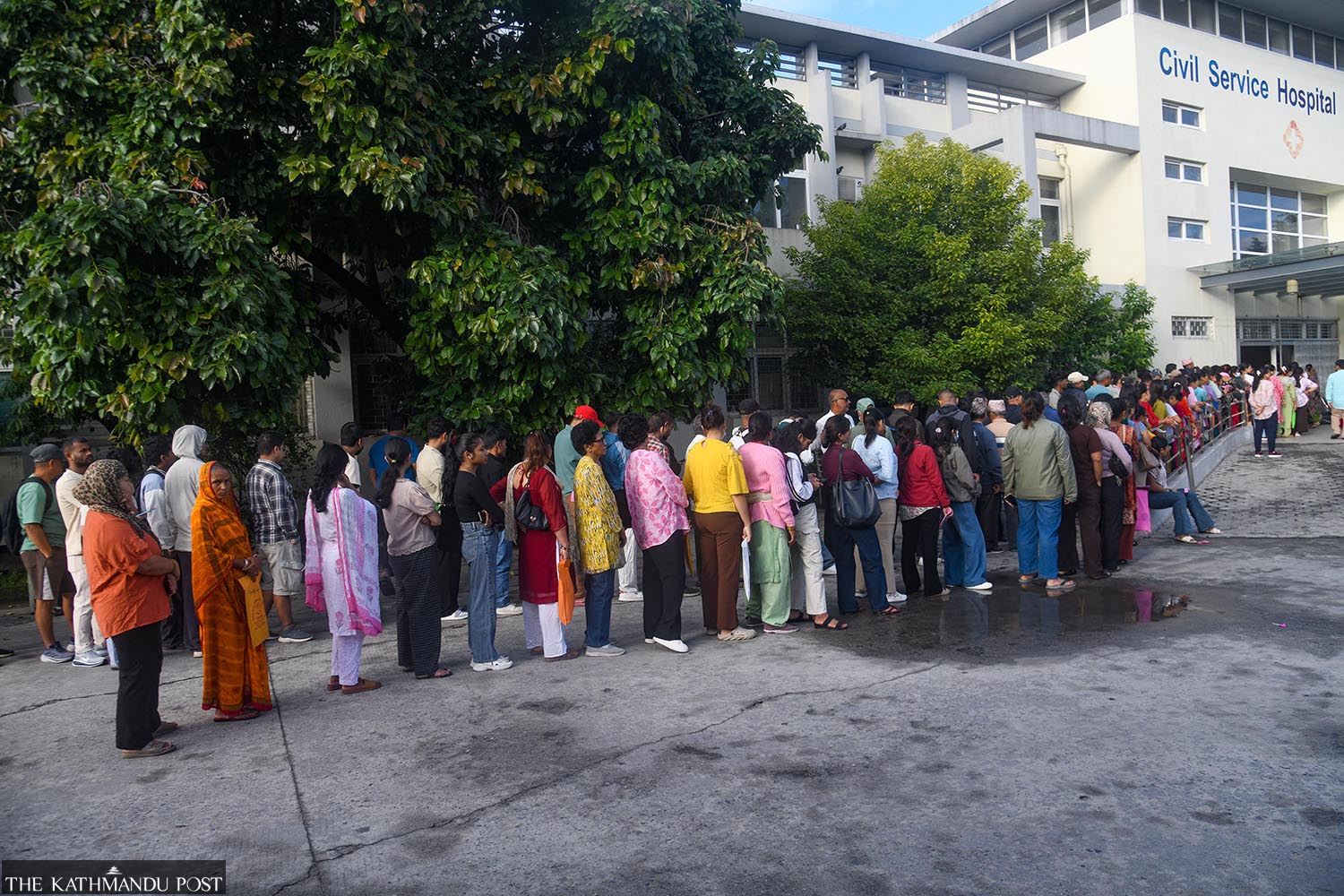
People in queue for appointments at the Civil Service Hospital in Kathmandu on Tuesday morning. Deepak KC/TKP
Arjun Poudel
Published at : August 12, 2026
Updated at : August 12, 2026 10:56
Kathmandu
Patients across Nepal are being deprived of essential vaccines, medicines and health supplements as prolonged procurement and supply problems leave government health facilities with depleted or empty stocks.
The shortages range from iron and folic acid supplements for pregnant women, new mothers and adolescent girls to anti-snake venom, which can mean the difference between life and death for people bitten by venomous snakes. Health facilities have also long reported shortages of anti-rabies vaccines, while the government has yet to vaccinate all vulnerable populations against Japanese encephalitis. This is particularly concerning as the peak monsoon season is ongoing, when the risk of JE and other mosquito-borne diseases increases. Even as the shortage of anti-rabies vaccines has eased, shortages of other essential vaccines are likely to persist for longer.
Health facilities across Bagmati province, for instance, have been without iron and folic acid supplements for months, and this shortage has left thousands of pregnant women, new mothers and adolescent girls without access to the government’s free supply.
Last week, officials from Bhaktapur Hospital and Trishuli Hospital in Nuwakot called the Provincial Health Logistics Management Centre in Hetauda seeking supplies. Other state-run facilities, including primary health centres and health posts, have been contacting the centre for supplies.
But the provincial centre itself has been out of stock for months.
“The responsibility for supplying iron and folic acid lies with the federal government,” Basanta Adhikari, director of the centre, told the Post over the phone from Hetauda. “But federal agencies have not yet supplied us with the supplements. So almost all health facilities in our province are without iron and folic acid.”
Iron and folic acid are among several essential health commodities whose supply has been disrupted by delays in government procurement.
While the shortage of these supplements is unlikely to cause immediate deaths and the tablets are relatively inexpensive and available from private pharmacies, the same cannot be said of some of the other commodities in short supply.
“We have not had a single dose of anti-snake venom for over a month,” said Ujjwal Yadav, information officer at the Provincial Health Logistics Management Centre in Madhesh. “Hospitals and snakebite treatment centres in our province keep calling us for anti-snake venom, but we have no stock. Chief district officers in Dhanusha and Siraha had also contacted us for supplies, but all we could do was tell them sorry.”
The shortage comes during the peak snakebite season. Hospitals and snakebite treatment centres in Koshi, Lumbini, Bagmati, Karnali and other provinces have either run out of anti-snake venom or have only a few vials remaining.
At least 60 people have died and more than 837 have been hospitalised after venomous snakebites since May 14.
The country also faced a shortage of anti-rabies vaccines until last week, raising concerns about access to timely post-exposure treatment. Doctors say rabies can be prevented when vaccination is administered promptly, but the disease is almost invariably fatal once clinical symptoms appear.
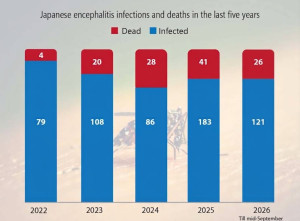
The government is also struggling to provide JE vaccination to all vulnerable populations, even as the mosquito-borne disease continues to claim lives.
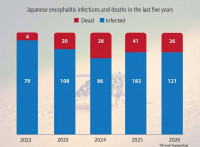
Last year, 41 people died of JE. This year, nine people have already died and 37 others have been infected.
The World Health Organisation says the virus kills about one-third of people who develop severe illness, while up to half of survivors are left with severe lifelong disabilities.
Health officials say inadequate funding has prevented the government from administering the JE vaccine to all vulnerable populations at once.
Public health experts say the recurring shortages point to a deeper failure in Nepal’s health system rather than isolated procurement problems.
“The Ministry of Health and Population, now the Ministry of Health and Food Safety, was established to protect people from preventable diseases,” said public health expert Dr Baburam Marasini. “But the incumbent administration appears more focused on concealing the problems and creating the impression that everything is all right.”
“How can things improve overnight when our system remains the same, the budget remains unchanged, and the problems continue to mount?” he said. “The incumbent leadership of the Health Ministry seems to be concealing the problems, and that will prove costly for the country and its people.”
Experts warn that Nepal risks losing hard-won gains in public health built through years of investment if authorities continue to downplay shortages and fail to address weaknesses in procurement and distribution.
The consequences may not always be immediate, they say, but prolonged interruptions in access to essential health commodities can have lasting effects.
The shortage of iron and folic acid, for example, could undermine efforts to tackle Nepal’s persistent burden of anaemia. The free supplementation programme was introduced to reduce anaemia among adolescent girls, pregnant women and new mothers.
According to the Nepal Demographic and Health Survey 2022, around 34 percent of women aged 15 to 49 were anaemic. The prevalence was significantly higher in the Tarai, at 45 percent, compared with 20 percent in the hills and 23 percent in the mountains. Madhesh recorded the highest rate, with 52 percent of women affected.
Anaemia during pregnancy increases the risk of foetal growth restriction, low birth weight, premature delivery and perinatal death. It can also reduce resistance to infection among mothers and babies and impair children's cognitive development.
The government began its iron and folic acid supplementation programme in 2003, after anaemia affected about three in four pregnant women in Nepal in the 1990s.
Under the programme, pregnant women from their fourth month of pregnancy and new mothers up to seven weeks after delivery receive a daily supplement, while girls aged 10 to 19 are provided 26 tablets a year.
Health ministry officials say they have instructed provincial and local governments to purchase iron and folic acid themselves after the federal government failed to procure the supplements on time. But public health experts say shifting the responsibility to lower levels of government cannot substitute for a functioning national supply system.
Arjun Poudel
Arjun Poudel is a health reporter for The Kathmandu Post. Before joining the Post, he worked for Sagarmatha Television, Naya Patrika, Republica and The Himalayan Times.
Most Read from Health
JE is killing more adults in Nepal as vaccination only covers children
Flood survivors face water shortages, disease risk in crowded holding centres
24 days after flood, hunger grips three Rasuwa wards
Four die in three weeks as scrub typhus spreads in Salyan
Seven die of scrub typhus in one month in Salyan
Editor's Picks

What triggered the Rasuwa flood? Scientists piece together a complex chain of events

The floods keep coming. Nepal keeps starting over

In a settlement destroyed by the Bhotekoshi flood, a disabled couple offer strangers the little they have

Nepal working on detailed assessment as Bhotekoshi flood reconstruction could cost up to $5 billion

Rabindra Dhant gave Nepal a reason to smile. Now his camp wants real action behind the praise
E-PAPER | September 29, 2026

×