Around 1 million people expected to leave Kathmandu Valley for Dashain
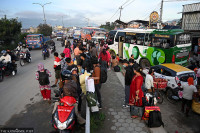
Authorities are registering privately hired vehicles for the first time and stepping up checks on fares, vehicle fitness and road safety ahead of the holiday rush. Post file photo
Around 1 million people are expected to leave Kathmandu Valley by road for Dashain this year, while another 30,000 to 35,000 are likely to travel by air, according to officials and transport authorities preparing for the annual holiday rush.
With passenger numbers expected to surge, transport agencies and airport authorities are preparing additional vehicles and flights alongside regular services.
Booking for long-distance buses opened on Friday. Tickets are available at counters at New Bus Park, Kalanki, Balkhu, Koteshwar and Chabahil, as well as through eSewa, Khalti, and various online ticketing platforms.
The Department of Transport Management has also decided to allow long- and medium-distance passenger vehicles to operate nationwide from Ghatasthapana (October 11), the first day of Dashain, through October 27. Additional vehicles will be deployed on routes where demand is high, said department Director General Rajeev Pokharel.
For the first time, authorities will also register privately-hired vehicles. “We normally allow additional vehicles to operate during Dashain, but there has been no system for tracking vehicles hired privately,” said Rajiv Pokharel, director general of the Department of Transport Management. “This year, we are recording each vehicle in response to growing road accidents and to improve oversight.”
The new monitoring system is intended to curb overcharging and give authorities a more reliable estimate of passenger numbers, Pokharel said.
Joint teams from the transport department, traffic police and bus operators will monitor the main departure points, including Gongabu Bus Park, Kalanki, Koteshwar, and Balkhu, and keep records of privately hired vehicles.
Authorities have ordered transport operators to display fare charts at all major public transport points. Long-distance buses will also be required to have two drivers, Pokharel said.
A report by the House of Representatives Infrastructure Development Committee estimates that around 900,000 people will leave Kathmandu Valley for Dashain this year, requiring about 65,000 public vehicles. The estimate does not include people travelling by air, private vehicles, or chartered vehicles.
In years when road conditions are favourable, almost 1.9 million people leave the Valley for Dashain, according to the Federation of Nepalese National Transport Entrepreneurs.
The parliamentary report says the Department of Transport Management plans to deploy heavy equipment and emergency rescue teams at 18 locations to respond quickly to accidents, landslides and other disruptions during the holiday period.
It also recommends greater use of technology and real-time data to manage the seasonal surge in travel. Among its proposals is a smart vehicle fitness system to help authorities monitor the mechanical condition of buses.
The Kathmandu Valley Traffic Police Office has set up passenger assistance desks at 15 locations ahead of Dashain, including New Bus Park, Balkhu, Pharping, Kalanki, Nagdhunga, Halchowk, Chabahil, Koteshwar, Bhimdhunga, Teenpiple, Tokha, Sankhu, Nanglebhare, Jagati, and Chapagaun.
The desks will bring together representatives of the agencies involved in public transport and provide assistance to travellers, said Superintendent of Police Nareshraj Subedi, the traffic office’s information officer. The transport department has also assigned focal persons and support teams to the Valley’s main exit points to help monitor traffic and assist passengers, he said.
Officials said they would take action against those who overcharge passengers, issue duplicate tickets, exceed the permitted seating capacity or drive under the influence of alcohol. “All vehicles will undergo mechanical and emissions tests,” Subedi said.
Passengers can report operators charging above the officially posted fare at the assistance desks, with authorities promising immediate action, Subedi said. Subedi urged drivers and operators to put passenger safety ahead of speed and profit and to comply fully with traffic regulations.
With road conditions still affected by recent rainfall, authorities expect around 1 million people to leave the Valley by road and estimate that between 50,000 and 60,000 vehicles will be needed, he said.
Traffic officials have also advised passengers to buy advance tickets only from authorised counters, where staff should be wearing uniforms and identification cards. Transport operators have been instructed to ensure ticketing staff meet those requirements and deal with passengers courteously.
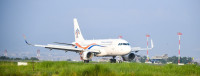
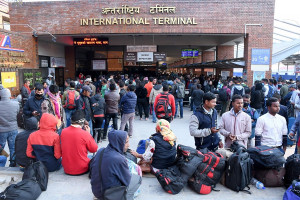
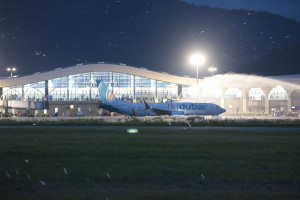
The Dashain travel is also expected to put pressure on domestic aviation. Tribhuvan International Airport typically sees a sharp increase in domestic passenger traffic during the festival, with many travellers booking flights well in advance.
The airport expects between 30,000 and 35,000 domestic passengers to travel out of Kathmandu during Dashain and is preparing additional flights to meet demand, said spokesperson Sanjay Kumar.
As road travel has become more challenging, demand for domestic flights has increased, Kumar said. The airport is therefore preparing to keep flights running until late at night during the festival. Flights are expected to operate late into the night to destinations including Biratnagar, Chandragadhi and Janakpur, he said.
Tribhuvan International Airport normally handles 28 aircraft movements an hour, including 20 domestic and eight international flights. That number has recently risen to 30 to 32 movements an hour as domestic demand has increased.
The airport’s ability to accommodate more flights is constrained mainly by runway capacity and the minimum separation required between aircraft, Kumar said. “We have to work within the limits of the runway and aircraft separation requirements, while weather can create additional constraints,” he said. “We will make the fullest possible use of the available capacity, operating flights from early morning until late at night.”
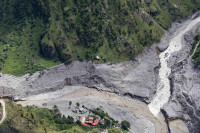
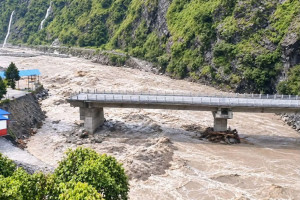
The Department of Roads has, meanwhile, begun maintenance work on routes expected to come under heavy pressure during the festival. Crews are reopening sections damaged by floods and landslides and filling potholes along the Nagdhunga-Mugling road, one of the country’s busiest highways during the Dashain travel season, said Bijaya Jaishi, the department’s director general.




 16.46°C Kathmandu