Nepal arrests four medical operators amid deepening row with Malaysia over worker recruitment
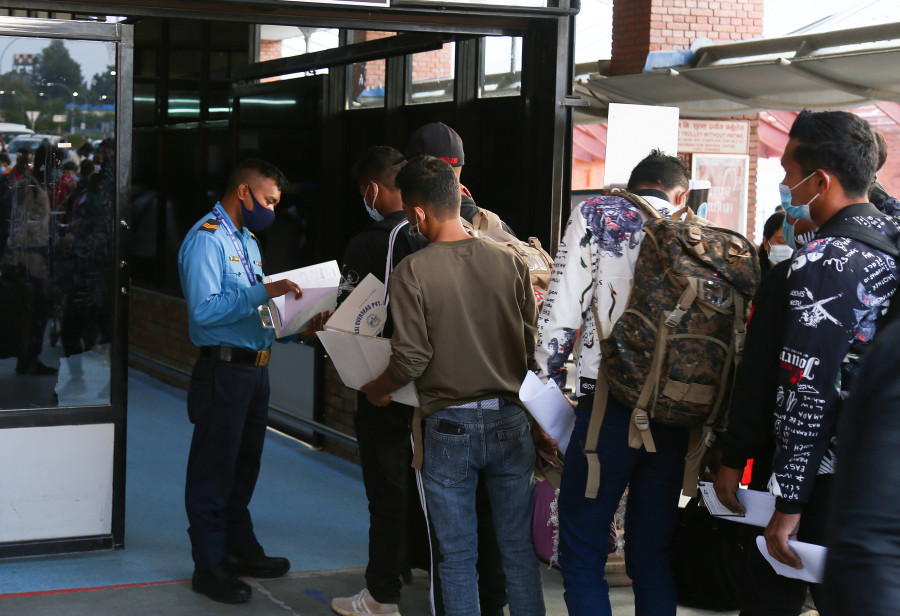
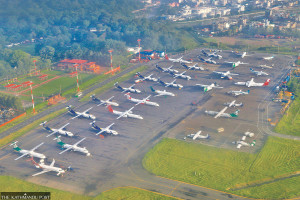
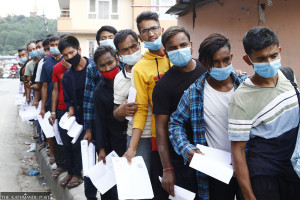
The arrests come as Malaysia moves to restrict recruitment to 25 approved agencies, despite Nepal’s foreign ministry urging a diplomatic solution to the dispute. The CIB says the arrests followed a complaint over medical examinations required for labour approval, although no workers declared unfit abroad have filed compensation claims with Nepal’s Labour Ministry. Post file photo
Nepal’s Central Investigation Bureau (CIB) arrested four health-service operators, including Kailash Khadka, president of the Nepal Health Professionals Federation, on Wednesday evening from Kathmandu and Lalitpur, as a diplomatic dispute with Malaysia over migrant worker recruitment deepens.
The police action follows growing tensions between the two countries over Malaysia’s selection of recruitment agencies. The Department of Foreign Employment has issued arrest warrants for the operators of 25 manpower agencies selected by Malaysia.
Prime Minister Balendra Shah and his Malaysian counterpart, as well as the two countries’ labour ministers, had previously held telephone conversations to resolve the dispute. They pledged to settle the issue through dialogue.
Senior Superintendent of Police Anupam Shumsher Rana, who is with the CIB, confirmed the arrests. He told Kantipur that the operators had been detained for investigation following a complaint related to medical examinations required for labour approval. “We arrested them for investigation following a complaint concerning medical examinations for labour approval. We will release further details through a statement,” Rana said.
Nepal’s Labour Ministry has a mechanism to compensate workers who are declared medically fit in Nepal but found unfit upon examination in their destination country. Under the mechanism, health-service providers are required to cover the prescribed costs. The process is overseen by a specialist committee led by an expert from the health ministry.
However, no workers who returned after being declared medically unfit abroad have filed complaints with the labour ministry seeking compensation, according to the report.
The government’s action follows Malaysia’s decision to recruit foreign workers exclusively through 25 manpower companies listed on its Foreign Worker Centralised Management System (FWCMS) from November 6. Nepal has since initiated action against the owners of the 25 recruitment agencies and medical operators.
The foreign ministry, however, had advised the government against taking coercive action against the businesses, recommending that the dispute be resolved through diplomatic channels. “The labour and foreign ministers discussed the issue on Tuesday. At the meeting, the foreign ministry suggested resolving the problem through a meeting of the bilateral mechanism, as a diplomatic solution would be more appropriate,” a foreign ministry official said.
But Ramjee Yadav, minister for youth, employment and social security, favoured action against the operators. He summoned a team led by Additional Inspector General Uma Prasad Chaturvedi to the labour ministry on Wednesday for discussions and pressed for the businesses to be arrested. The arrests began shortly after the meeting ended.
Kantipur tried repeatedly to contact Yadav on Wednesday and Thursday for comment but could not reach him. Labour ministry spokesperson Mira Acharya said she was unaware of the arrests.
Dispute over medical examinations
Nepal and Malaysia signed a labour agreement on October 29, 2018, that included provisions on medical examinations for migrant workers. To implement the agreement, the second meeting of the countries’ joint technical committee made it mandatory for 36 medical centres connected to the Biometric Medical system to conduct examinations in Nepal in accordance with Malaysia’s standard operating procedures.
Under the agreement, Malaysian employers are supposed to cover medical examination costs in Nepal under an “employer-pays” model, with the amount reimbursed through the worker’s first month’s salary. Workers are therefore supposed to receive medical examinations free of charge.
In practice, however, employers recruiting workers under Malaysia’s zero-cost migration system have been paying the medical fees in Nepal. The examinations have been conducted at the rate of Rs6,500 fixed by the labour ministry.
Medical operators not selected by Malaysia had filed writ petitions at both the High Court and the Supreme Court, alleging that the approved providers had been granted a monopoly over medical examinations for Malaysian employment. Both courts rejected their claims, ruling that the arrangement did not constitute a monopoly.
On January 29, 2020, a joint bench of High Court judges Lohit Chandra Shah and Rekha Thapa Pandey ruled against the operators’ demands. On February 7, 2023, a joint bench of Supreme Court justices Sapana Pradhan Malla and Nahakul Subedi also declined to issue the requested order, ruling that the medical examination system did not amount to a monopoly.
Hom Karki is a reporter with two decades experience covering migrant workers issues and the Nepali diaspora. He was previously based in the Gulf for Kantipur Daily.




 21.38°C Kathmandu