Explained: Why does an hour long flight to Dhangadhi cost more than a flight to New Delhi?
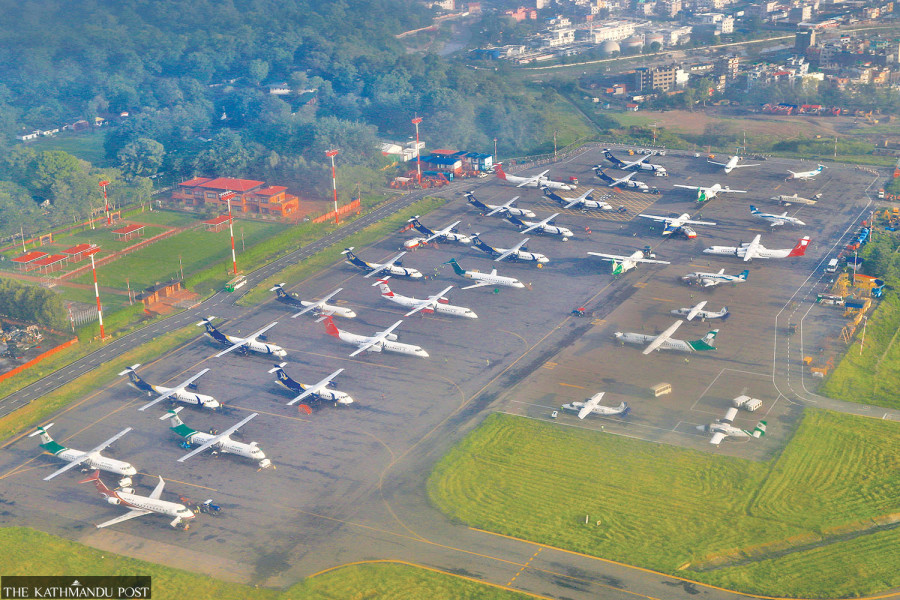
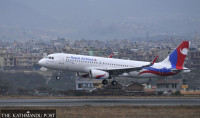
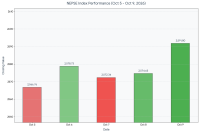
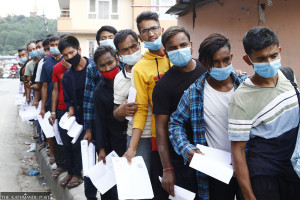
Domestic airfares in Nepal have doubled on the longest route in 12 years, with rising fuel costs, taxes and seasonal demand pushing up ticket prices. The maximum one-way airfare on the Kathmandu-Dhangadhi route has doubled from around Rs11,000 in 2014 to more than Rs22,000 in 2026. Post File Photo
On October 7,Prem Singh Saud wrote on his Facebook page that a flight from Kathmandu to Dhangadhi in Sudurpashchim province, in far-western Nepal, was more expensive than a flight from Kathmandu to Delhi. Posting a screenshot of the airfare to Dhangadhi, he asked: “If Sudurpashchim is not far, why is the airfare farther than Delhi?”
Padam Subedi also raised the issue, borrowing the words of Prime Minister Balendra Shah, who once said, “Sudur Aab Dur Nahi. Jhikkai Jhikkai Maya Timilai”.
“The Kathmandu-Dhangadhi flight fare for about 50 minutes: Rs22,180. But Kathmandu-Delhi for about 1 hour 50 minutes: Rs15,367,” he wrote.
The question was straightforward: Why does a flight of about 50 minutes cost so much more than an international flight lasting 1 hour and 50 minutes? Who is responsible, and why must passengers continue to pay such high fares?
Consumer criticism is understandable. The maximum one-way airfare on the Kathmandu-Dhangadhi route has doubled from around Rs11,000 in 2014 to more than Rs22,000 in 2026.
The issue has repeatedly reached Parliament.
Rastriya Swatantra Party lawmakerAakriti Awasthi has called on the government to lower domestic airfares for passengers travelling between Kathmandu and Dhangadhi, arguing that flights to Nepal’s far-western region often cost more than international travel to New Delhi.
Awasthi told lawmakers that it should not be more expensive for Nepalis to travel to Sudurpashchim than to India’s capital. Referring to Prime Minister Shah’s election-era slogan about bringing the far west closer, she urged the government to make domestic air travel easier and more affordable.
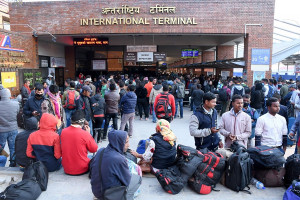
Ticket prices frequently rise during major festivals and when floods and landslides disrupt road transport, travellers are left with no option other than air services. While airlines may justify fare increases through demand-and-supply dynamics, passengers have little choice but to pay higher prices since alternative modes of transport are not available.
Air travel, once considered a luxury, has become a necessity for millions of Nepalis. Yet the cost of flying remains beyond the reach of many.
The Post explains how domestic airfares are determined, why they rise during festivals and disasters, and what makes flying within Nepal so expensive.
How are domestic airfares regulated in Nepal?
Domestic airfares are regulated by the government, while international airfares are largely determined by market demand and supply.
The government sets both minimum and maximum limits for domestic fares. Nepal is perhaps the only country where the government also regulates the minimum fare.
The minimum fare was introduced after domestic airlines began undercutting one another when the government liberalised the aviation market and opened it to private operators in 1992. The policy led to a surge in competition, with more than 75 airlines registered over the years. Many have since folded and only a fraction remain in operation.
However, Nepal has yet to adopt an open-sky policy.
The government introduced fare controls in 1993. Amid concerns about intense competition, oversupply of seats and airlines offering tickets at unsustainably low prices, it introduced the lower ceiling as well.
How did low fares contribute to the collapse of Nepali airlines?
In the early years of liberalisation, airlines competed aggressively for passengers. Oversupply of seats, particularly on major hubs and tourist routes, triggered steep fare cuts, according to aNepali Times report.
Necon Air, founded on September 14, 1992, offered mountain flights to view Everest on an ATR aircraft for as little as $32 per person—almost 60 percent below government-approved rates. The airline suspended operations in 2003 and was officially delisted in 2006.
Cosmic Air marked another turning point in Nepal's aviation history when it introduced 105-seat jet aircraft in December 2004. It, too, triggered a price war by selling tickets at rock-bottom prices.
In April 2005, passengers travelling on Cosmic Air's Fokker-operated domestic routes, including Kathmandu-Nepalgunj, Kathmandu-Bhairahawa and Kathmandu-Biratnagar, were entered into a lucky draw. One passenger on each qualifying flight won a motorcycle.
But the promotional campaign could not generate enough cash to cover the airline's day-to-day expenses. The company eventually folded.
“The positive past of Cosmic Air was that it made the airfare so cheaper that it made Nepalis travel via plane, removing the established tag that planes means a luxury,” said Tri Ratna Manandhar, a former director general of the Civil Aviation Authority of Nepal.
“When Cosmic introduced the prize offer on top of low fare, we intervened. We sought clarification from Capt Rabindra Prasad Pradhan, its chairman, because it was a serious safety issue,” said Manandhar, who was the safety chief at the time.
Pradhan, a former Nepal Army captain who was close to the royal family, refused to submit a clarification, Manandhar said. The company eventually folded in 2005 after running into a cash crunch.
High operating costs, poor management, and intense competition have caused more than a dozen airlines to collapse or suspend operations. When airlines lack adequate cash flow, they may compromise on safety, eventually leading to accidents and a loss of passenger confidence.
Agni Air, Gorkha Airlines and other carriers entered the market but folded after losing passenger confidence following crashes.
The government introduced a minimum airfare limit in 2008-09 as airlines began folding one after another.
How are airfares and fuel surcharges calculated?
Under theDirective on Airfare Regulation, 2016, airlines operating scheduled services must set their fares within the minimum and maximum limits prescribed by the government.
Airlines can classify tickets into different fare categories and determine prices according to their business strategies. However, the cheapest category cannot be priced below 50 percent of the minimum airfare prescribed by the government.
Airfares have two main components: the base fare and the fuel surcharge.
When aviation fuel prices change, airlines can adjust their fuel surcharges according to a government-prescribed formula. Under the formula set by the Civil Aviation Authority of Nepal, airlines must increase or reduce the surcharge when fuel prices change by Rs4 per litre. A committee under the civil aviation regulator reviews the surcharge.
The government also sets and reviews the other major component of domestic airfares, taking into account requests from the Airlines Operators Association of Nepal and Nepal Rastra Bank's inflation rate.
In effect, the government regulates domestic airfares, while airlines have some flexibility to set prices within the prescribed limits.
Why do airfares rise during festivals and natural disasters?
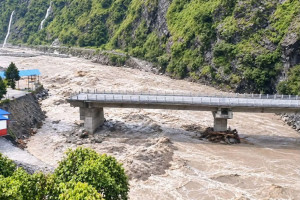
Demand for air travel surges during major festivals such as Dashain, Tihar and Chhath. It also increases when natural disasters and severe monsoon floods block highways, forcing people to rely on flights.
But airlines do not always have passengers in both directions.
During the festive season, for example, a flight to Bhadrapur may be full while the return flight is almost empty. Airlines charge higher fares on the busy leg to help cover the cost of operating the return flight. They may offer discounts of 60-70 percent on the less popular return journey.
The seasonal nature of demand is central to the economics of Nepal's domestic aviation industry.
“Income generated from five months—September, October and November in autumn and April and May in spring—sustains airlines for 12 months,” said Pratap Jung Pandey, president of the Airlines Operators Association of Nepal.
Operating an airline in Nepal is difficult because of taxes and other operating costs. “With some exceptional cases, we haven't heard of any airlines making money or profit,” Pandey said. “The profit ranges from 3-4 percent while investment comes to billions.”
Birendra Bahadur Basnet, chairman of Buddha Air, the country's largest private airline operator, said his airline generates annual revenue of Rs15 billion but earns a profit of only Rs600 million.
Richard Branson, an English business magnate who co-founded the Virgin Group in 1970, once offered a blunt assessment of the airline business: “If you want to be a millionaire, start with a billion dollars and launch a new airline.”
Why are airfares expensive even outside the festive season?
Fuel prices are one of the biggest factors driving domestic airfares.
In 2007, aviation fuel sold to domestic carriers cost Rs72 per litre. In November 2015, during India's blockade of Nepal, the price surged to Rs232.88 per litre. It fell sharply to Rs67 per litre in February 2021 before rising to Rs96 in October 2022 and Rs128 in January 2026.
In April 2026, the price jumped to Rs269 per litre, the highest on record. It currently stands at Rs251 per litre.
Fuel prices have therefore increased almost fourfold over two decades, raising the fuel surcharge and making air travel in Nepal among the most expensive in Asia.
According to airline officials, fuel accounts for 35-40 percent of an airline's total operating costs.
The depreciation of the Nepali rupee against the US dollar has added to the burden. On December 31, 2021, the dollar was valued at Rs117.49. It now costs around Rs155.
“As everything, from parts to crew training needs to be paid in dollars, the appreciation of the US dollar means a rise in airfare,” Pandey said.
Taxes have also increased the cost of tickets. Since mid-July 2023, the government has imposed value-added tax on domestic airfares for the first time, adding 13 percent to ticket prices.
Nepal Oil Corporation, the state-owned fuel supplier, also charges domestic aviation fuel at a higher price to cross-subsidise cooking gas. These costs are ultimately passed on to passengers.
What are the highest and lowest airfares on domestic routes?
In April, Nepal Oil Corporation nearly doubled the price of aviation fuel for domestic carriers, raising it by 97.63 percent. The fuel surcharge on the Kathmandu-Dhangadhi route, Nepal's longest domestic sector, increased by Rs5,480 overnight—the largest recorded jump—taking the total surcharge to Rs9,735.
The maximum one-way fare on the Kathmandu-Dhangadhi route consequently rose to Rs22,179.
The total includes Rs9,450 as the base fare, Rs9,735 as the fuel surcharge, Rs2,494 in VAT and Rs500 as the passenger service charge.
After the revision, the minimum fare on the Kathmandu-Dhangadhi sector stands at Rs16,085, while promotional fares can be as low as Rs11,600 one way.
The Kathmandu-Simara route, one of the country's shortest, also saw its fuel surcharge rise by Rs1,140 to Rs1,985. The total fare reached Rs5,082, comprising Rs2,070 as the base fare, Rs1,985 as the fuel surcharge, Rs527 in VAT and Rs500 as the passenger service charge.
Simara and Bharatpur, among the shortest domestic routes, have only one fare category.
Is a flight to Dhangadhi really more expensive than a flight to New Delhi?
Domestic and international airfares operate under different pricing systems, making direct comparisons difficult.
International fares are largely market-driven and depend on demand, seat availability and competition. Airlines use a system known as the Reservation Booking Designator, or RBD, to sell seats at different prices on the same flight.
In November 2024, when Kathmandu's Tribhuvan International Airport was closed from 10 pm to 8 am for five months until March 31 to allow taxiway expansion, the fare for the roughly 90-minute Kathmandu-Delhi flight surged to Rs80,000 one way at the highest RBD level.
The lowest fare available at the time was Rs42,000, and seats at that price were rarely available.
International airlines do not necessarily raise fares arbitrarily. Under the RBD system, prices increase in steps, with each successive fare level typically $15 to $100 more expensive than the previous one.
During normal periods or the low-travel season, the Kathmandu-Delhi fare can fall to around Rs12,000 one way. The cheapest one-way flight from Kathmandu to New Delhi currently starts at Rs18,848.
The comparison with Dhangadhi is therefore not simply about the length of a flight. Domestic fares are subject to government-set limits, fuel surcharges and taxes, while international fares fluctuate according to market conditions and the availability of cheaper seats.
A low international fare may be available only to a limited number of passengers, while higher-priced tickets may be all that remain when demand rises.
What is behind the latest airfare controversy?
Buddha Air, Nepal's largest private carrier, has warned that misleading screenshots and other content created using Photoshop and artificial intelligence are circulating on social media and some online media outlets.
The airline said it had taken serious note of the circulation of such material.
In a statement, Buddha Air said it had been offering one-way flights from Kathmandu to Dhangadhi for Rs10,800. It said tickets on many flights had already sold out on numerous days because seats were available at the minimum fare.
Following the August 26 Bhotekoshi flood, Buddha Air chairman Basnet said the airline had decided to help passengers affected by disrupted road transport.
“When there is a problem in road traffic due to natural disasters, it is our responsibility to provide passengers with an alternative to easy transportation through air bridges,” he said. “For this reason, we have decided to operate flights at the lowest fare until the highway is smooth.”
As the controversy over domestic airfares intensified, airline operators and the tourism ministry reached an understanding last Friday to sell tickets at reasonable rates during the festive period.
The Civil Aviation Authority of Nepal hasasked all airlines to publish their airfare lists on their respective platforms.
However, the immediate problem remains ticket availability. Many flights have already sold out as passengers rush to secure seats, even at high prices, rather than travel on highways that have become increasingly dangerous because of floods and landslides.
Sangam Prasain is Business Editor at The Kathmandu Post, covering tourism, agriculture, mountaineering, aviation, infrastructure and other economic affairs. He joined The Kathmandu Post in October 2009.




 19.22°C Kathmandu