Nirmal Purja, who redrew the limits of human endurance and reshaped Nepali mountaineering, dies in Broad Peak avalanche
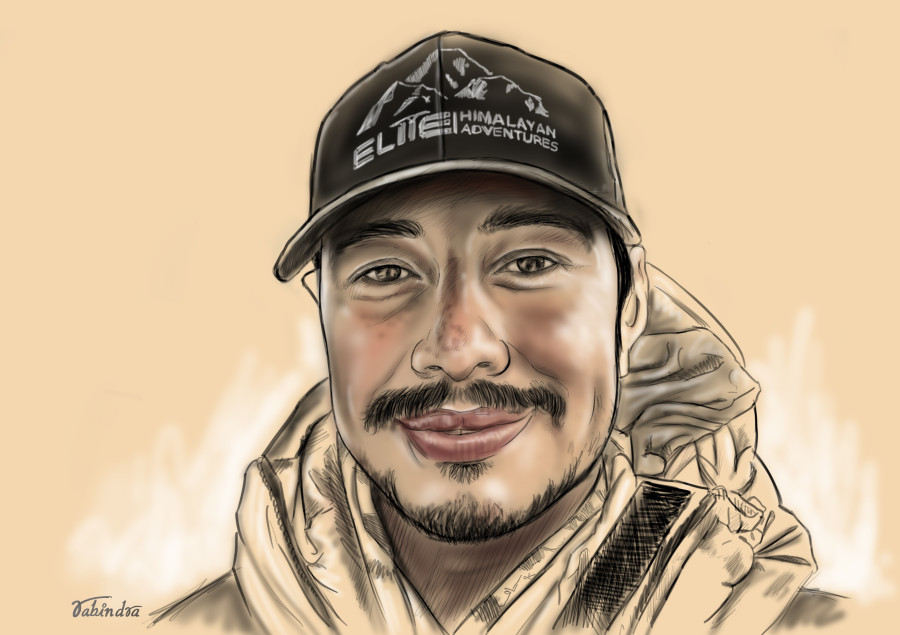
The former British special forces soldier climbed all 14 of the world’s 8,000-metre peaks in six months, becoming one of the most celebrated — and polarising — figures in modern mountaineering. Illustration by Rabindra Manandhar for TKP
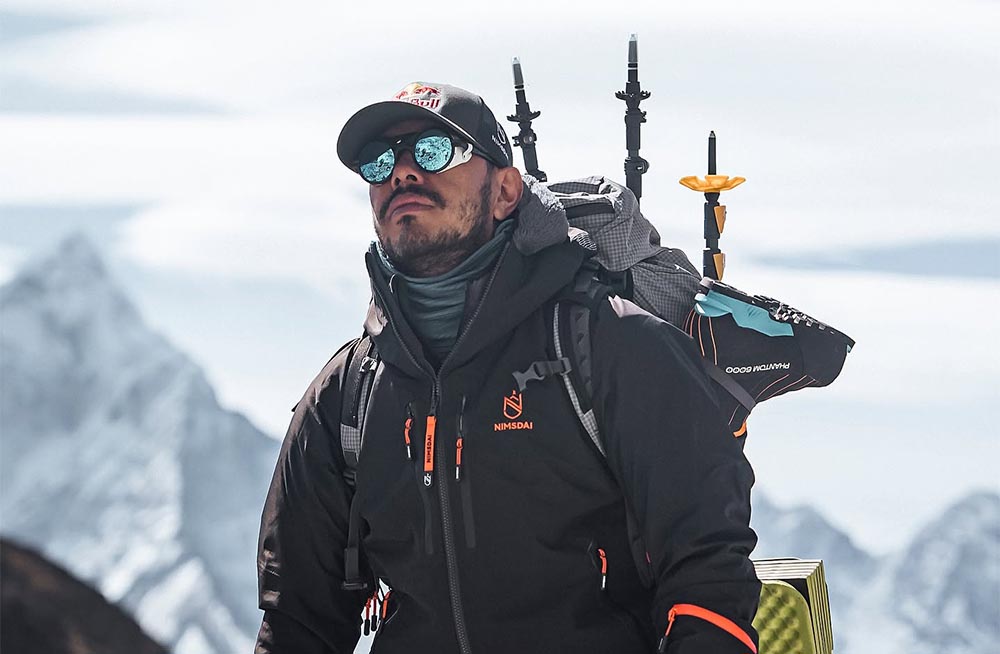
Nirmal Purja, the Nepal-born former special forces soldier who stunned the mountaineering world by summiting all 14 of the planet’s 8,000-metre peaks in six months, has died in an avalanche on Pakistan’s Broad Peak. He was 43.
Purja's death was confirmed in a statement by Elite Expedition on its social account on Saturday. "It is with profound sadness and immense heartbreak that we confirm that Nirmal "Nimsdai" Purja tragically lost his life following the avalanche on Broad Peak," the statement said. "We have also received confirmation that other members of the expedition sadly did not survive."
Purja was on Broad Peak as part of an expedition when an avalanche struck the team on July 30, 2026. Pakistani mountaineering authorities said there had been no communication with the group since the incident. Mingma Gyabu Sherpa, a member of Nepal’s House of Representatives and Purja’s business partner, had said that tracking data showed Purja’s position had shifted after the avalanche — first appearing to have been swept downhill, then moving again from where the signal had stopped.
Known across Nepal and the global climbing world as “Nims Dai,” Purja became one of the most recognisable figures in modern mountaineering after completing what he called Project Possible — an attempt, in 2019, to climb all 14 of the world’s eight-thousanders in seven months. He finished in six months and six days, shattering a previous record by more than seven years.
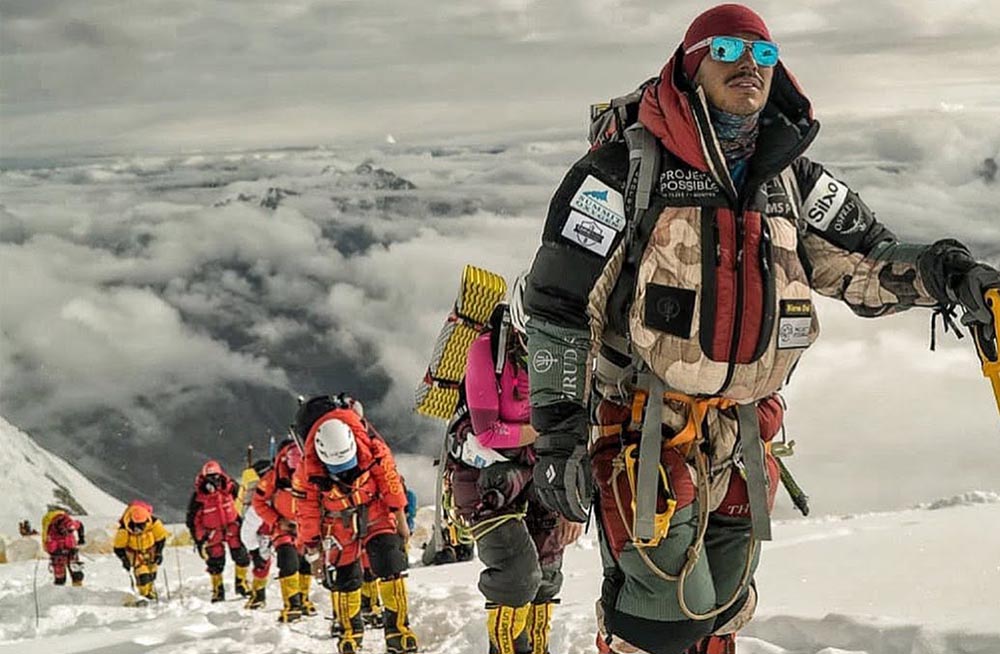
Purja spent much of his career testing the outer limits of human endurance, driven by an unshakeable belief that anything was achievable if a person set their mind to it.
Photo: Courtesy of Nirmal Purja's Facebook
“I am quite lucky with my physiology but I have also been trained by the best unit on earth,” he told the Post in an interview in 2019, referring to his military training. “So when you combine that with a positive mindset, you can do anything.”
Purja was born on July 25, 1983, in Dana village in Myagdi district, and grew up largely in Chitwan. He came from a family with a long history of military service: his father and three older brothers all served in Nepal’s Gurkha regiments. Purja followed that path himself, serving six years as a British Gurkha before becoming the first Nepali to be accepted into the British Special Boat Service, an elite unit of the Royal Navy. “Being a Gurkha was my only dream,” he wrote in his book. “It was the only thing I wanted to do.”
Across a military career spanning roughly 16 years, he later became a subject-matter expert in extreme cold-weather warfare within the SBS’s mountain unit. He was appointed a Member of the Order of the British Empire (MBE) in 2018 for his military service and mountaineering achievements.
On the morning of October 30, 2019, Tribhuvan International Airport in Kathmandu was packed with journalists waiting for him. Purja emerged from the arrival hall buried under flower garlands so heavy he could barely move his neck.
To finance that expedition, Purja resigned from the Special Boat Service, gave up his military pension and sold his house in the UK. “I gave up my job in the United Kingdom. I gave up my pension and sold my house for this high-altitude, high-speed quest,” he told reporters at the time. “Nobody believed it could be done. Everyone was laughing at me when I launched Project Possible.”
Purja did not come to mountaineering through a conventional path. His climbing career traces back to a 2012 trek to Everest Base Camp, originally planned as a simple hike, that he extended into a summit push, an experience he later said had ignited his ambition for the mountains.
He went on to compress what typically takes climbers years or decades into months. His 2019 record-breaking expedition, chronicled in the Netflix documentary “14 Peaks: Nothing Is Impossible,” carried him across Nepal, Pakistan and Tibet, closing with Shishapangma on October 29, 2019. His team included Mingma David Sherpa, Gesman Tamang, Galjen Sherpa, Lakpa Dendi Sherpa and Halung Dorchi Sherpa.
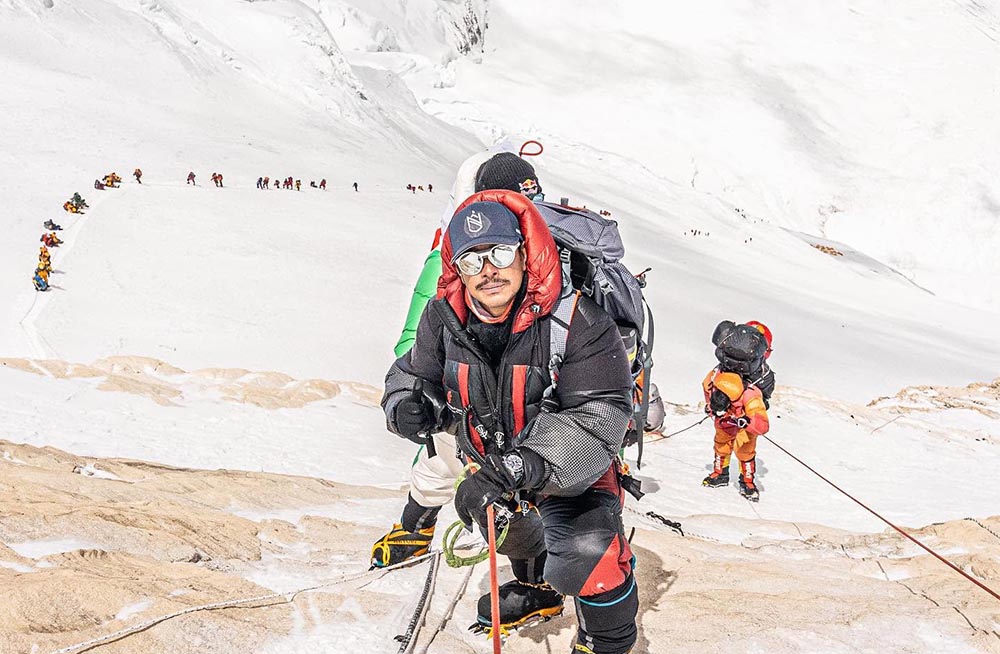
Photo: Courtesy of Nirmal Purja's Facebook
For Purja, the record was never simply about speed. On April 23, 2019, while descending Annapurna, Purja interrupted his own expedition to help rescue Malaysian climber Chin Wui Kin, who had been stranded without food, water or supplemental oxygen for around 40 hours. Purja brought him down, though Chin later died from his injuries after being evacuated to Singapore. Weeks later, during the ascent of Kanchenjunga, Purja again gave up his own summit push to help others. “At 8,450 metres, we had to give our oxygen and start rescuing three other climbers,” he recalled. “That was a suicidal attempt and probably the hardest moment.”
His final obstacle on the expedition came not from weather or altitude but politics: with only Shishapangma left to climb, Chinese authorities repeatedly delayed his climbing permit, which was finally granted on October 15 after Nepal’s government intervened diplomatically with Beijing. “From rescuing people at high altitudes to fixing ropes, from supplying oxygen to opening routes and going nights without sleeping, we were doing multiple jobs and were testing our limits,” Purja said afterward. “But we delivered.”
Purja called the feat “extremely, horrendously good,” despite setbacks along the way, including having his oxygen supply stolen while climbing Lhotse. Speaking to reporters in Kathmandu after his return, Purja said he hoped his record would show the next generation of Nepali climbers that “anything is possible with determination.”
In doing so, he broke South Korean climber Kim Chang-ho’s previous record of seven years, ten months and six days, and eclipsed Polish climbing legend Jerzy Kukuczka, who had become the first person to complete all 14 eight-thousanders, in 1987, after nearly eight years. Purja’s own record proved short-lived: on July 27, 2023, Norwegian climber Kristin Harila and her Nepali climbing partner, Tenjen (Lama) Sherpa, completed all 14 peaks in just 92 days.
His 2019 schedule bordered on the unbelievable. He climbed Annapurna and Dhaulagiri, moved to Kanchenjunga, then summited Everest, immediately traversed to adjoining Lhotse, flew to Makalu Base Camp and climbed Makalu — all within 48 hours. His campaign then continued through Pakistan, where he climbed Nanga Parbat, Gasherbrum I, Gasherbrum II, Broad Peak and K2, before returning to Nepal to finish Manaslu, Cho Oyu and, finally, Shishapangma.
During that same expedition, Purja took a photograph that would become one of the defining mountaineering images of the decade: a long queue of climbers near Everest’s summit, widely described as a “traffic jam,” which ran on front pages worldwide, including in The Kathmandu Post, and helped push Nepal’s government to tighten climbing regulations.
He later co-founded Elite Exped with Mingma David Sherpa and, in January 2021, was part of a 10-member all-Nepali team, alongside Mingma Gyalje Sherpa, that achieved the first winter ascent of K2 — one of the last unclaimed milestones in Himalayan mountaineering, a peak he told The Post was the only one among the 14 that genuinely scared him.
His journey reached a global audience beyond Nepal in 2021, when the documentary “14 Peaks: Nothing Is Impossible” introduced viewers in 191 countries to Nepal’s climbing community and made Purja one of the world’s most recognisable mountaineers almost overnight. Purja published a memoir, “Beyond Possible” in 2020, tracing his path from a 16-year military career to record-setting mountaineer, and continued to add to his list of Guinness World Records in high-altitude climbing in the years that followed.
Photo: Courtesy of Nirmal Purja's Facebook
Purja’s rise made him one of Nepal’s most prominent public figures internationally, and he used that platform to campaign for greater recognition of Nepali climbers, and for the welfare of high-altitude workers and communities through the Nimsdai Foundation. He also served on international panels addressing sustainability in mountain regions. Beyond mountaineering, he also expanded into aviation, serving as chairman of Mustang Helicopters.
“He was daring. He loved challenges. He was frank,” said Tashi Gyalzen Sherpa, 30, who climbed Everest four times within 15 days last spring and who helped Purja retrieve bodies from Shishapangma in 2024. “It is a big loss to the climbing fraternity.”
Tashi said Purja fundamentally altered the mindset of Nepal’s climbing community. “He was overly ambitious. He taught Sherpas to not just climb — but climb for a purpose.”
But his career was not without controversy. Nepal’s Department of Tourism investigated Purja and Elite Exped over allegations that an unauthorised helicopter had flown directly to Everest’s Camp II and that high-altitude training had been conducted without permission. He faced criticism over his company’s handling of compensation following an oxygen-cylinder explosion in 2022 at a rented property linked to his company, which a court later ordered the company to pay compensation for after the blast destroyed the house and caused deaths. During the climbing season in 2024, he drew criticism within the mountaineering community after sharing a viral video alleging rival Sherpas had deliberately cut fixed ropes above Everest’s South Summit, claims that sparked heated debate and a government investigation. In 2024, two female mountaineers accused him of sexual harassment, which was reported in the New York Times. Purja said he unequivocally denied any wrongdoing.
Purja is married to Suchi Purja, the daughter of a Gurkha soldier, and the couple have a daughter, Himani. The family divided time between the UK and Nepal. Purja obtained Non-Resident Nepali citizenship three years ago.
Sangam Prasain is Business Editor at The Kathmandu Post, covering tourism, agriculture, mountaineering, aviation, infrastructure and other economic affairs. He joined The Kathmandu Post in October 2009.




 19.88°C Kathmandu