Habitat concerns grow as Nepal counts a record 429 tigers
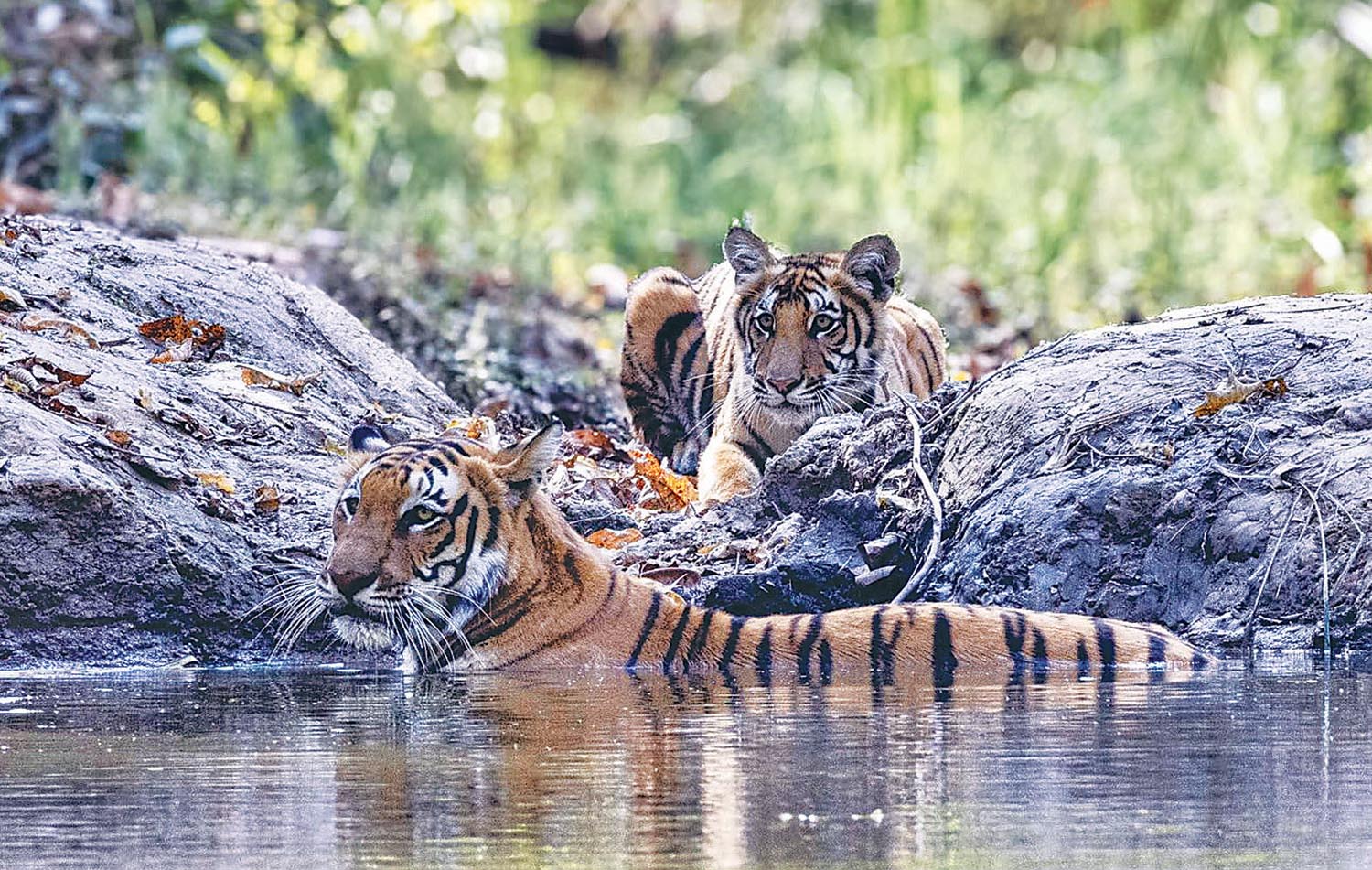
Fresh census records 74 more tigers than in the previous nationwide count of 2022, when the country saw 355 big cats.The census, carried out between December 31, 2025 and April 23, 2026, used camera traps. Post file photo
Nepal’s tiger population has hit a record of 429, according to the latest national count of the wild animal made public on Wednesday, marking another milestone in the country's globally recognised conservation efforts while raising fresh concerns over habitat management, human-wildlife conflict and the carrying capacity of protected areas.
The Department of National Parks and Wildlife Conservation unveiled the report in Kathmandu in the presence of Minister for Agriculture and Forests Gita Chaudhary on the occasion of World Tiger Day observed every year on July 29.
The census recorded 74 more wild tigers than the previous nationwide count conducted in 2022, when the country recorded 355 big cats.
The latest census found tiger numbers increasing in all major protected areas except Bardiya National Park, long regarded as one of the country’s best destinations for tiger sightings. Chitwan National Park and its buffer zone, the country's largest tiger habitat, registered the highest population of tigers at 145. As per the 2022 count, there were a total of 128 tigers in Chitwan.
Hari Bhadra Acharya, information officer at the Department of National Parks and Wildlife Conservation, said Bardiya was the only protected area where tiger numbers declined.
The census, carried out between December 31, 2025, and April 23, 2026, using camera traps, also recorded significant increases elsewhere. Parsa National Park's tiger population rose to 71 from 41 and Banke National Park’s number climbed from 25 to 51 while Shuklaphanta National Park recorded 50 big cats, up from 36. Bardiya saw its tiger numbers drop from 125 to 112.
The latest figures sustain a remarkable conservation story. Around 2000, Chitwan had only about 60 tigers. The number climbed to 91 in 2009 and reached 120 in the 2013 survey before dropping to 93 in 2018.
Conservationists are elated with the results, saying that they reflected years of investment in habitat restoration, anti-poaching operations, prey recovery and cross-border cooperation with India.
“The increase in tiger numbers is encouraging not only for conservation but also for the country’s tourism industry,” said Baburam Lamichhane, a wildlife researcher specialising in tiger ecology. "It strengthens Nepal's reputation as a global conservation success. Past experience also shows that an increase in tiger numbers does not automatically mean an increase in human casualties."
Tiger conservation has become one of Nepal's strongest international environmental credentials. In 2022, Nepal doubled its wild tiger population from the 121 recorded in 2009, achieving the global TX2 target set at the 2010 St Petersburg Tiger Summit four years ahead of schedule.
Dil Bahadur Pun, chief conservation officer at the Chitwan National Park, said future programmes would focus on sustaining the growing population through better habitat management and closer cooperation with local communities.
“We will continue conservation programmes by incorporating community concerns alongside scientific recommendations,” said Pun. “Habitat management and long-term conservation planning will become even more important as tiger numbers increase.”
Shivaji Gayak, chairman of the Buffer Zone Management Committee under the Chitwan National Park, said local residents remained concerned that more tigers could lead to more attacks on people and livestock. “That fear exists in many communities. But if we continue raising awareness and reduce people's dependence on forests, human casualties can be minimised,” said Gayak.
Conservationists suggest that Nepal should now look beyond celebrating higher tiger numbers and use the achievement to strengthen nature-based tourism.
“We should think about how to generate greater benefits by allowing more tourists to see tigers. Many visitors are willing to spend significantly for a tiger-viewing experience. We need targeted plans and programmes to attract such tourists,” said Naresh Subedi, former member secretary of the National Trust for Nature Conservation (NTNC).
He attributed the rise in tiger numbers to improved habitat conservation and management, an increase in prey species, stronger anti-poaching measures, the expansion of protected areas and the development of wildlife corridors linking Nepal and India.
Experts, however, warned that the growing tiger population also presents new management challenges. Bhagawan Dahal, Nepal country representative of the Zoological Society of London, said habitat management would become increasingly important to minimise human-tiger conflict.
“If the right measures are implemented in time, losses caused by tigers can be reduced,” said Dahal. “Research shows that tigers are less likely to leave well-managed habitats. At the same time, providing alternative livelihood opportunities to communities living around parks and forests can significantly reduce conflict.”
Dahal suggested that the government should formulate a long-term national policy for tiger management as the population continues to grow.
Conservationists have also called for a debate on whether Nepal's existing protected areas can support a larger tiger population. While some argue the country is nearing its ecological carrying capacity, wildlife expert Hem Sagar Baral said Nepal could sustain between 400 and 500 tigers given the current availability of prey, improved grassland management and the combined habitats of national parks, buffer zones and surrounding forests.
A pair of Royal Bengal tigers pictured at Bardiya National Park in this undated photo. Courtesy of Chungba Sherpa
Human-tiger conflict declines in Chitwan though rife elsewhere
Marichman Bhandari, 62, of Banke’s Rapti Sonari Rural Municipality-1 was grazing his livestock on January 2 when a tiger dragged him away and killed him in front of his companions. Less than two-and-a-half months later, Indra Bahadur Khatri, 30, of Rapti Sonari-9 was fatally attacked while cutting grass in a local community forest. Earlier, in late December last year, Dhansari Rawat, 42, of Salyan’s Kalimati Rural Municipality-7 and Chandra Bahadur Khaptadi, 65, of Kalimati-6, also lost their lives in separate tiger attacks.
The deaths underline the growing challenge of managing human-tiger conflict even as Nepal celebrates remarkable gains in tiger conservation.
According to the NTNC, 10 people were killed in tiger attacks in the last fiscal year of 2025-26. It was the first rise in fatalities after four consecutive years of decline. Four deaths occurred around Banke National Park, three in Parsa National Park, two in Bardiya National Park and one near Chitwan National Park.
Leopard attacks claimed another nine lives in Bardiya during the same period. Over the past eight years, 85 people have been killed in tiger attacks across Nepal.
Acharya said the increase in such incidents suggests that conservation efforts still have shortcomings. “We cannot change the behaviour of tigers, but we can certainly change our own,” said Acharya. “The next phase of conservation should therefore focus on changing the behaviour of local communities.”
Acharya said human-wildlife conflict is not one-sided. While tigers sometimes kill people and livestock, humans also retaliate by poisoning or trapping tigers. Contrary to popular belief, he said, healthy tigers do not normally attack humans. Most incidents involve old, injured or displaced animals that have become unable to hunt their natural prey.
“If such tigers can be identified and rescued in time, many conflicts can be prevented,” said Acharya. He also stressed the need to reduce people's dependence on forests by creating alternative livelihood opportunities. Many residents still enter forests daily to collect fodder, mushrooms, wild vegetables and fiddlehead ferns, increasing the likelihood of encounters with wildlife.
The tiger is found in only 13 countries worldwide.
Following the rise in tiger numbers in 2022, many people in Chitwan feared that a larger population of the predator would inevitably lead to more attacks. The latest figures, however, tell a different story. Chitwan National Park recorded no human fatality from tiger attacks in its buffer zone in the last fiscal year, according to Abinash Thapa Magar, information officer at the Park.
Communities have also adopted practical measures to minimise risk. Raju Silwal, chairman of the Kumroj Buffer Zone Community Forest, said residents are now allowed to enter forests only after 9 am, following an earlier fatal assault on a person collecting grass.
“We have fixed entry and exit times, designated separate grass-cutting areas and cleared vegetation to improve visibility,” Silwal said. “We also regularly educate forest users on how to avoid wildlife attacks.”
Gentle and shy by nature
Long-held assumptions about tiger behaviour are being challenged as the growing tiger population reveals new ecological patterns, according to conservationists.
Ashok Ram, chief conservation officer at Bardiya National Park, said the traditional belief that a male tiger requires about 50 square kilometres of territory and a female around 30 square kilometres no longer reflects conditions in the wild. Spread over 968 square kilometres, Bardiya National Park is home to 112 tigers, leaving an average of just seven to eight square kilometres of habitat per animal.
Field observations suggest that one male tiger often shares a territory with up to three females within an area of eight to 10 square kilometres. “If the females produce cubs, the density increases even further. The reality we are witnessing today does not match what we learned from ecological theory,” said Ram.
A tigress usually gives birth to two to four cubs. Researchers have also observed family groups living together more frequently, challenging the long-held view that tigers are strictly solitary animals. The gestation period ranges from 93 to 102 days.
Ajit Tumbahamphe, chief of the National Trust for Nature Conservation's Bardiya office, described tigers as naturally gentle and shy animals. “A healthy tiger does not deliberately hunt people. Most attacks involve old or injured animals that can no longer catch their natural prey and therefore turn to livestock or, in rare cases, humans,” said Tumbahamphe. He said the presence of tigers indicates a healthy ecosystem with abundant forests and prey species.




 13.8°C Kathmandu

1.jpg)