Govinda Sunar’s play follows a shaman-sculptor whose devotion, superstition and caste identity collide in a personal tragedy. Photos: Courtesy of Kantipur Film Academy/Rupesh Sah
Director of ‘Acheta’ Govinda Sunar, who grew up in Jumla, recalls a temple he was not allowed to enter. While others went inside to pray, he would sit outside.
“The god’s statue inside was made by my grandfather. I used to ask myself: if it was made by our own hands, why were we treated like that?” Sunar asks.
‘Acheta’ tells the story of Dal, a sculptor and shaman whose faith is a double-edged sword in his life.
The play serves as a medium to voice the concerns of communities who are often neglected while also advocating for the dismissal of superstitious beliefs and practices.
‘Acheta’, was screened for the three-day Tri-Nation Theatre Festival organised by the Nepal Academy of Music and Drama at Kantipur Theatre before staging at Shilpee.
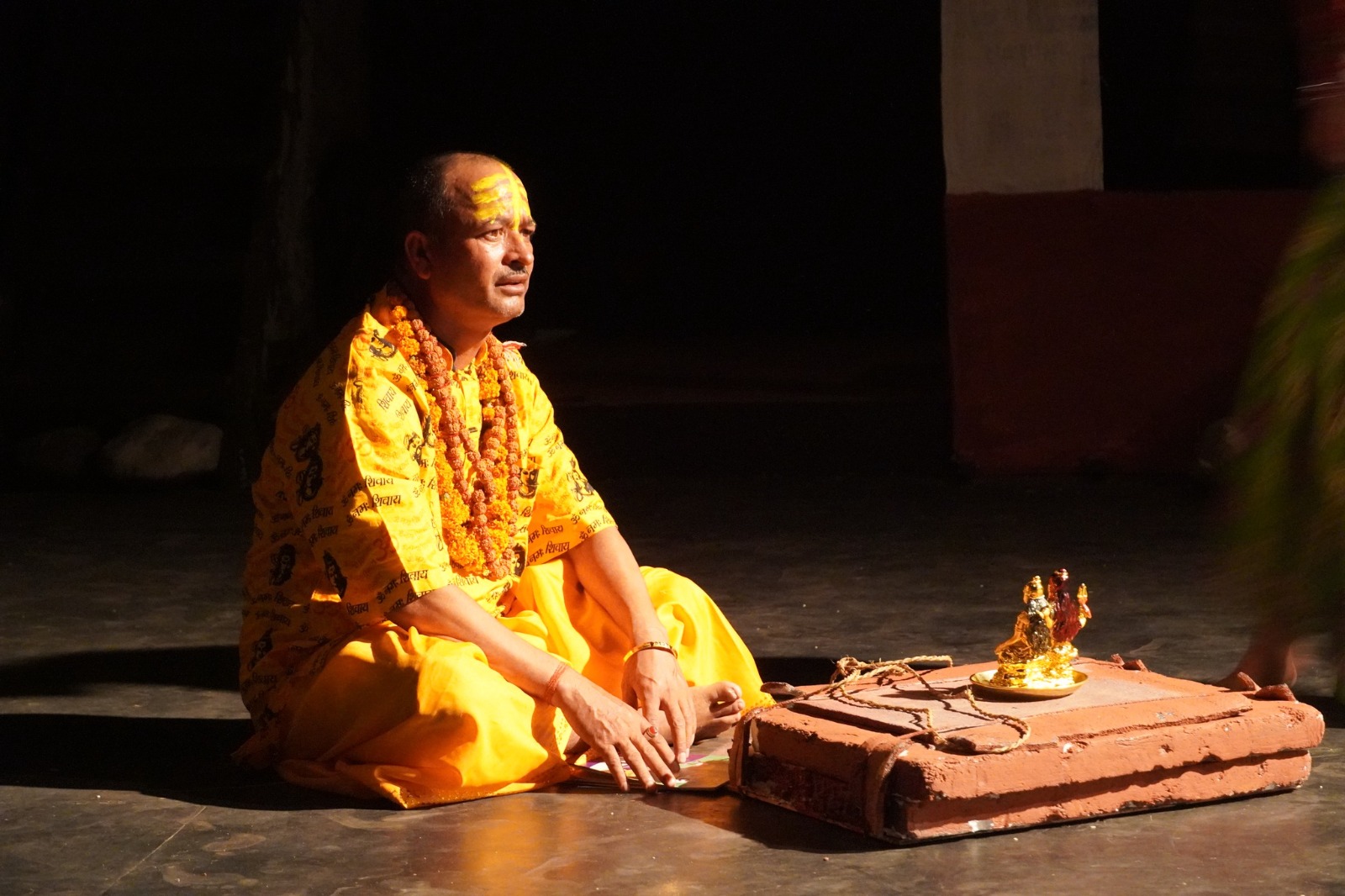
The play begins with a jhakri (Nepali shaman) channeling the spirit of a god to cure the villagers’ woes. Traditionally, shamans are believed to possess non-human energy and traits such as a thunderous voice and uncontrollable movements. The actors have convincingly captured this embodiment of shamans.
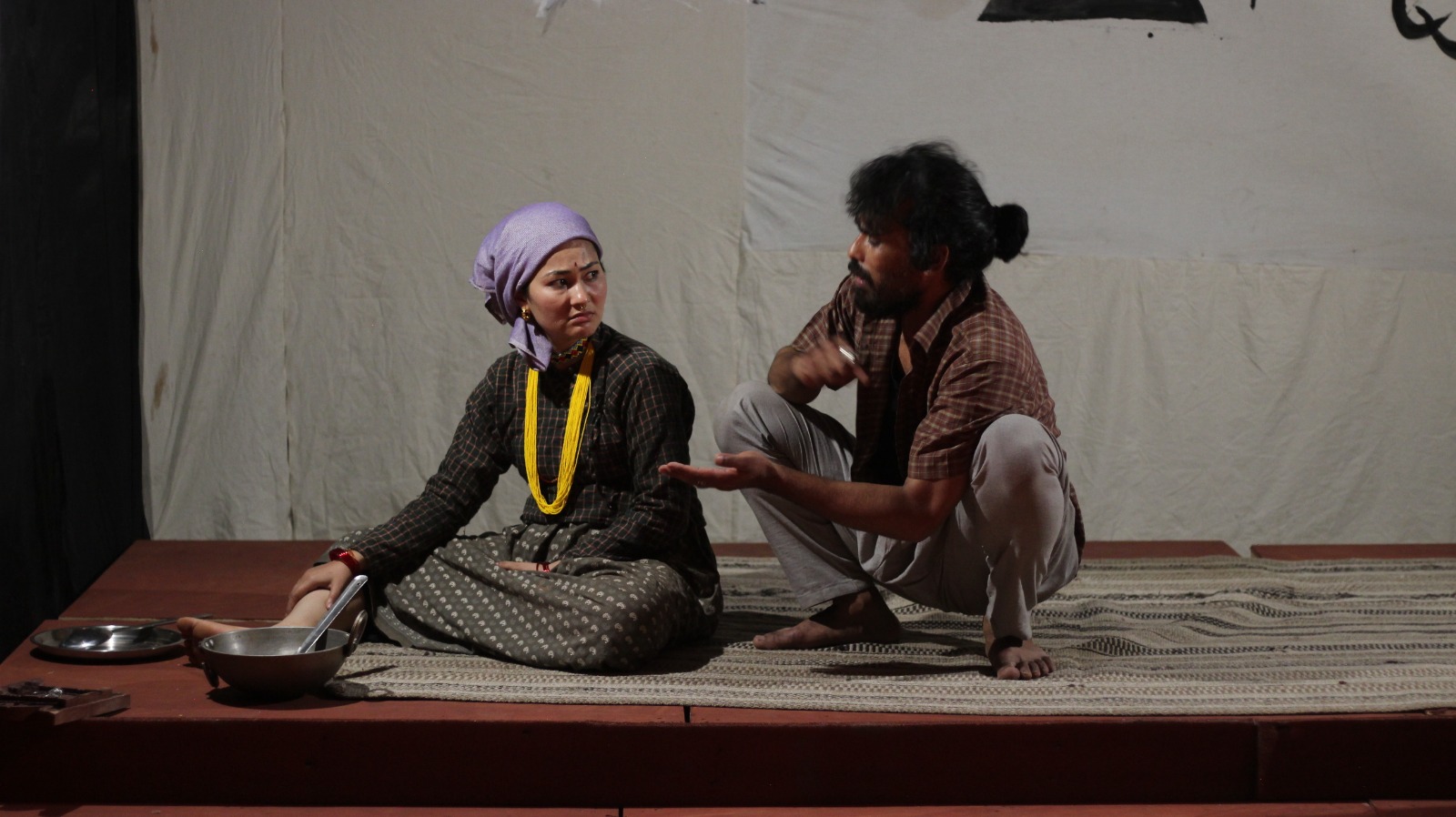
The jhakri is also a sculptor called Dal (played by Jhaken BC). Dal lives with his wife, Geeta (played by Sushmita Kunwar), who is expecting a baby.
The play begins with a shaman channelling the spirit of a god to cure the villagers’ woes.
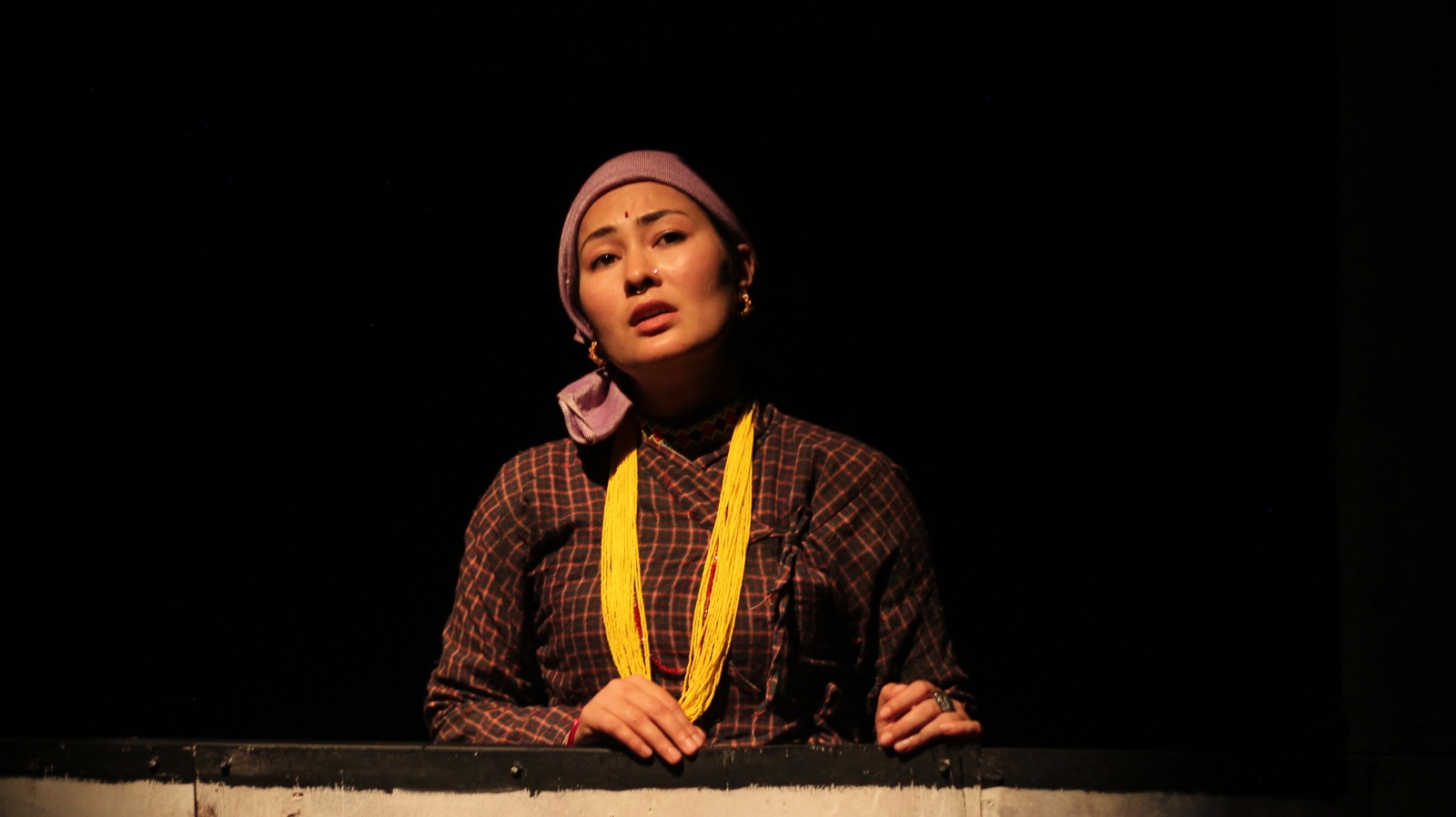
Geeta is worried that her husband’s involvement in shamanic practices is bringing more harm than good to their lives. Villagers call her an “Alachini,” meaning a bad omen or ill-fated person. Hurt by these labels, she urges Dal to step away from shamanism.
But he remains firm in his faith. He believes that when there is no one for the family to lean on, there is always God.
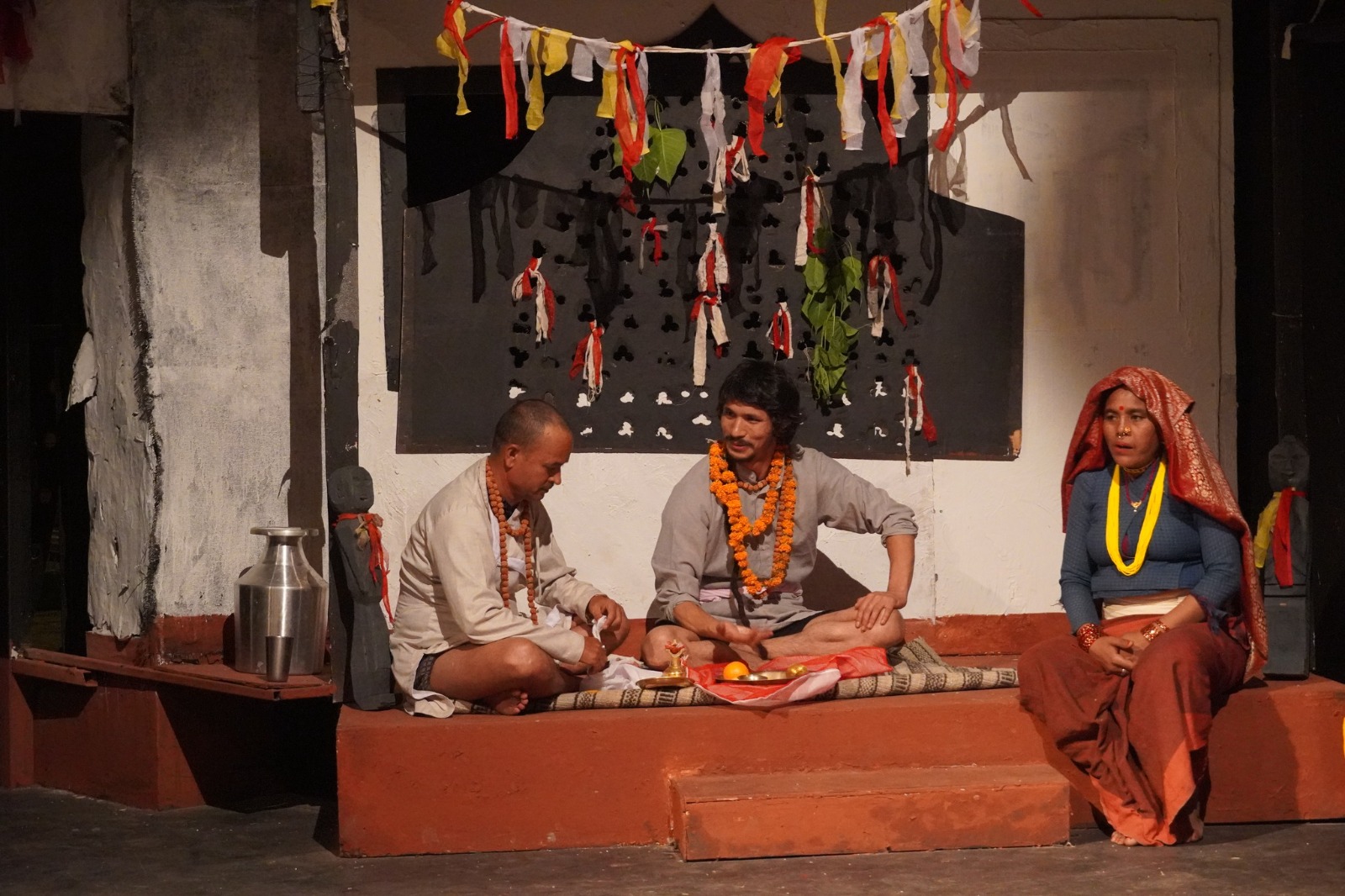
Concerned about his baby’s health, he visits another jhakri, referred to as ‘Narayan Gosai’. As Dal is considered ‘untouchable’, he sits far from everyone. The play repeatedly draws attention to how the mistreatment of people considered lower caste continues in every setting.
The jhakri gives Dal a red cord to tie around his wife’s neck, telling him that if she dreams of a white elephant, everything will be fine. Dal complies with those directions, hopeful about his family’s future.
As Dal is a fine sculptor, the ward chairperson assigns him to make a statue of a god. The chairperson is about to visit India for the treatment of his wife. He promises Dal that once he returns, he will pay him.
After his baby is born healthy, Dal and Geeta start discussing his future.
“Is it as easy to build our baby’s life as the sculptures you make?” asks Geeta.
Dal dismisses the thought, believing that sculpting itself is no easy task. Yet, the conversation quietly foreshadows the harsh reality ahead: while statues can be carefully shaped by hand, their child’s future will be moulded by a society far less forgiving.
Suddenly, their baby gets sick and has a high fever. When the parents try to take him to the local health post, the doctors are absent. There is only one way to treat him: get him to a nearby city.
To visit the city, he needs money. That is when the chairperson and wife return, demanding the sculpted god. But after Dal hands them the statue, instead of thanking him, they claim they have no money, leaving him in a tight spot.
“The gods you prayed for and the people you followed are of no use now,” quotes Geeta sadly, talking to Dal.
Helplessly, he returns to the same jhakri, having nowhere to go. Now, his baby is on the verge of dying. The jhakri is not a real health practitioner. Even so, instead of giving the baby any sort of medicine, he hands Dal, acheta.
In the hopes of curing his baby, he runs to the temple to offer the acheta. Then, he stumbles upon the puja of the chairperson and his wife. Seeing an ‘untouchable’ enter the premises of God, furiously they try to beat him up. Retaliating, Dal desperately begs them for help for his son. But the chairperson only gives him some money and promises to offer his ‘acheta’ to the god.
As soon as Dal leaves, the chairman throws away his acheta and demands the pandit spray him with sun pani (water for purification) since he has touched Dal. This reveals his character as someone even in authority, supposedly more educated than others, still holds such demeaning values towards the Dalit group.
By the time Dal returns, it is already too late. His son is no more. Now, every faith, every hope and devotion towards god, seems to be futile for Dal and Geeta, who had already lost two babies before. At last we see Dal throwing his rudraksha, Geeta’s sacred cord, and all of the things he used for practising shamanism, ultimately giving up on god.
‘Acheta’, the play’s name, represents the emotional state of the main couple. What was once considered a medium for hope turns into something useless, merely a few grains of rice. It also raises a critical question: when a person from a higher caste offers acheta, it is accepted as a sacred offering, yet when the same act is performed by someone from a lower caste, it is dismissed as having no value.
It shows the harsh reality of Karnali. Rather than rushing the baby to a city hospital, the people in his village still superstitiously believe he can be healed by jhakris, showing how blind faith accumulated from generations results in suffering and losses rather than the fulfilment of delusional hopes. Similarly, the lack of proper infrastructure for health care and ignorance of governmental figures emphasises the failures that affect rural communities every day.
Casteism is highlighted throughout the play. It is not just a display of mistreatment but also a portrayal of how systemic discrimination cuts off minority groups across every aspect of life, from limiting future opportunities to forced social isolation. The way Dal compromises to suffer in silence after every door has been closed for any help is painful to even watch.
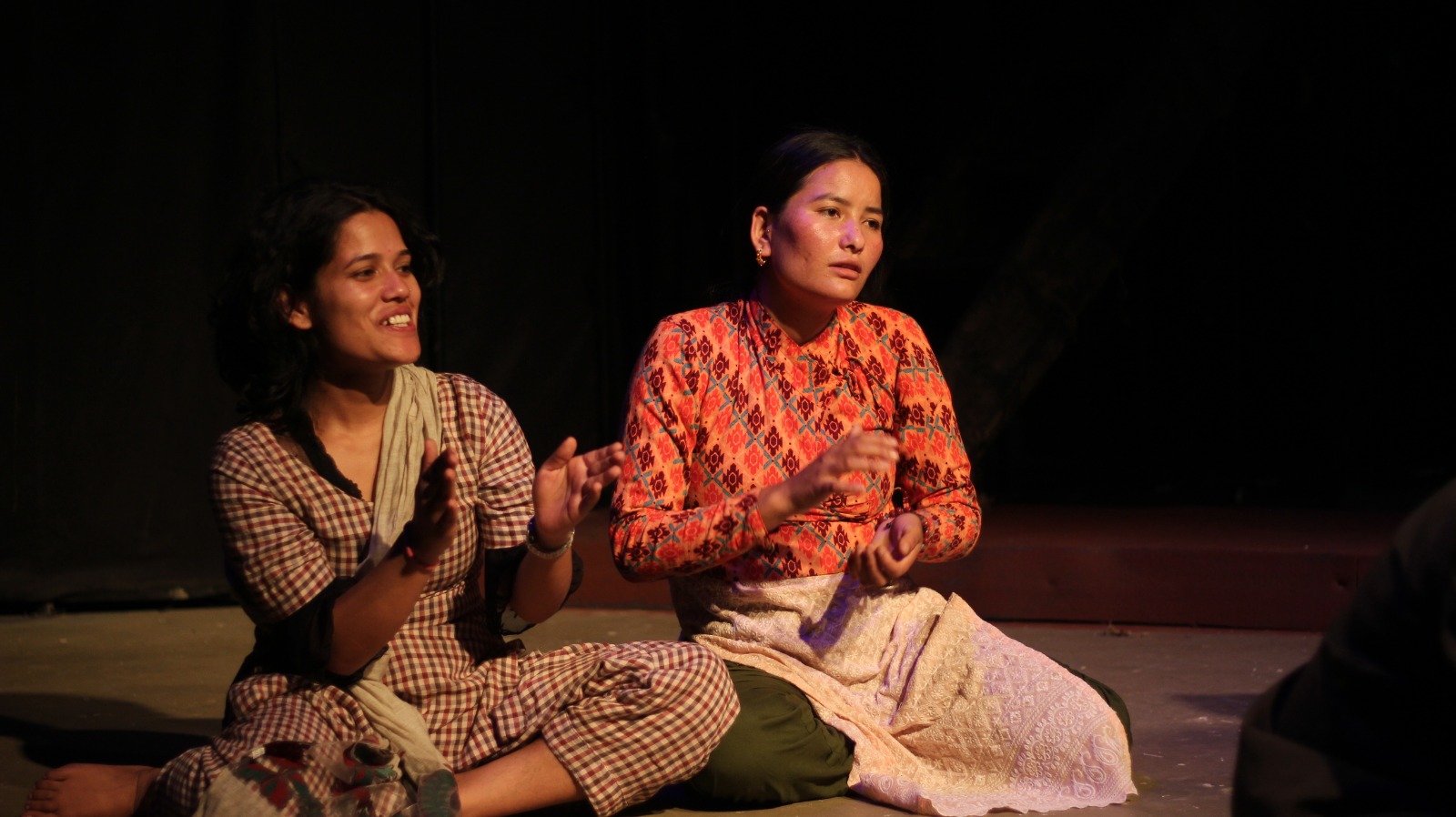
The play’s authenticity towards portraying Karnali society is very consistent. With more than half of the crew belonging to the Sudurpaschim region, their use of the Khas dialect, filled with light-hearted banter, feels natural.
Inspired by director Sunar’s personal experiences, ‘Acheta’ takes a dig at the deeply rooted societal issues that hinder someone’s life. By the end, the audience is left with a deeply unsettling awareness of this injustice.




 16.76°C Kathmandu