



 20.73°C Kathmandu
Mon, Oct 12, 2026
Culture & Lifestyle
Food review: An authentic taste of Lebanon
Beirut’s Lebanese menu favours balance and freshness, letting vegetables and herbs take centre stage.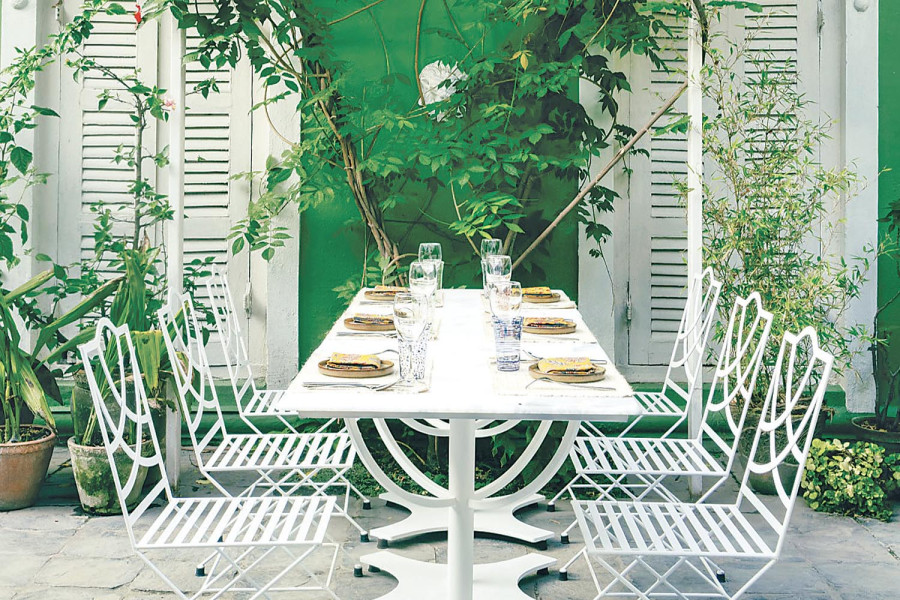
bookmark![]()
‘Magnificent Salad’ ![]()
Mezze Platter ![]()
![]()
Shrinkhala Chand Thakuri
Published at : July 24, 2026
Updated at : July 24, 2026 06:25
Kathmandu
Lebanese food has become familiar enough in Kathmandu that most people think they already know it. Shawarma has become street food. Hummus appears on café menus. Falafel is not an unfamiliar word. But somewhere between those borrowed dishes and their original context, it is easy to forget that Lebanese cuisine was never meant to be built around one signature item. It is a cuisine of many small plates, herbs used generously rather than sparingly, vegetables that receive as much attention as meat, and meals designed to cling.
Beirut, tucked inside Gairidhara's Hotel Noya, understands this better than most.
Before the food even arrives, the restaurant establishes its identity. White walls are softened by climbing greenery, a subtle nod to the white and cedar green of the Lebanese flag. Deep reds appear in rugs and furniture without overwhelming the room, completing the palette. Earth, water and plants are recurring motifs; a small koi pond sits in one corner, while both indoor and outdoor seating make the space feel less like a restaurant and more like someone's carefully maintained courtyard. It is elegant without trying too hard.
That same restraint carries onto the table.
The ‘Magnificent Salad’ is perhaps the restaurant's prettiest dish. Apples, cherry tomatoes, roasted peppers, cucumber, feta, falafel, lettuce, parsley, basil and thyme are brought together with tahini dressing and roasted sesame, creating something that looks almost like summer on a plate. Every bite changes texture. Crisp apples give way to creamy feta, crunchy falafel breaks against soft greens, while the nutty dressing ties everything together.
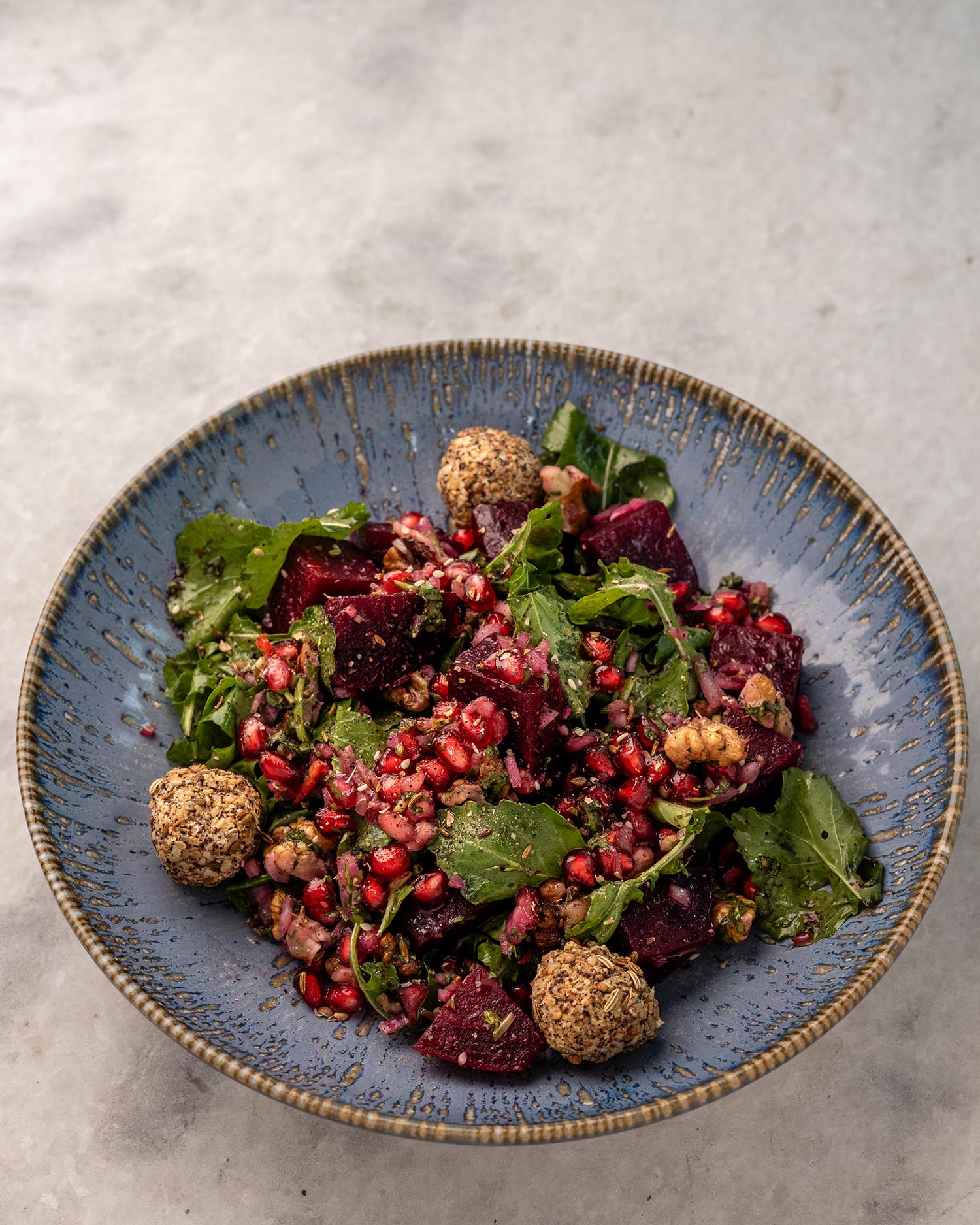
Yet despite all that variety, the flavour remains surprisingly reserved. Fresh, balanced and undeniably pleasant, it never quite develops into something memorable. It is a salad you enjoy while eating more than one you think about afterwards.
Falafel, however, is easier to remember.
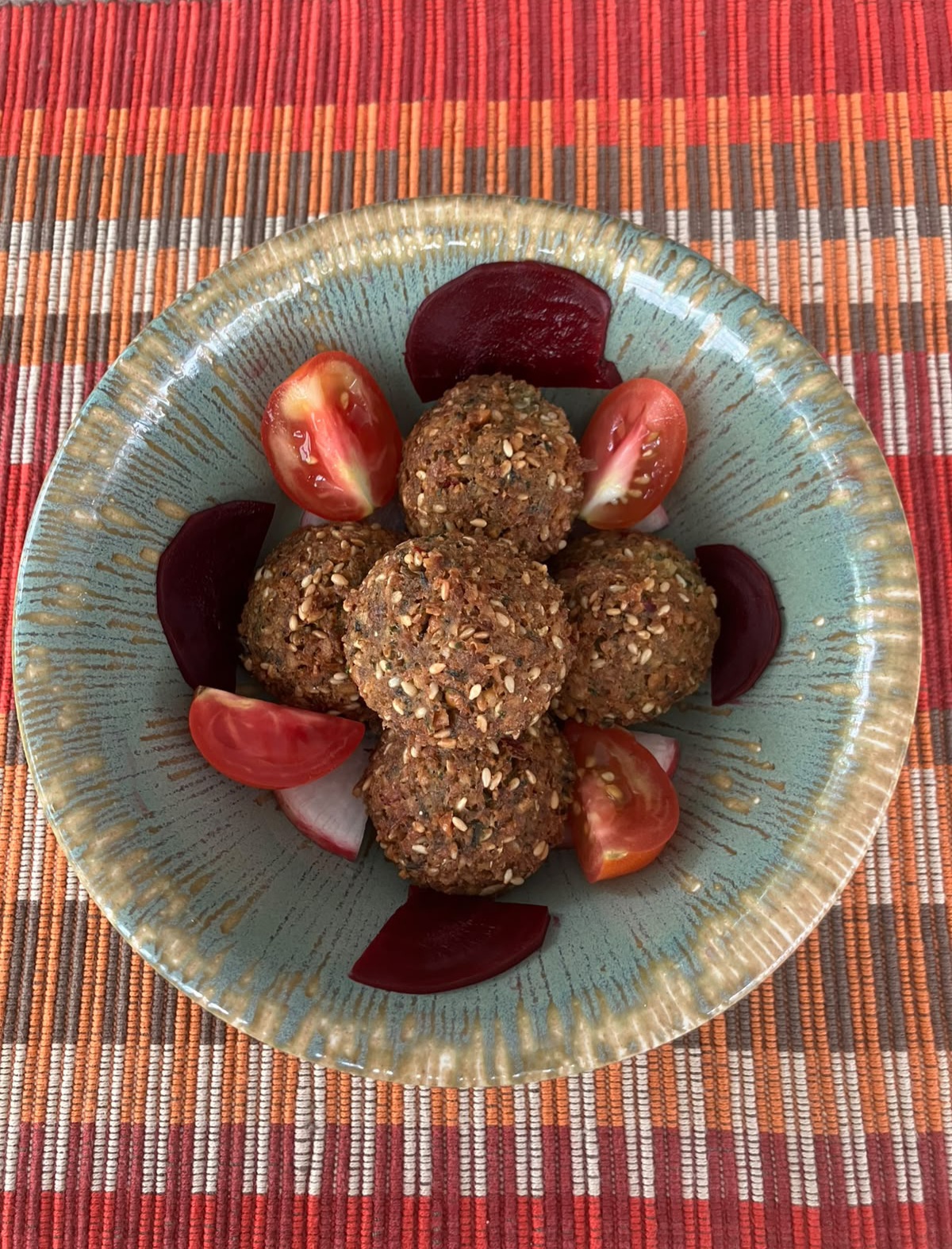
Made from ground chickpeas mixed with herbs and spices before being fried, falafel is one of the Middle East's most recognisable dishes. Beirut's version arrives crisp outside and fluffy within, with a texture that Nepali diners might instinctively compare to pakoda. The garnishes feel intentional rather than decorative, particularly the lightly pickled beetroot and apple, whose acidity cuts through the richness.
The accompanying sauces tell two different stories. Tahini, the classic sesame paste brightened with lemon and garlic, is mild and slightly nutty. On its own, it feels almost incomplete, requiring time for its subtle flavours to register.
Shatta, by contrast, announces itself immediately. The fiery chilli condiment, whose Arabic name simply means ‘hot pepper’, feels almost tailor-made for Nepali palates. Together with the falafel, the combination is easily among the strongest dishes on the menu.
Hummus follows naturally.
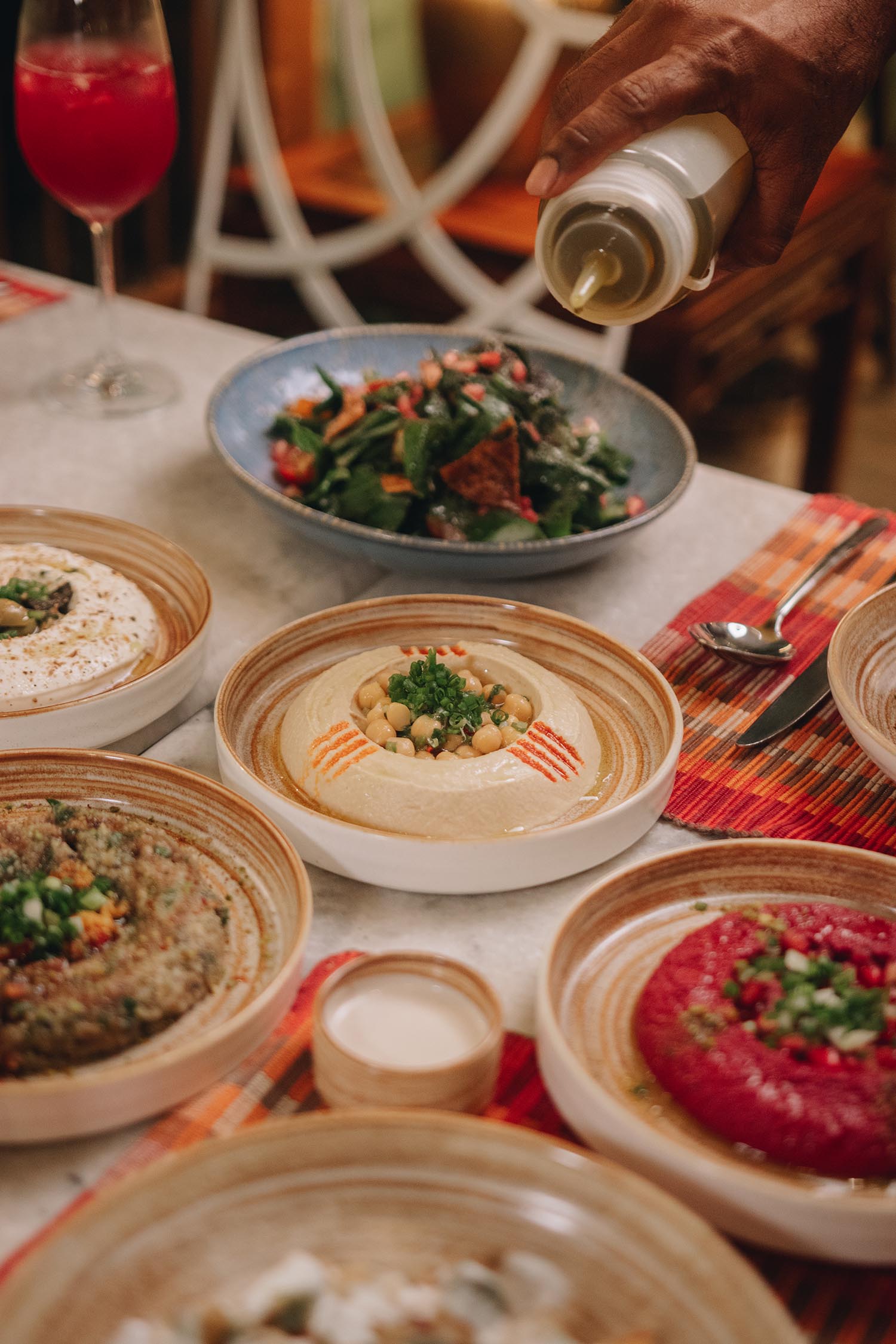
Few dishes represent Lebanon as universally as hummus, a blend of chickpeas, tahini, lemon and olive oil that has travelled across continents long before ‘plant-based’ became fashionable. Beirut presents it beautifully, the ivory-coloured dip streaked with green herbs and red spices, unintentionally echoing the colours of the Lebanese flag.
Its texture is impeccable: smooth, creamy and delicately lemony. Yet, much like the salad, it remains restrained. On its own, the hummus feels heavy rather than vivid, as though it is waiting for something else to complete it.
That something is the pita.
Soft, warm and understated, the bread transforms the experience entirely. Neither component is especially exciting alone, but together they find the balance that each lacks individually.
The za'atar manakeesh offers another glimpse into everyday Lebanese cooking. Often described as Lebanon's answer to pizza, manakeesh is a flatbread spread with olive oil mixed into za'atar, the fragrant spice blend of wild oregano, thyme, toasted sesame and tangy sumac before being baked in a brick oven.
Served on a traditional brass tama plate, Beirut's version delivers the earthy aroma the spice blend is known for. It would perhaps have benefited from arriving warmer and softer. Instead, the bread had already firmed up slightly by the time it reached the table. Even so, paired with the restaurant's shatta, it remained deeply satisfying.
Dessert proved to be the meal's only real stumble.
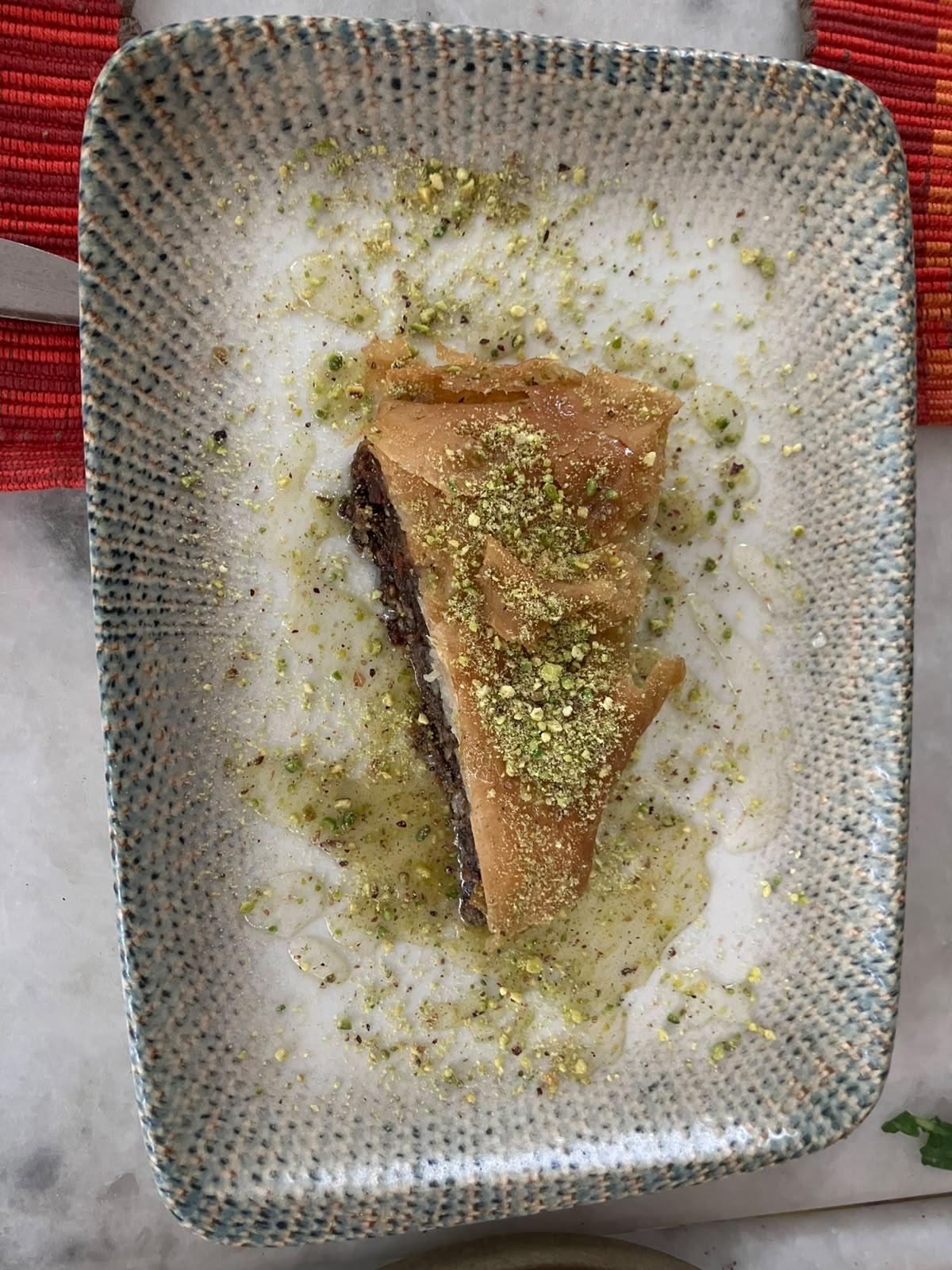
Baklava, one of the region's oldest pastries, layers filo sheets with chopped nuts before soaking everything in syrup or honey. Beirut's interpretation leans generously into richness. For Nepali diners, the warm, nutty filling recalls gudpak more than anything else.
The pastry, however, is noticeably thicker than expected, while the syrup, nuts and warmth all compete simultaneously for attention. Rather than complementing one another, the flavours begin to overwhelm. Coming after a meal that starts so fresh and herbaceous, the heaviness feels even more pronounced.
Still, Beirut is less interesting because of individual highs and lows than because of what the menu achieves as a whole.
For anyone observing Shrawan, when many Nepalis turn vegetarian for the month, Beirut makes a compelling case for looking beyond familiar meat substitutes. Chickpeas in the hummus and falafel provide generous plant protein, salads contribute fibre and healthy fats, while pita and manakeesh round out the meal with comforting carbohydrates. The result is nutritious without ever feeling like healthy food.
More importantly, Beirut dismantles one persistent misconception: that vegetarian food is automatically boring. It isn't trying to imitate meat or apologise for the absence of it. Instead, vegetables, herbs, legumes and spices are treated as worthy centrepieces in their own right.
Even the details reinforce that philosophy. The plating mirrors the earthy tones of the restaurant itself, while thoughtfully selected cutlery for each course makes the meal feel considered from beginning to end.
The food may not always chase bold flavours, but perhaps that isn't the point. Beirut isn't interested in overwhelming diners. It prefers balance over spectacle, subtlety over excess and freshness over indulgence.
Not every dish reaches the same height, but together they offer something singular in Kathmandu: a meal that introduces another culinary tradition without diluting it for local tastes.
Restaurants often chase the dish you'll photograph or remember months later. Beirut is after something less obvious. It leaves you remembering how the meal felt: fresh without being austere, filling without feeling excessive, and carefully considered from the first plate to the last.
Shrinkhala Chand Thakuri
Shrinkhala Chand Thakuri is a Culture and Lifestyle intern at The Post. She is an English Literature and Journalism major.


Most Read from Culture & Lifestyle

It’s a bird … it’s a plane … it’s the Indian ambassador’s farewell tweets

‘Tenzing’ puts the Sherpa at the centre of the Everest story

How should Nepal navigate a world in reorder? Rajib Upadhya on geopolitics and foreign policy

How Anup Poudel took Nepali cinema to Cannes
A Nepali photographer rediscovers Calcutta after decades
Editor's Picks

Constitutional Bench caught in seniority, ‘pick and choose’ dispute

A Dom boy’s long road to becoming a doctor

From blankets to handmade dolls, two foreign women bring comfort to flood survivors

News Analysis: When institutional defence exposes institutional fault lines
It’s a bird … it’s a plane … it’s the Indian ambassador’s farewell tweets
E-PAPER | October 12, 2026

×