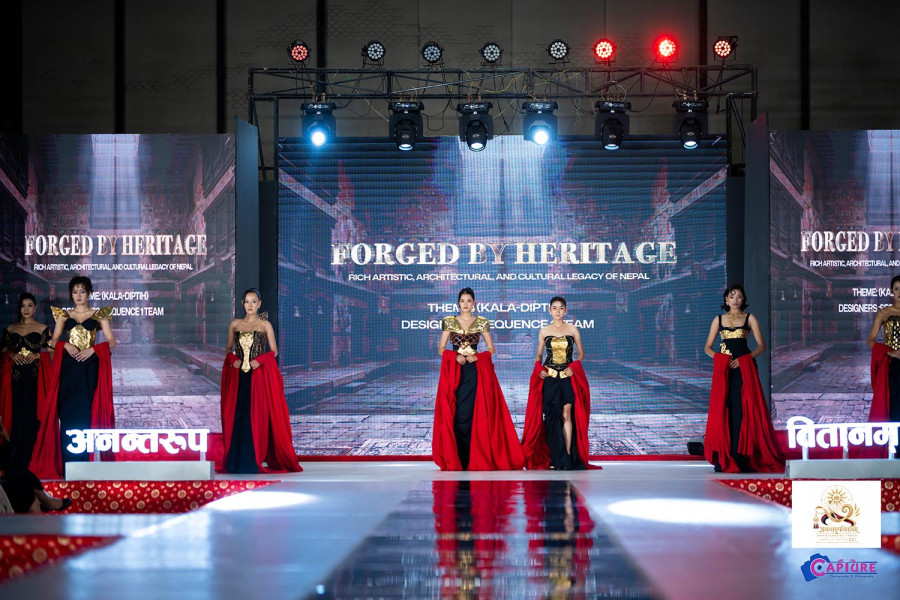
At NCFT’s graduating show, 54 designers focused on Nepal’s architecture, agricultural traditions, and traditional jewellery.Sequence 1 ‘Forged by Heritage’ Courtesy of Capture
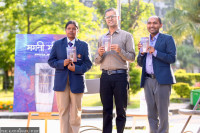
Nepal’s rich cultural heritage offers a wealth of inspiration for fashion. At Namuna College of Fashion Technology (NCFT)’s ‘Journey of Fashion XXI: Anantarupavitanam’, 54 graduating designers presented collections under the theme ‘Cosmic Threads of Heritage: Nepal Beyond Time and Universe’ on Saturday, October 10.
Held at The Plaza in Lalitpur and choreographed by Rojin Shakya, the show featured designers from NCFT’s 21st batch as they completed their four-year Bachelor of Fashion Design and Management (BFDM).
Anantarupavitanam, meaning “the infinite tapestry of forms”, reflected the diverse expressions of Nepali lives through fashion.
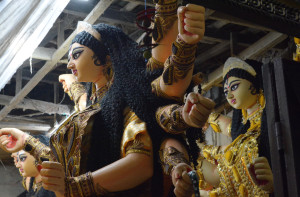
The collections were organised into six sequences, each one exploring a different theme. ‘Forged by Heritage’ focused on Kala-Diptih, while ‘Terra Sutra’ drew inspiration from Nepal’s agricultural traditions. ‘Nepalese Gilded Spine’ explored traditional Nepali jewellery, followed by ‘The Shape of Returning’, which focused on the theme of nomads. ‘Abhaya-Shakti’ represented goddesses from Hindu tradition, while the final sequence, ‘Kalpa Sutra’, explored the evolution of Nepal’s heritage and culture.
The show was introduced with six promotional designs from each of the sequence teams.
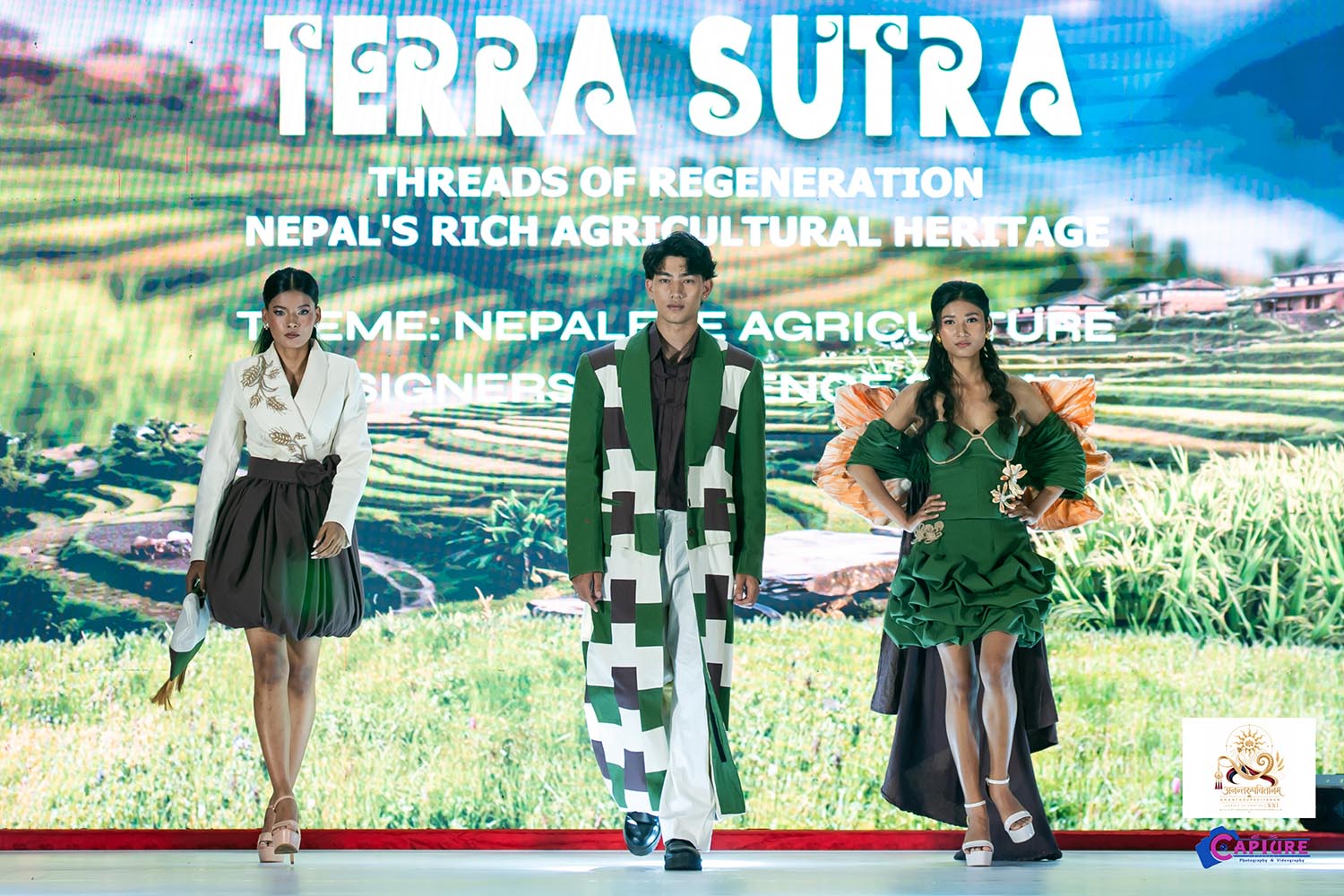
Sequence 2 ‘Terra Sutra’
The first sequence, ‘Forged by Heritage’, explored the theme of Kala-Diptih through Nepal’s heritage sites and traditional craftsmanship. Among its eight designs, ‘Swarnaprabha’ was designed by Naincy Shrestha, which gave voice to Nepal’s architecture, Thangka and Paubha paintings, and art in a contemporary silhouette.
The design featured a structured corset contrasted with a lightweight, deep-red shawl, along with metalwork jewellery. Metalwork jewellery inspired by fenestra of temples and historical places accentuated the dress with symmetrical brass wirework.
Moreover, the detailing in the design incorporated stylised lotus forms, peacocks, abstract Bhairav eyes, and fish-scale textures. The antique-gold brass created visual richness in its depth and texture, contrasting with the idea of a black corset and red shawl. Black symbolises depth and strength, red conveys vitality, gold symbolises sacredness, and Nepal’s artistic richness.
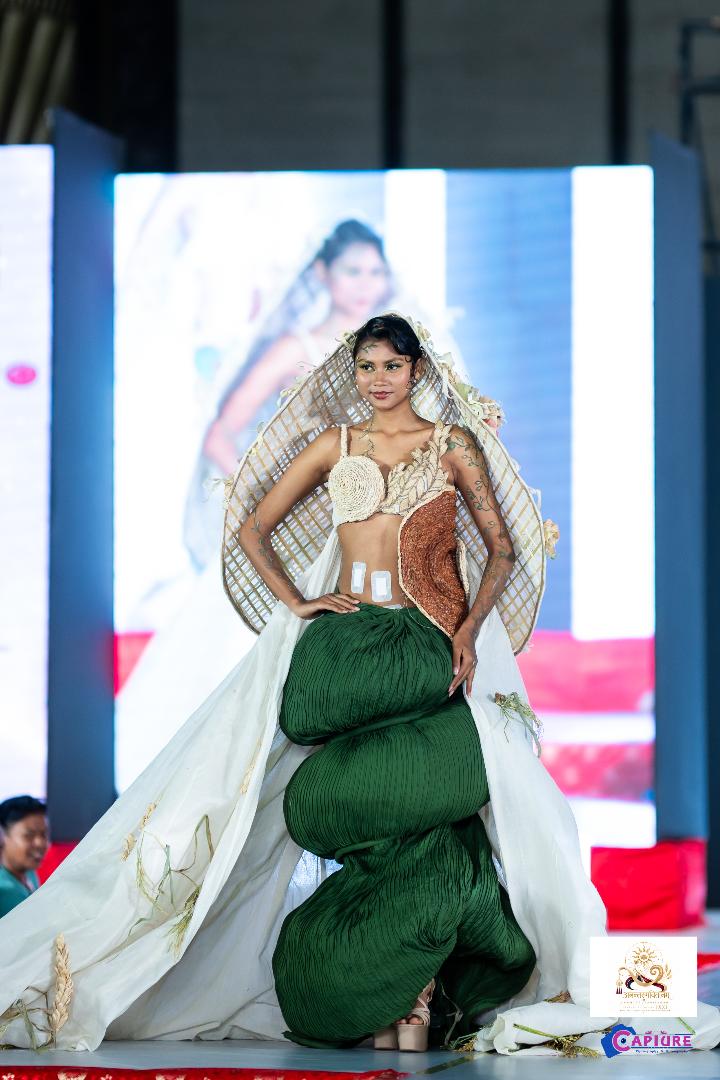
‘Uravara-The Living Field’ designed by Sequence 2 team
Similarly, the second sequence, ‘Terra Sutra’, focused on Nepal’s agriculture. The major attraction of this sequence’s designs was the ability to present the raw version of the country’s agricultural crops, such as rice, wheat, and millet, in contemporary silhouettes.
The cycle of harvesting became a metaphor for sustainable fashion. Each model presented the designs in two different ways on the runway, revealing alternative looks.
The sequence’s creative wear ‘Uravara-The Living Field’ captivated the audience’s attention with its raw nature of using wheat, rice, and millet, signifying agricultural life. Raw crops became a means of expressing the collection’s ideas.
One of the team members, Suhangma Limbu, said, “The major inspiration behind this artwork was farmers”.
Its headgear was modelled on the ghum, a traditional head covering worn by farmers during rainy weather, while the deep green skirt with rounded layers was inspired by the sculptural form of aali (agricultural plots). “This collection took six to seven days to complete,” says Limbu.
‘Magarika’ designed by Shreethika Shakya
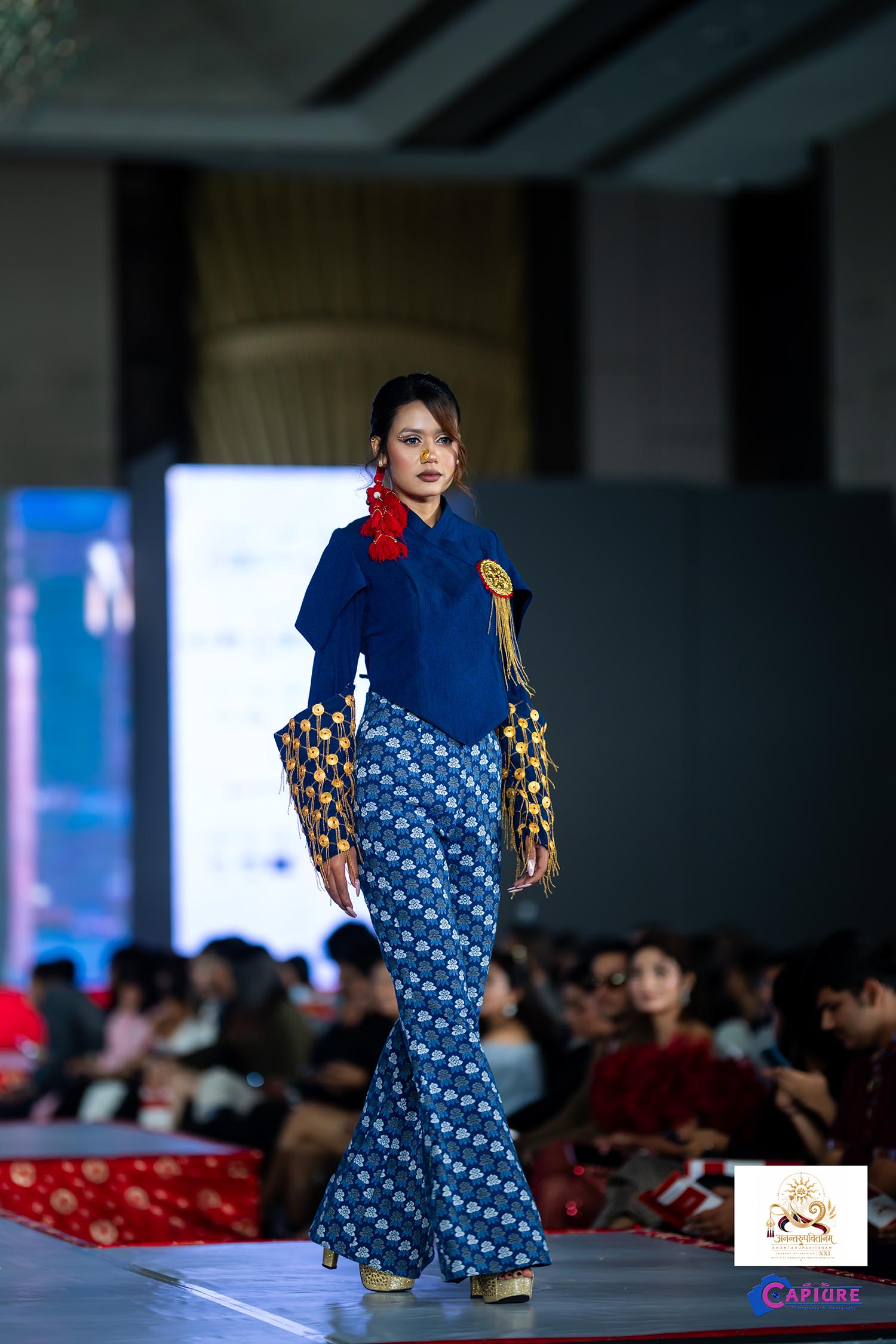
The following sequence, such as ‘Nepalese Gilded Spine’ carried the theme of traditional Nepali jewellery. It featured 9 contemporary designs with one creative wear. The dresses combined structured tops attached with jewellery and ornaments, and Nepali dhaka fabric trousers for all designs.
The jewellery attached to the tops was inspired by different communities, including Magar, Newa, and Brahmin, highlighting the diversity in Nepali ornaments. The use of jewellery was not limited to the dresses but also extended to hair accessories.
‘Magarika’ designed by Shreethika Shakya was inspired by Magar jewellery. The design featured 63 fuli on each sleeve, and the chains added movement as the model walked the runway. Shakya said positioning the ornaments was challenging, as she wanted them to be recognised as traditional jewellery rather than mistaken for buttons.
Similarly, ‘Swarna Sutra’, designed by Kusum Wagle, drew inspiration from the tilhari, a traditional ornament worn by married women. Wagle explored how its cultural significance could be incorporated into menswear, without simply reproducing the jewellery itself.
‘Parinama’ designed by Sequence 6 team
The design paired a cropped jacket with trousers, using deep green to evoke nature and cultural richness. Eleven tilharis were incorporated into the garment as button-like details, transforming the traditional ornament into part of the outfit’s structure.
“When we think about jewellery, we usually think of women. I wanted to change that,” Wagle says.
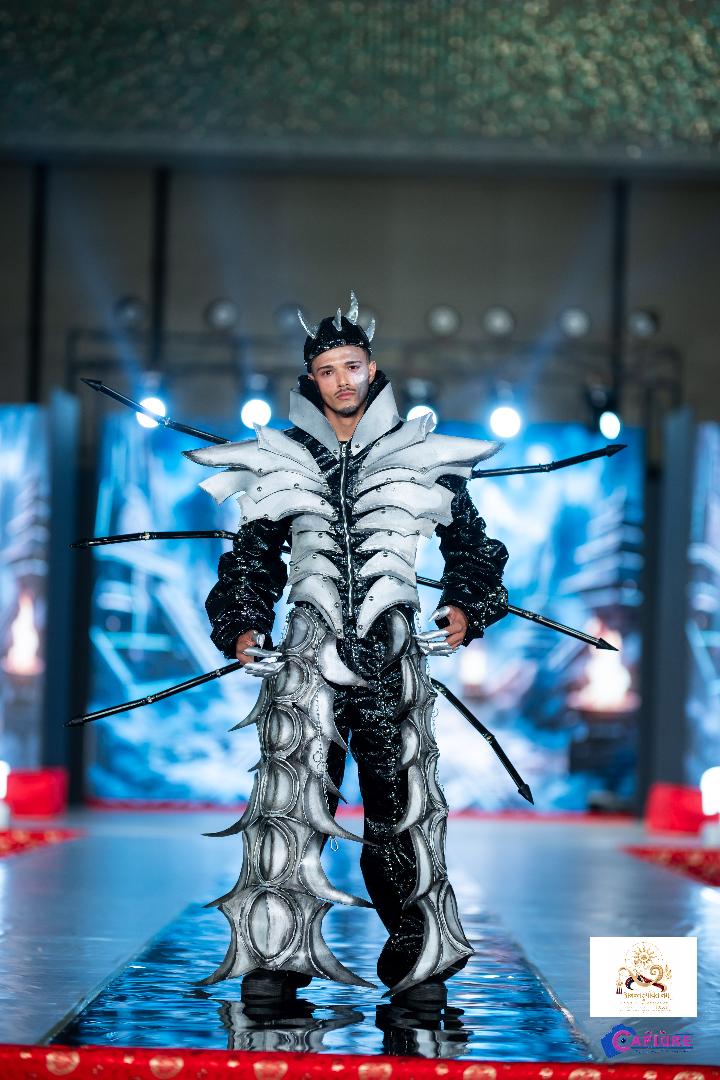
The final sequence, ‘Kalpa Sutra’, expressed the evolution of Nepal’s heritage and culture through artificial intelligence, cosmic evolution and futuristic design. Rather than viewing culture as something rooted only in the past, the collection imagined how it might evolve alongside technology.
Its creative wear, ‘Parinama’, designed by the sequence’s team, envisioned a speculative future inspired by machines and engineered systems. Sculpted black foam forms, metallic surfaces, and armour-like elements shaped the silhouette, while fragmented silver angles and details such as chains, rings, studs, and metallic components reinforced its futuristic character. A battery-operated, claw-inspired hand added movement to the design, bringing its mechanical aesthetic to life.




 19.64°C Kathmandu