A dying professor’s lessons in the classic memoir prompt a young writer to reflect on how the pursuit of success can distract us from the little moments that make life meaningful.
Last week, while everyone around me was going door-to-door for Dashain tika, I was standing in front of my bookshelf, mulling over what to read.
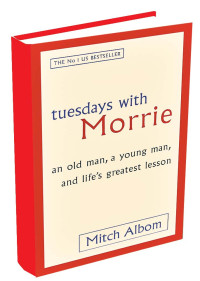
Just before the festive season, I had bought a pile of books, including ‘Tuesdays with Morrie’ by Mitch Albom, the 1997 memoir that has received a waterfall of affection across the internet over the decades. The book had appeared on my social media feed several times, with readers describing it as a tearjerker. I knew its general premise. And that only made me want to pick it up and dive right into it. I wanted to picture my own life with Morrie, and I wanted the book to be a space where I could cry about it.
Nearly thirty years after its publication, ‘Tuesdays with Morrie’ continues to find readers across generations. It has been embraced as warmly by Goodreads reviewers as by the BookTok community. According to Mitch Albom’s official website, it has sold nearly 18.5 million copies in more than 51 territories worldwide. The book has been reviewed countless times and it hardly needs another account of its lessons. But every reader has their own experience of reading it. The lessons one draws from it might be just as varied.
The memoir follows sports journalist Mitch Albom and his dying former professor, Morrie Schwartz, through the Tuesdays they spend together. At 21, I found myself relating to Mitch, who had been so occupied with his work that he had lost touch with the things that once mattered to him. I could see something of my own dilemmas in his struggle to find meaning in life. At 61, I suspect I will read it as Morrie, and the same words will mean something entirely different.
Throughout the book, Mitch’s love language is food. He brings something on every Tuesday visit. But the greatest gift we can give another person, as Morrie teaches us, is our time. The idea sounds simple until we begin to notice how rarely we give it.
Time is a scarce commodity in today’s attention economy. At a table, for instance, before the food arrives, people are more likely to reach for their phones than talk to each other. On a bus, we are more likely to look at our phone rather than observe the trees passing by. When the whole world is outside the window, why do we keep seeking it through our phones?
And then I question myself: when was the last time I sat with someone and truly listened. When was the last time I made my people feel seen and heard?
What drew me to Morrie was not simply his lessons, but his willingness to remain open to feelings that most of us try to escape. He felt like an older version of myself, holding my hand, hugging me and whispering, “It’s okay. It’s okay to grieve for the people you love.” He did not treat grief or dying as things to be ashamed of. Even as his body gradually withered, he remained willing to feel, to speak, to love and to receive love.
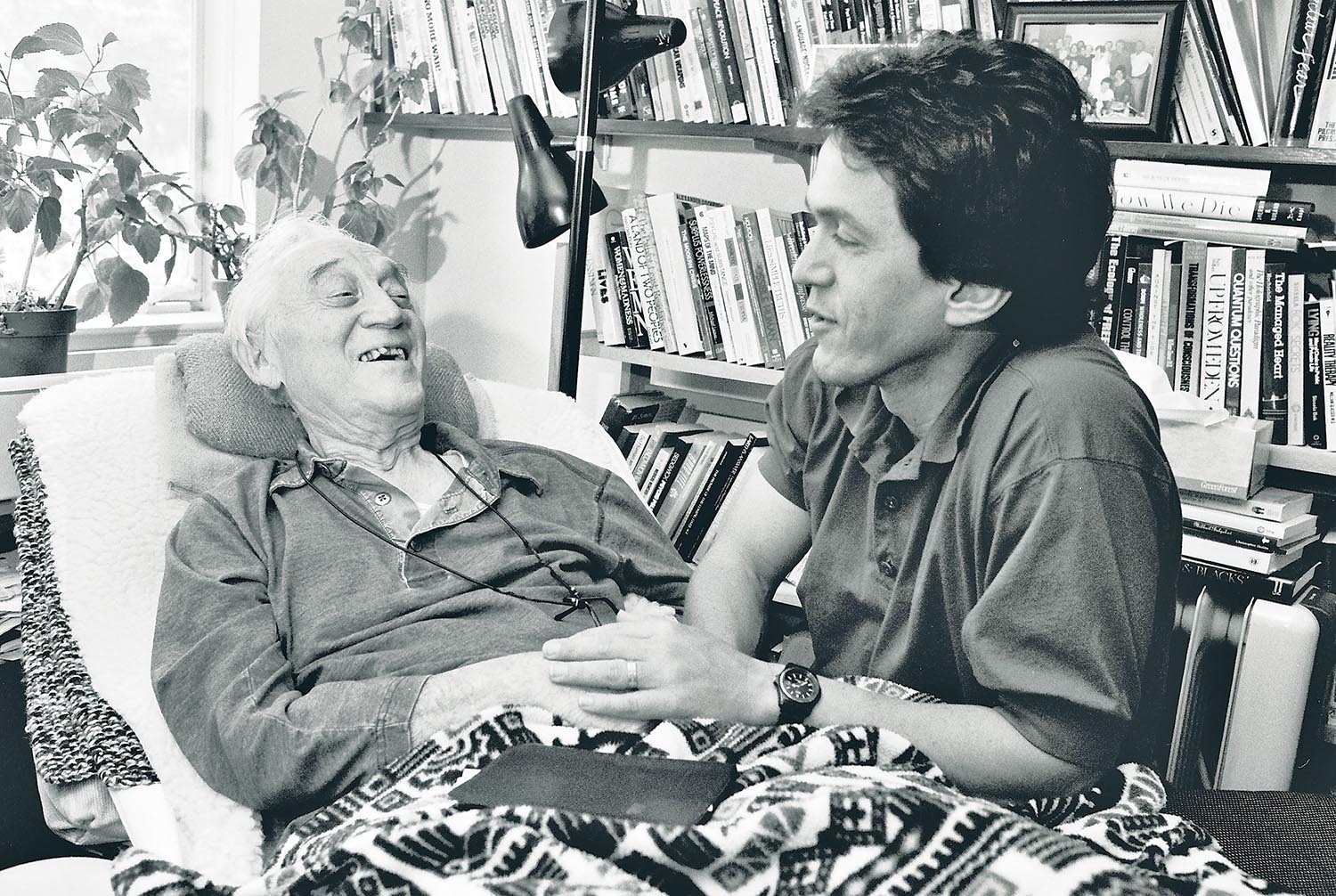
Mitch Albom and Morrie Schwartz in 1995. Photo: Heather Pillar via WUNC
Morrie suggests that we must allow an experience to penetrate us fully before we can let it go. He explains how detachment is more about allowing ourselves to feel it completely, then leaving it behind. Our society often mistakes strength for the ability to carry our heaviest feelings in silence, folding them into ourselves like a crumpled paper.
We conceal our grief, swallow our tenderness and withhold the words that might reveal how much another person means to us. This is why affection goes unexpressed, not because we have stopped loving others but because we keep so much of that love to ourselves. Morrie reminds us not to take human relationships for granted. When time begins to run out, it is love that matters the most.
Death is perhaps the only certainty we have in our lives, yet we avoid it like it were contagious. In conversations, we soften its name, change the subject or dismiss it with “shubh shubh bol” (speak of good things).
When was the last time you actually sat with someone and spoke openly on the subject of death? Perhaps we rarely do.
Morrie does the opposite. As ALS (Amyotrophic Lateral Sclerosis) weakens his body, he speaks about dying without shame. When Mitch asks how anyone can prepare for death, Morrie suggests following what Buddhists do, keeping a little bird on our shoulder that asks each day, “Is today the day? Am I ready? Am I doing all I need to do? Am I being the person I want to be?” The bird is not simply a reminder of death, but to examine how we are living before our time runs out.
We have learnt to say “I love you” but not deeply enough to carry another person’s sorrow. Perhaps this is why Morrie’s words about people accepting substitutes for love stayed with me. We embrace material things and expect a sort of hug back, as Morrie puts it, but the embrace goes only one way.
This very book holds a mirror before us. We run towards the next degree, the next job, the next achievement, telling ourselves we will be happier once we get there. In the rush to become someone, we forget to ask whether we are living the life we actually want. ‘Tuesdays with Morrie’ is a book that speaks to us gently at different ages. And in doing so, it brings us back to the things we often lose sight of in our pursuit of success and achievement. As Morrie puts it, “Once you learn how to die, you learn how to live.”




 15.54°C Kathmandu