Who gets blamed when families fall apart in Nepali films?
More often than not, it is the women. Filmmakers cast daughters-in-law and mothers-in-law as the source of domestic discord, rarely examining the men and social expectations behind it.Keki Adhikari and Aanchal Sharma in Jhinge Dau (2022). Screengrab from trailer
In a familiar trope in Nepali cinema, a son’s marriage becomes the beginning of family discord, with the daughter-in-law blamed for driving a wedge between him and his parents. As tensions mount and relationships unravel, she is often cast as the troublemaker responsible for tearing the family apart.
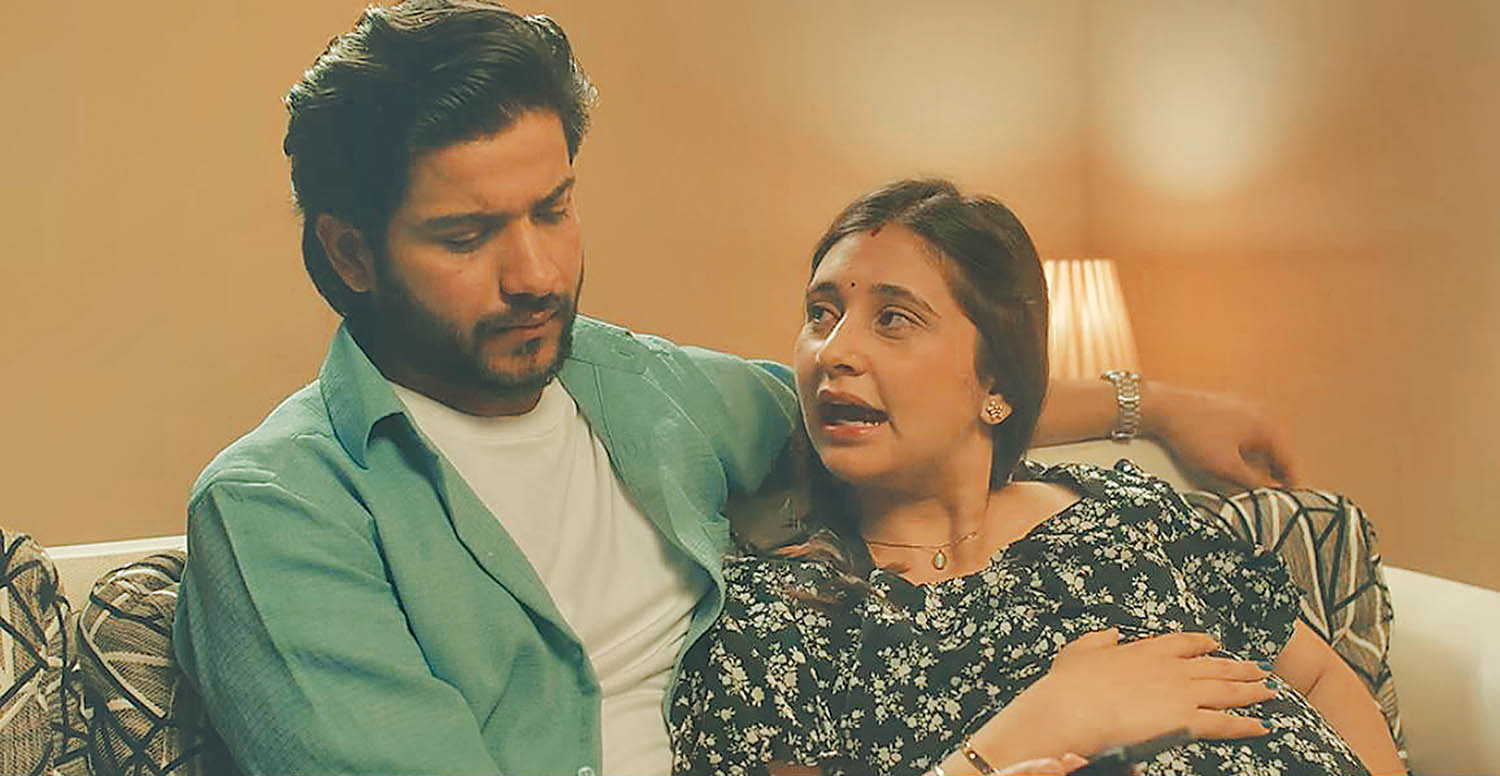
In Deepak Acharya’s recently released film ‘Paran’, Neer Shah plays an ageing father who wants his younger son, played by Mahesh Tripathi, to stay with him. The son, too, is reluctant to leave his parents and move abroad. His wife, however, has other plans. Hoping for a more comfortable life in the United States, she repeatedly presses him to apply for the Diversity Visa lottery. He eventually gives in. When the couple leaves for the US, the father is left to face a very different life.
The film captures the loneliness of ageing parents, but when it comes to explaining its causes, it places much of the blame on the daughter-in-law’s desire to move abroad. The son’s own decision, the family’s economic and social circumstances, and the differing expectations of two generations receive far less attention.
A similar trope appears in ‘Ba: Ek Yoddha’, directed by Hari Lamsal and released in August. Rudra Prasad, played by Divya Dev Pant, gives his daughter the land title deed as a wedding gift, angering his son and daughter-in-law. The latter is portrayed as turning her husband against his parents and pushing him to move abroad. Even the son’s harsh treatment of his father is framed as a consequence of his wife’s influence.
The tendency to place daughters-in-law at the centre of family conflict is not limited to these two films.
The same pattern recurs in ‘Aa Bata Aama’, another film directed by Lamsal and released on October 16. Devaki (Bipana Thapa) leads a happy family until her son moves to Australia, a decision the film attributes largely to his wife’s repeated insistence. When the couple has a child, Devaki too is eventually left with little choice but to move to Australia. The daughter-in-law’s self-interest and lack of concern are portrayed as the driving forces behind the family’s troubles, casting her as the villain.
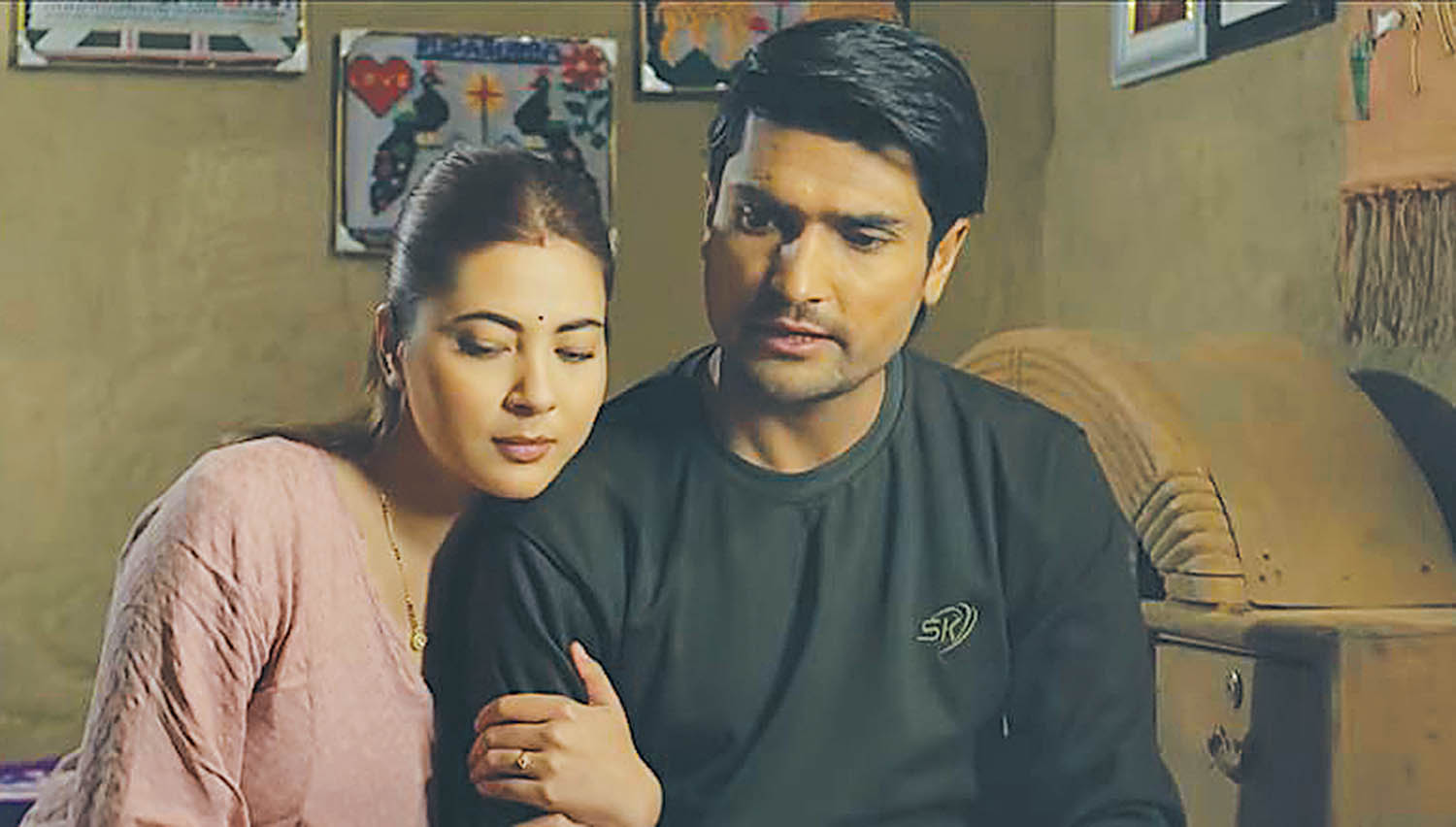
Ramchandra Bohara and Prasanna Karki in Buhari (2025). Screengrab from trailer
In ‘Chha Maya Chhapakkai-2’, directed by Dipendra Lama and released during Dashain, Muralidhar (Deepak Raj Giri) is caught between his wife (Keki Adhikari), who wants to move abroad for a more comfortable life, and his father, who wants him to stay in the village and pursue politics. Here, too, it is the wife’s ambitions that set the family conflict in motion.
The same dynamic appears in ‘Jhingedau-2’, directed by Gyanendra Deuja and released in August. The competing interests and rivalry of two daughters-in-law drive a wedge between two brothers, eventually forcing their mother to leave the family home.
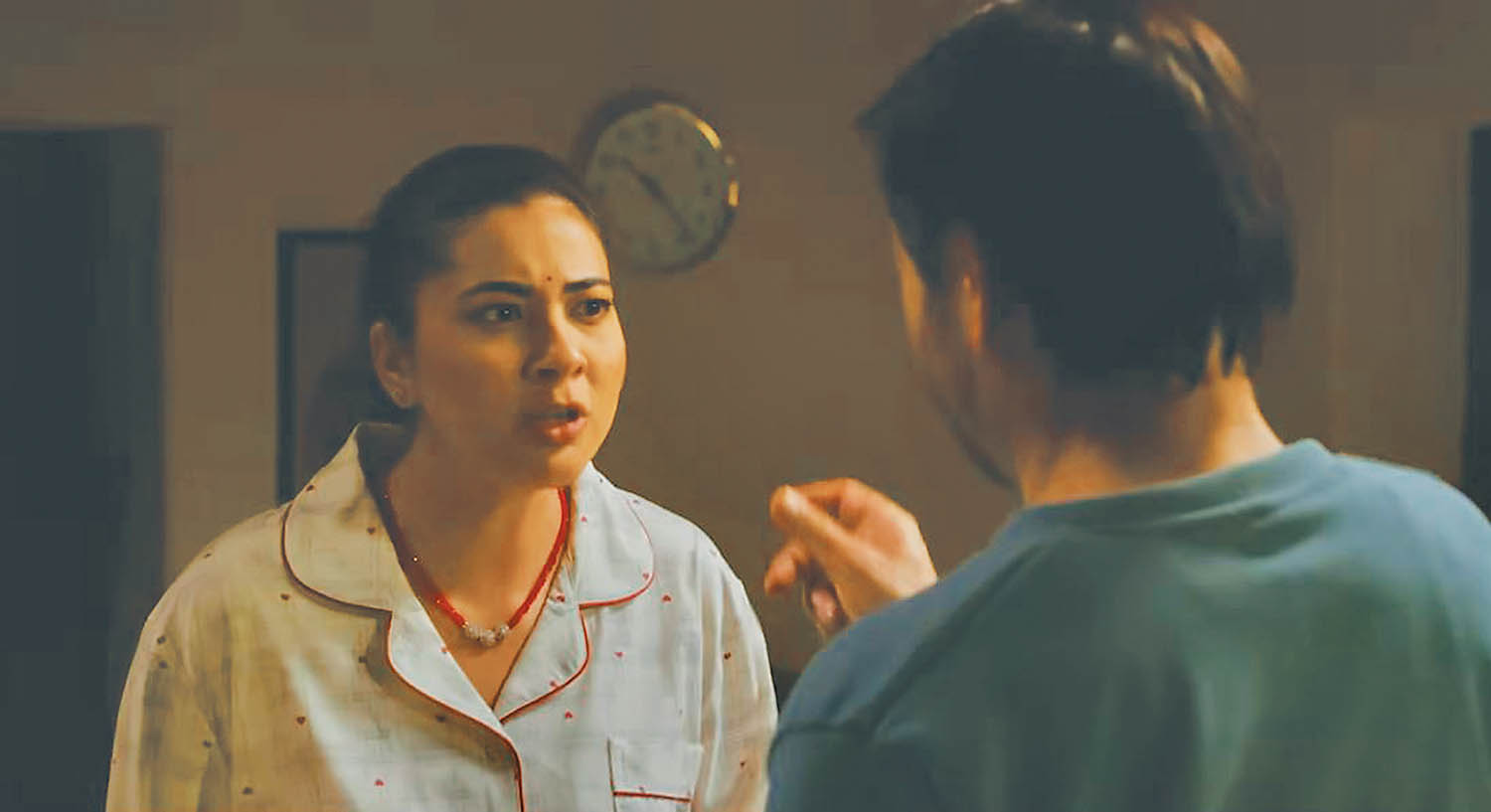
In Dinesh Raut’s ‘Mahabhoj’, released in January, the wife is once again cast as the source of family discord. Bishnu, played by Khagendra Lamichhane, faces pressure from his wife (Anjana Baraili) to repay a loan he took from his father-in-law. Her hostile behaviour at home also drives a further wedge between him and his family.
In all these films, daughters-in-law are repeatedly blamed for family breakdowns, with their ambitions and disagreements portrayed as the source of domestic discord. Far less attention is paid to household power dynamics, financial pressures, the sons’ own choices or the failure of family members to communicate. The films rarely question why sons choose to move out, what their wives want for themselves or whether family expectations leave them little room to make their own decisions.
Some films simply reverse the roles, casting the mother-in-law rather than the daughter-in-law as the villain. In ‘Gaunthali’, directed by Kapil Rijal and released in July, the mother-in-law rules the household while subjecting her daughter-in-law to abuse. She remains a negative figure throughout the film, reinforcing another familiar trope in which women are portrayed as each other’s adversaries within the family.
Women’s rights activist Rita Sah says the way female characters are portrayed in films reflects the patriarchal attitudes prevalent in society. Television serials in the past also routinely depicted women as villains within their own homes. In her view, that narrative persists, with women continuing to be cast as adversaries of other women. “Films reflect how women are viewed in society. Television serials, too, routinely cast women within the family as villains. But that does not mean such portrayals reflect reality,” she says.
Sah also argues that who writes and directs female characters matters.
Screenwriter Sampada Malla traces this tendency partly to the influence of Hindi television serials. She says the lack of attention to strong writing and nuanced characterisation has allowed filmmakers to fall back on familiar stereotypes, often assuming that audiences want to see women portrayed this way. “Every character, whether male or female, needs careful development. But writing has never been given the importance it deserves. We keep portraying women this way because we assume that is what audiences want,” she says.
Malla says stronger character development and a better understanding of what drives people’s choices would help filmmakers move beyond simplistic portrayals of men and women as either heroes or villains.
Anjana Baraili and Khagendra Lamichhane in Mahabhoj (2025). Screengrab from trailer
Citing Abinash Bikram Shah’s ‘Elephants in the Fog’, she says filmmakers should give characters more convincing shades of grey. “There was a time when heroes were portrayed as entirely good and villains as entirely bad. Giving characters shades of grey would help break away from that convention,” she says.
Actor Richa Sharma also points to the male-dominated nature of Nepali filmmaking. With most films written and produced by men, she says, stories tend to emerge from a male perspective. A social mindset that casts men as heroes and inherently good makes it easier for filmmakers to turn women into villains to move the plot forward. “Our society tends to see men as the natural heroes and the good guys. So filmmakers often find it easier to make women the villains to drive the story,” she says.
Society accepts women who conform to the ideals of a good wife and mother, who are self-sacrificing and forgiving. But independent, ambitious and self-confident women are still often viewed negatively, Sharma says. South Asian cinema, she adds, tends either to idealise women or cast them as villains.
“Cinema will not change until we challenge the belief that a woman’s place is in the home and that household responsibilities are hers alone, even when both partners work,” she says.
Film theory describes this as the “male gaze”. Coined by British film theorist Laura Mulvey in 1975, the term refers to the way conventional cinema presents women through a male perspective, often reducing them to objects rather than treating them as active characters with agency. As a result, women’s desires, choices and struggles are often pushed into the background.
Actor and filmmaker Rekha Thapa has challenged conventional gender roles by making women the driving force in her films. She has even turned the familiar hero-rescues-heroine formula on its head, with female protagonists fighting to save male characters. She says films told from a male perspective tend to focus on men’s struggles while overlooking women’s experiences. “In my films, women take the lead. They are the heroes, not characters to be sidelined. Women have their own physical and mental strength, and that should be recognised,” she says.
Thapa argues that male filmmakers naturally reflect the world they see and experience in their work, and that their perspectives shape the stories they tell.
Anjana Baraili and Mahesh Tripathi in Paran (2025). Screengrab from trailer
Thapa says women must take charge of telling their own stories, just as men have long done. More women writing, directing and producing films, she argues, would bring fresh perspectives to Nepali cinema and ensure that women shape stories behind the camera as well as on screen.
Changing family structures also shape how women are portrayed on screen. Sociologist Menuka KC says that as more married sons move out to set up separate households, films continue to hold their wives responsible for family breakdowns, overlooking the sons’ own decisions and the wider social and economic changes behind them.
“In the past, men had little role in household work, leaving women to shoulder most domestic responsibilities. This often fuelled tensions between mothers-in-law and daughters-in-law. Today, more married sons are setting up separate homes with their wives. Yet when families split, women are still held responsible,” she says.
KC says filmmakers often fail to look beyond the surface when depicting family tensions. Generational divides, changing lifestyles and domestic conflicts are real features of Nepali society, but blaming them on one character’s behaviour or self-interest oversimplifies the issues and risks reinforcing the very prejudices that shape such portrayals.
Some Nepali filmmakers have taken a different approach, putting women’s experiences and choices at the heart of their stories. ‘Bulbul’, directed by Binod Poudel, ‘Chiso Maanchhe’, directed by Dipendra K Khanal, and Upendra Subba’s ‘Jaari’ give space to women’s struggles and decisions. ‘Shape of Momo’, a Nepali-language film directed by Triveni Rai and released this year, also centres on a daughter who challenges the belief that women are weak.
But a woman taking the lead does not, by itself, make a film progressive. Unless female characters are given the same complexity as their male counterparts, filmmakers risk replacing one stereotype with another. Screenwriter Malla says Nepali cinema needs to move beyond its simplistic divide between good and bad characters. “We have long treated heroes as entirely good and villains as entirely bad. Characters need to have shades of grey,” she says.




 10.12°C Kathmandu