More than a meal: Inside Nepal’s only zero-waste cafe
At Cafe Zero, potato peels become chips, bottle caps become coasters, and visitors learn how small choices can reduce their environmental footprint. Photos: Provided to the Post
A zero-waste cafe exists to minimise waste and disposables from the time a product is sourced until it reaches the customer’s plate. Such a concept is rare in Nepal, but Cafe Zero is now working to change that.
Opened in 2025, it is an experimental platform where conscious consumption lies at its core. While serving food, the cafe’s goal remains simple: to educate visitors on sustainable living by demonstrating that waste can be reduced, repurposed, and reimagined without compromising anything.
It all started when three green-minded individuals noticed a gap in the waste management industry. While working at Blue Waste to Value, a social enterprise implementing the principles of the 3Rs to maximise the value of waste, Jenson Maharjan, Nabin Bikash Maharjan and Ronish Shakya found that in many parts of the country, a temporary approach to waste management was being taken.
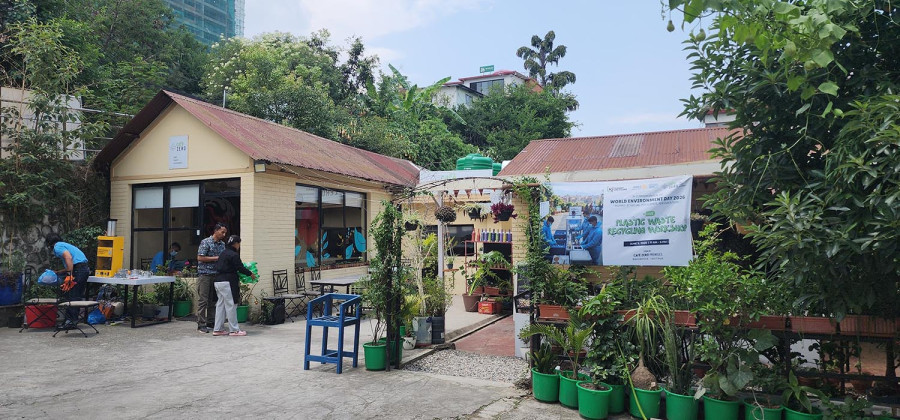
But what they envisioned was quite the opposite: to handle and oversee the entire lifecycle, from its generation to its reintegration into the economy. That vision ultimately led them to start Cafe Zero Nepal, located in Bakhundole, Lalitpur, which is supported by DCA and is in collaboration with ISET Nepal.
Firstly, the produce is sourced from local farmers and then cooked into food items, leaving pre-consumed food scraps at the end. But these do not go to waste. Instead, they are converted into menu additions.
After a French fry is made, what remains is the potato skin, usually considered dirty and covered in mud. But using that same ‘waste’, the cafe has experimented with making chips. Similarly, the branch of cauliflower, a hard and stemy part that is often just fed to cattle, is transformed into a vegetable fritter, Pakora.
“Our team has been trying to come up with new food inventions; sometimes it's a hit, other times we have to start from scratch,” shares Nabin Bikash Maharjan, the co-owner of the cafe, hinting at more additions to the menu in the future.
In addition to encouraging visitors to think consciously about their carbon footprint and sustainable behaviour, the café’s exterior and interior reflect the same philosophy. Visitors can explore various composting methods, ranging from traditional composting and vermicomposting to faster solutions such as electric composters. Even the cutlery is made from discarded wine bottles.
Additionally, the cafe showcases how everyday wares and decor can be made from discarded items. Some are created in-house, while others are sourced from creators who share the cafe’s vision.
The most striking product from the display is the bag. On the outside, a shiny silver covering gives it a sleek, modern finish. With an almost fashion-like statement piece, only a few could guess that the bag was made from WaiWai’s plastics, a bizarre yet practical use of Nepal’s beloved staple snack.
The country's noodle consumption is estimated to rank 15th in the world, according to the World Instant Noodles Association. As much as Nepalis love the snack, the way the waste is managed remains a serious concern.
This unconventional integration of waste into everyday wares is only one of the many inventions Cafe Zero added to their display. Another product created by Moware, in collaboration with Blue Waste to Value, is the Himalaya coaster set; as its name suggests, the coasters are made from HDPE plastic collected in the Himalayas.
“The residues that remain in the mountains are tonnes of plastic bottle caps; these coaster sets are entirely upcycled from that," claims Maharjan. But sometimes, due to geographical adversities and seasonal changes, even extracting the initial waste can be a hassle.
While the cafe serves as a hub for zero-waste implementation, visitors and customers can also learn how waste can generate value through free talk sessions and events. So far, they have conducted more than eight such sessions, inviting experts active in food rescue, natural solutions, and waste management.
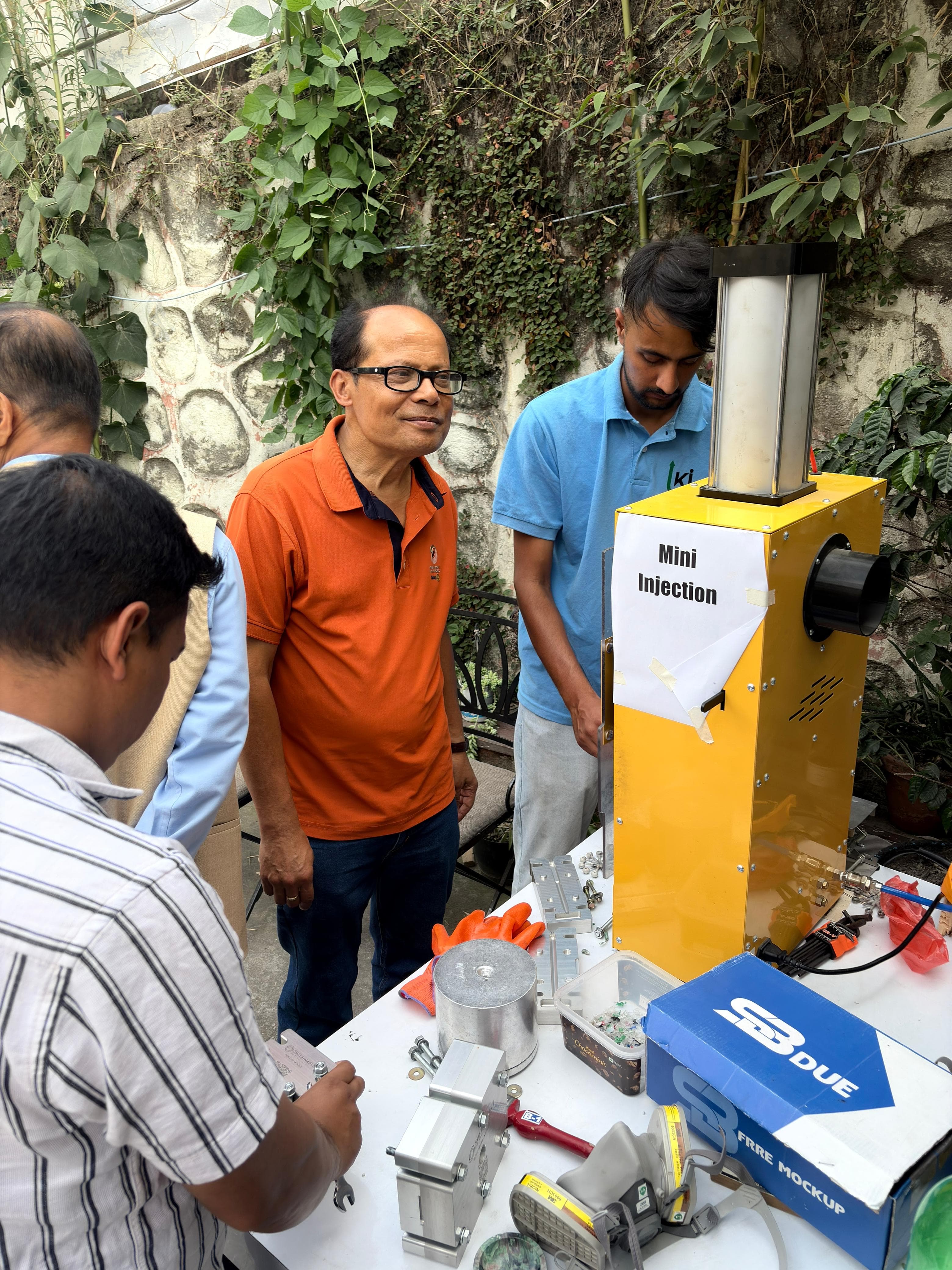
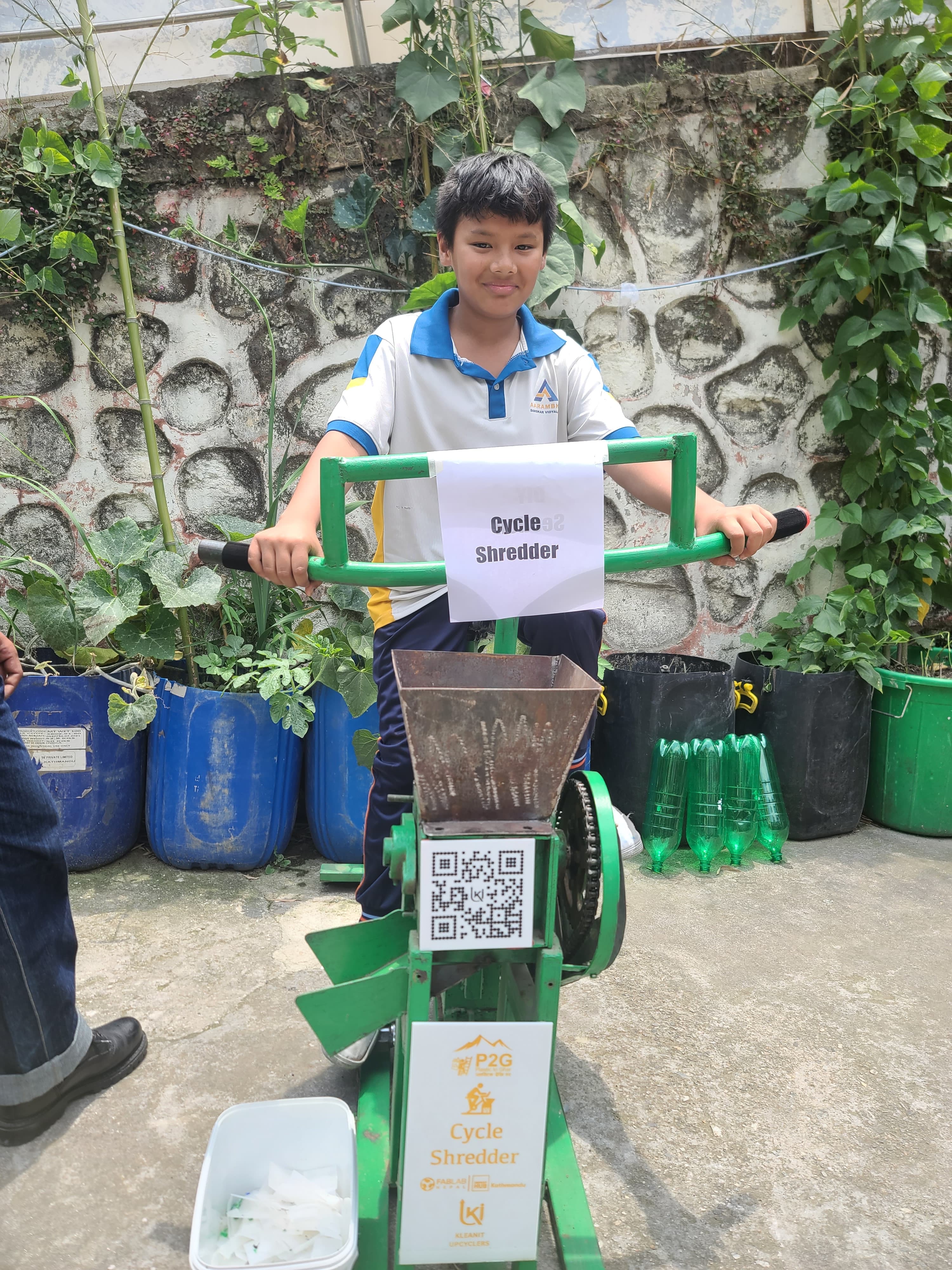
On this year’s Environment Day, a different kind of crowd, including school students, filled the premises. With a bicycle that shreds plastic, the cafe turned physical recreation into one that actually designs usable jewellery from discarded plastic. After the plastic is chopped into fine pieces, it is recycled into bracelets or earrings.
“Our goal was to inform children about recycling while still making it fun. That kind of learning is what sticks the most with young minds," expresses Maharjan. "Every day should be celebrated as Environment Day."
A bicycle that shreds plastic.
Drawing from a background in environmental science and three decades of experience in waste disposal and processing, Maharjan, along with the two co-founders, hopes to inspire a new food culture, one that involves less consumption and more sustainable practices. He believes that the hospitality sector is one of the biggest generators of food waste, so it's time to rethink how resources are being discarded.
"Every day, food waste from banquets gets thrown away. Some of it gets converted into manure or biogas, but both of these options create less value from the initial resources, fuel and the effort it takes to cook," shares Maharjan.
Even a minor effort to inform people about what happens when they throw food from their plates can kick-start a shift in perspective. But currently, this kind of awareness is becoming a challenge to the cafe. He believes CSR (Corporate Social Responsibility) is being treated as part of marketing, and that people still prioritise convenience over conscious consumption.
“From the moment you wake up until the time you sleep, every choice you make leaves an environmental footprint. I believe we should be cautious about that," says Maharjan.




 14.59°C Kathmandu