



 24.51°C Kathmandu

Mon, Oct 12, 2026
Culture & Lifestyle
How Nepal’s gym culture is growing beyond the young generation
Once associated with bodybuilders and intimidation, gyms are now attracting office workers and retirees.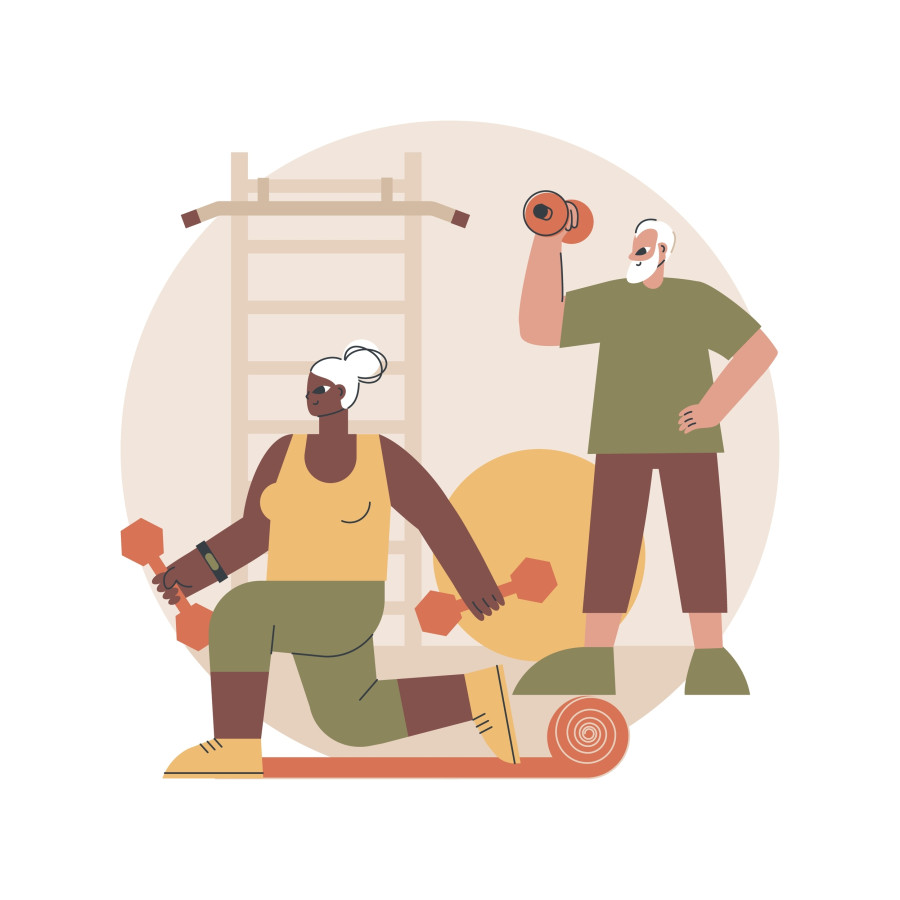
bookmark![]()
Sunil Moktan (right) and Rojen Shrestha Photo: Courtesy of Sunil Moktan
Rivash Rijal
Published at : August 4, 2026
Updated at : August 4, 2026 07:16
Kathmandu
In recent years, the number of young people going to the gym has gone up significantly; this everyone knows. But it is not just a question of how many more people are working out, but also of who is working out. Gym-goers report a certain change in recent years in the weightlifting demographics.
It is not rare to see, during the late afternoon lull, retired folks on the treadmill or homemakers doing bicep curls and, in the evenings, to see 9-to-5 employees in their forties clocking into the gym after clocking out from work. What is behind this shift in the gym-goer demographic? Why are so many more uncles and aunties working out now?
“When I was growing up, people did not think of the gym the way they do now. Then, everyone in the gym seemed to already have massive backs and shoulders. When I told my mother I wanted to go to the gym, she told me it was a place for ruffians and extortionists. This is what people’s understanding was at the time, and it was true in ways; the gym was a place where a certain type of person could be found. This perception scared people. It made it unlikely that most would go [to the gym]," says Sunil Moktan, a powerlifter turned EREPS (European Register of Exercise Professionals)-certified trainer at Visionova Recreation.
It is not a surprise, then, that more everyday people were not crazy about getting that pump.
“The gym is seen as unsafe. People see these heavy weights, plates and rods and think that it's not a good idea to try to lift something so heavy. But training is, of course, controlled and gradual. The lack of correct information makes things hard for us trainers,” adds Rojen Shrestha, a former national dodgeball player turned powerlifter and trainer and is the other half of the two-man training operation at the gym.

“Social media definitely plays its part. Viewers see reels online of others working out. There are many fitness creators in Nepal pushing people to work out and explaining the benefits of doing so. That challenges traditional beliefs. It is not only Nepali creators. People have access to content from all over the world. Fitness content has always been big in the West, and as Nepali viewers see more of that, it changes who comes to workout,” Shrestha says.
Moktan adds, "Schools used to focus on education. That was the only thing that mattered – you had to study well. Now, most schools also focus on extracurricular activities and fitness as important things. If children come home with a certain idea, or if parents see what schools are focusing on, that helps to change people’s perceptions too.”
“Doctors are also to thank for the increase in older people going to the gym. Doctors will recommend their patients go to the gym to help them counteract loss of strength or if they have high cholesterol and other such things,” Moktan said.
“The gym is a preventive thing. It helps reduce the risk of health complications. Doctors will send patients to the gym if something goes wrong, but medical professionals should be telling people to start working out so things don’t get a chance to go wrong,” he also added.
There are still ways in which working out at the gym is seen in a negative light.
“Parents will tell their kids that so-and-so's kid went to the gym and got injured in such-and-such way, so you shouldn’t go. Another popular misconception is that working out at a young age will stop you from getting taller. There are many other misconceptions. It is not that everybody, suddenly, has adopted good sources of information. People have, but most have not,” Shrestha said.
People’s source of information repeatedly came up as the primary reason for the change in demographics but also the main problem in the industry.
“The gym has a lot of things that are new to a lot of people. For example, with diets, we recommend people eat a certain way so they can gain muscle. It is very common that our clients do not get enough protein. Clients do listen to us, but the people coming here are already better informed than most. It shows how well informed the average person might be,” Shrestha said.
“It is our part of our job as well to make sure people are well informed and understand what they are doing and why. But we alone cannot change everyone’s thinking. Other members of society whose voices are important need to also speak,” concludes Moktan smilingly.
Rivash Rijal
Rivash Rijal is a culture and lifestyle intern at the post. He is also a rising senior at St John's College in Santa Fe, NM. He will be graduating from the class of 2027 with a BA in Philosophy, Literature and Natural Sciences.




Most Read from Culture & Lifestyle

It’s a bird … it’s a plane … it’s the Indian ambassador’s farewell tweets
‘Tenzing’ puts the Sherpa at the centre of the Everest story

How should Nepal navigate a world in reorder? Rajib Upadhya on geopolitics and foreign policy

How Anup Poudel took Nepali cinema to Cannes
A Nepali photographer rediscovers Calcutta after decades
Editor's Picks

Constitutional Bench caught in seniority, ‘pick and choose’ dispute

A Dom boy’s long road to becoming a doctor

From blankets to handmade dolls, two foreign women bring comfort to flood survivors

News Analysis: When institutional defence exposes institutional fault lines
It’s a bird … it’s a plane … it’s the Indian ambassador’s farewell tweets
E-PAPER | October 12, 2026

×