



 20.73°C Kathmandu

Mon, Oct 12, 2026
Culture & Lifestyle
What Nepali cinema has changed—and what it hasn’t
The Board’s ‘Old Is Gold’ exhibition offers a window into how Nepali cinema—and Nepali society—has changed, while revealing what remains familiar.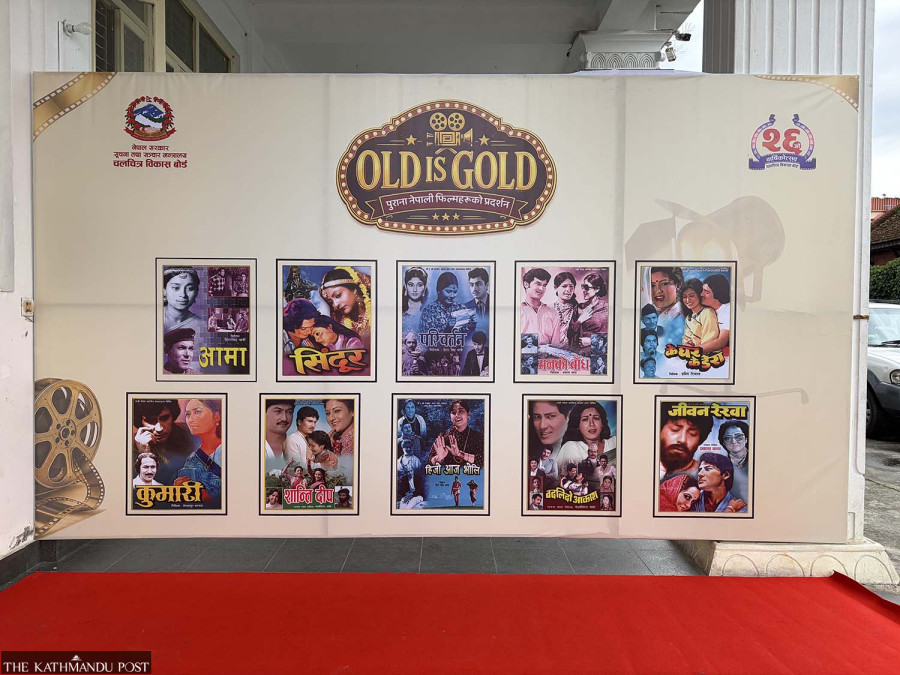
bookmark![]()
![]()
Shrinkhala Chand Thakuri
Published at : August 11, 2026
Updated at : August 11, 2026 07:17
Kathmandu
Before the lights dimmed, the audience was already split between two worlds. Some had come to revisit a past they once lived through. Others had only heard stories about it.
The Film Development Board’s ‘Old Is Gold’ offers more than a chance to revisit old Nepali films. The exhibition features ten digitised films, including ‘Aama’, ‘Sindoor’, ‘Pariwartan’, ‘Manko Baandh’, ‘Kumari’, ‘Jeevan Rekha’, ‘Badlindo Aakash’, ‘Ke Ghar Ke Dera’, ‘Shantideep and Hijo Aaja Bholi’.
According to Film Development Board chairperson Dinesh DC, the programme was conceived as more than an anniversary event.
“An anniversary should not only mean cutting a cake and exchanging greetings,” he says. “A good way for an institution to mark its anniversary is also by bringing the history it has preserved back before the public.”
The technical development of Nepali cinema is immediately visible. Camera quality, sound, editing and production have improved significantly over the decades.
In ‘Sindoor’ conversations often unfold through long, largely static shots, while transitions between scenes can feel abrupt to viewers accustomed to the quicker cuts and multiple camera angles of contemporary cinema.
The films preserve not only stories but fragments of everyday life: of streets that no longer exist, fashions long abandoned, accents that have softened with time, and homes built around values that have since evolved.
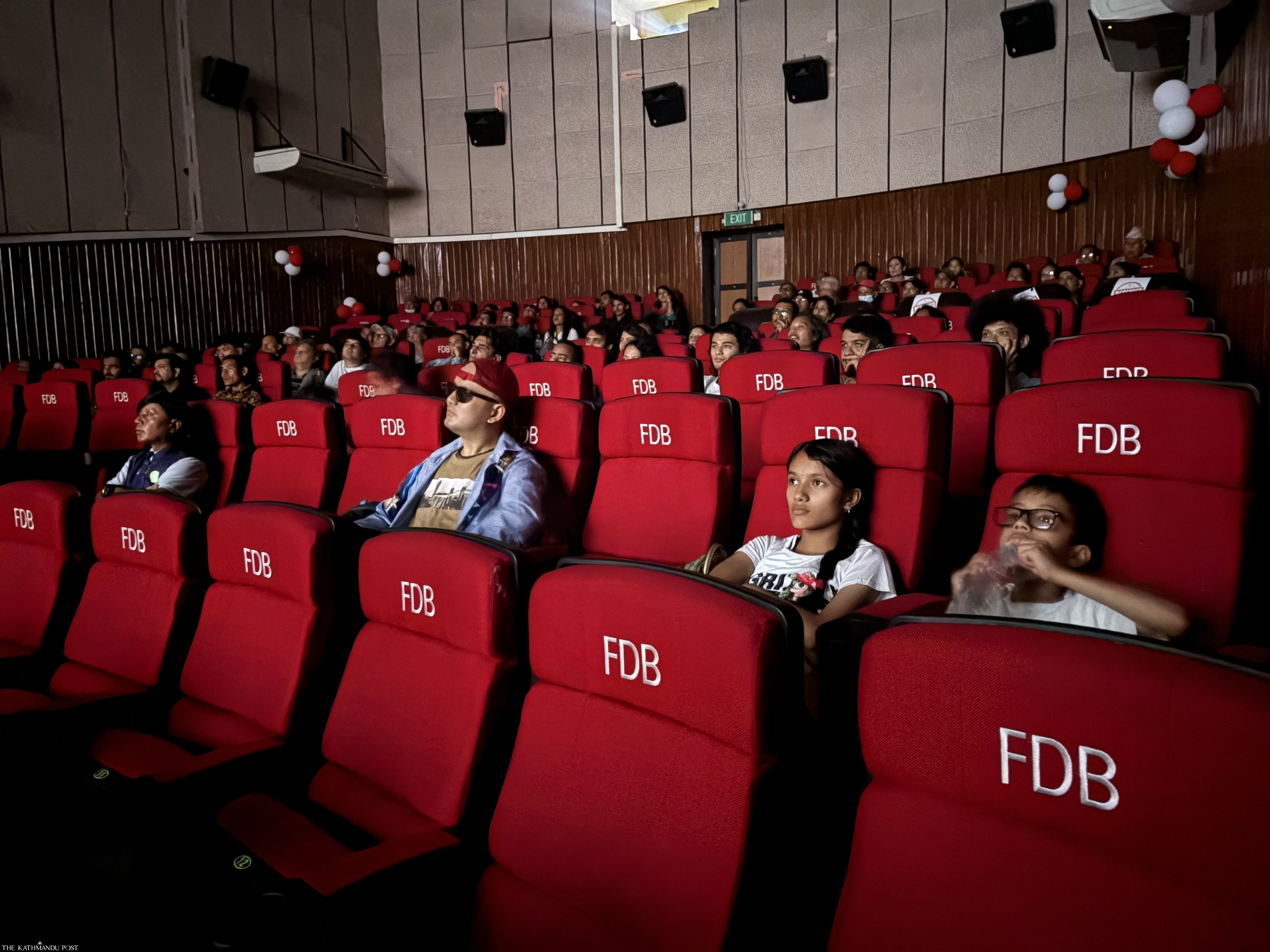
Songs appear frequently, sometimes interrupting the narrative in ways that can feel excessive today, yet they generated some of the strongest audience reactions. Viewers clapped along when familiar songs began. Among them was Sumit, 37, who had brought his children, aged eight and thirteen, to introduce them to older Nepali cinema. The children said the songs were what they enjoyed most.
DC says that was one of the aims of the exhibition.
“I don’t want to call young people into the hall to give them a history lesson,” he says. “I want them to come, watch the films, enjoy them and start asking themselves questions about what Nepal was like at the time.”
Fashion is one obvious marker of change. Women frequently appear in saris and more traditional attire, contrasting with the broader urban and global influences visible in contemporary Nepali films.

Some romantic conventions now appear exaggerated. During ‘Sindoor’, the audience laughed at prolonged exchanges of glances between the romantic leads that were played seriously in the film.
Yet what now feels clichéd was still being established at the time; films like these helped define conventions later Nepali cinema repeatedly returned to.
At the same time, not everything feels distant. One of the more striking continuities is the way women are represented.
In ‘Aama’, for instance, Harka repeatedly abuses his wife, yet she is still expected to remain within the marriage and endure his behaviour. The scene reflects the limited choices available to women within the social world the film depicts.
Filmmaker and film educator Abhimanyu Dixit says the social shift is more complicated. Older films often relied on archetypes like the dutiful wife, sacrificial mother or “bad woman”, though he notes that some characters still had considerable agency. “Sometimes I watch and think, ‘did we actually become more conservative later?’” he says.
Dixit does not entirely agree that contemporary cinema simply reproduces the same stereotypes in more polished forms. “I actually think contemporary Nepali filmmakers are trying,” he says. “Even compared to 2018, when I used to review Nepali cinema for the Post, I can see a change.”
“You can watch a filmmaker’s work over several films, sometimes even within the same series, and see that their female characters have continued to evolve,” he says. Dixit attributes that partly to the current cultural climate and greater scrutiny from audiences. “Maybe social media scares filmmakers now, so they are more conscious. Or maybe we are genuinely learning.”
DC himself describes old cinema as a “visual document” of its period.
“When we watch an old film, we do not only watch a story,” he says. “We see the cities and villages of that time, the houses, clothes, language, family structures and the way society looked at men and women.”
For older viewers, the films also operate differently.
Sixty-seven-year-old Yogesh Parajuli said watching ‘Aama’ reminded him of a period when going to the cinema itself felt different.
“We used to bunk classes whenever there was a show,” he said. “Our mother used to come and chase us out. This made me miss her.”
That contrast between old and new audiences became one of the more interesting parts of the exhibition. Older viewers often recognised songs, actors and scenes immediately. Younger viewers responded to the films with more distance, sometimes laughing at the acting or dialogue, but still remaining engaged.
For the Board, this is also part of a larger archival project.
DC distinguishes between digitisation, restoration and preservation, noting that the three are not the same. The ten films in the exhibition have been digitised and made suitable for screening, while the Board is also preparing to digitise additional historically significant films.
He argues, however, that preserving only a limited number of films is not enough.
“Ten films are something to be proud of, but we cannot be satisfied with ten,” he says. “This is a beginning, not a destination.”
The challenge extends beyond digitisation. Old reels, negatives, scripts, photographs and other material remain scattered across private collections, while copyright and ownership can limit how digitised films are publicly distributed.
Screenings including ‘Aama’, ‘Sindoor’ and ‘Pariwartan’ drew strong attendance, with some shows filling the hall.
For viewers, the exhibition offers a direct comparison between different periods of Nepali cinema. The cameras are sharper, editing is faster, fashion and romance have changed, and filmmakers are reconsidering how women are represented. Yet songs still draw audiences in, familiar storytelling conventions persist, and some older social attitudes remain recognisable.
‘Old Is Gold’ is therefore most interesting not simply as an exercise in nostalgia, but as a record of what Nepali cinema has changed, what it has retained and what it is still learning to leave behind.
Shrinkhala Chand Thakuri
Shrinkhala Chand Thakuri is a Culture and Lifestyle intern at The Post. She is an English Literature and Journalism major.





Most Read from Culture & Lifestyle

It’s a bird … it’s a plane … it’s the Indian ambassador’s farewell tweets

‘Tenzing’ puts the Sherpa at the centre of the Everest story

How should Nepal navigate a world in reorder? Rajib Upadhya on geopolitics and foreign policy

How Anup Poudel took Nepali cinema to Cannes
A Nepali photographer rediscovers Calcutta after decades
Editor's Picks

Constitutional Bench caught in seniority, ‘pick and choose’ dispute

A Dom boy’s long road to becoming a doctor

From blankets to handmade dolls, two foreign women bring comfort to flood survivors

News Analysis: When institutional defence exposes institutional fault lines
It’s a bird … it’s a plane … it’s the Indian ambassador’s farewell tweets
E-PAPER | October 12, 2026

×