EXCLUSIVE: Nepal faces black listing warning as anti-money laundering reforms stall
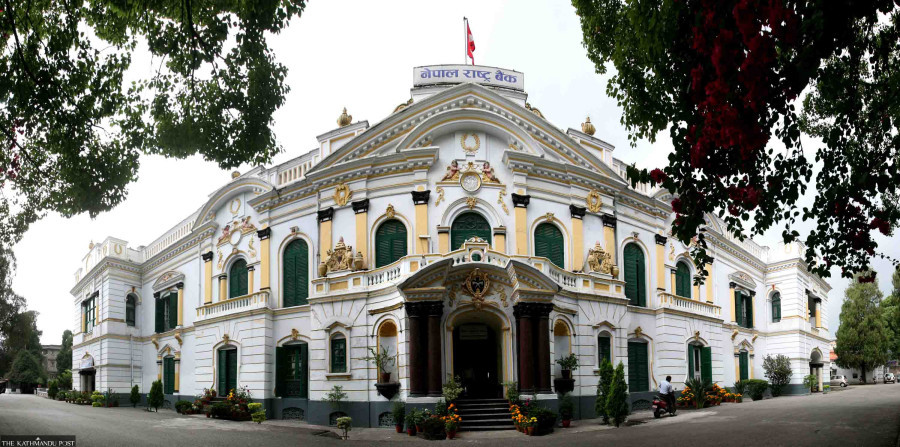
A confidential briefing note prepared by APG Secretariat, and obtained by Kantipur, describes Nepal’s progress as disappointing and warns that the September 2026 review will be the decisive moment. Nepal was placed on the grey list in February 2025, with a deadline of 2027 to fulfil 15 specific directives. Progress on those commitments has been slow, and officials point to a period of significant political disruption as one reason. File Photo.
The Asia/Pacific Group, the regional arm of the international anti-money laundering watchdog, the Financial Action Task Force (FATF), has warned Nepal that it risks being placed on the black list if it fails to demonstrate sufficient progress on financial crime reforms. In unusually direct language, the APG said Nepal's efforts to exit the grey list have been disappointing.
This is not routine diplomatic messaging. The APG has explicitly described the current visit to Kathmandu as the final high-level intervention before a decisive review by the AP-JG in September 2026, leaving Nepal less than four months to show meaningful results.
The seriousness of the situation is reflected in who the APG sent to Kathmandu. The delegation is led by Deputy Executive Secretary David Shannon, who has been with the APG Secretariat since 2002 and is currently conducting his 24th mutual evaluation. He is widely regarded as one of the most experienced FATF assessors in the world. That an official of his seniority made the trip himself is itself a measure of how grave Nepal’s situation has become.
The delegation, which arrived in Kathmandu on Sunday, held meetings on Monday at the Office of the Prime Minister and Council of Ministers with officials from across the government’s anti-money laundering apparatus — including the ministries of Finance, Home Affairs, and Law, the Office of the Attorney General, Nepal Army, Nepal Police, Armed Police Force, Nepal Rastra Bank, and the Department of Money Laundering Investigation. One official who attended the meetings, speaking on condition of anonymity, told Kantipur that the APG officials made their dissatisfaction with Nepal’s progress unmistakably clear.
Among those who met with the delegation were Law Secretary Pushkar Sapkota, Finance Secretary Ghanshyam Upadhyaya, Home Secretary Rajkumar Shrestha, and Revenue Secretary Bhupal Baral.
A confidential briefing note prepared by the APG Secretariat, and obtained by Kantipur, sets out six objectives for the visit. The delegation aims to restructure Nepal's FATF engagement strategy under direct ministerial leadership; assess whether preparations across the 15-point action plan are adequate for the September 2026 deadline; deliver political-level messages about the risk of blacklisting; coordinate all relevant government agencies on what must be done across each of the 15 action items; secure political commitment for technical assistance focused on operational results rather than theoretical training; and address gaps in the reports, case studies, and statistics Nepal has been submitting to FATF.
Nepal was placed on the grey list in February 2025, with a deadline of 2027 to fulfil 15 specific directives. Progress on those commitments has been slow, and officials point to a period of significant political disruption as one reason. The Gen Z uprising of September 2025 fundamentally altered Nepal’s political landscape, triggering snap elections that brought the Rastriya Swatantra Party to power. A new government was formed in late March 2026, and the transition left many items on the 15-point agenda incomplete.
The current government has signalled awareness of the urgency. Finance Minister Swarnim Wagle has repeatedly described exiting the grey list as a top priority, warning that it has caused reputational damage internationally and is affecting the investment climate. Speaking at an event with the Society of Economic Journalists last month, Wagle said the government was committed to meeting the deadline and that financial crime prosecutions would be grounded in irrefutable evidence. A series of recent arrests in money laundering cases, officials say, are part of that effort.
Former finance minister Rameshore Khanal had also, at a function earlier this year, stressed the need to strengthen investigation, prosecution, and asset confiscation processes in money laundering cases.
Despite those stated intentions, the APG’s assessment is that Nepal has fallen short across the board — on policy intervention, law implementation, building investigative capacity, monitoring high-risk sectors, and prosecuting offenders. Case filings under money laundering offences so far stand at 121 from the Department of Money Laundering Investigation, 21 from the Nepal Police following the law amendment, six from the Commission for the Investigation of Abuse of Authority, and one each from the Department of Forests and the Revenue Investigation Department. APG officials have indicated these numbers are insufficient, with particularly little progress in complex cases.
The delegation was seeking a meeting with Prime Minister Balendra Shah on Tuesday, though as of filing, it remained unclear whether that meeting would take place. Given that the stated purpose of the visit is to reset Nepal’s FATF engagement under ministerial leadership, whether or not the prime minister agrees to meet carries considerable political significance. According to a senior government official, the APG team is also scheduled to meet Finance Minister Wagle and Nepal Rastra Bank Governor Biswo Paudel on Tuesday.
Nepal was previously on the grey list in 2011 and managed to exit it in 2014.




 14.4°C Kathmandu