After BJP’s historic win in West Bengal, what lies ahead for the Gorkhaland dream
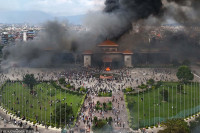
The BJP’s first-ever majority government in West Bengal has revived hopes of a separate Gorkhaland state among Nepali-speaking communities in Darjeeling and adjoining regions. Participants of 2017 Gorkhaland movement, the indefinite strike had lasted for more than 100 days. File Photo
An old question is once again echoing across the hills of Darjeeling: “Will the road to Gorkhaland finally open now?”
For more than four decades, that question has surfaced repeatedly, often during moments of major political change. The demand for a separate Gorkhaland state has witnessed waves of agitation, periods of negotiation and the creation of successive autonomous administrative bodies. Yet the central objective of statehood has remained unfulfilled.
Today, the issue has returned to the forefront following a dramatic political shift in West Bengal.
On May 9, 2026, the Bharatiya Janata Party (BJP) secured an outright majority and formed a government in West Bengal for the first time, bringing an end to the 15-year rule of Chief Minister Mamata Banerjee and her Trinamool Congress. BJP leader Suvendu Adhikari was subsequently sworn in as chief minister.
In the Nepali-speaking regions of Darjeeling, Kalimpong, Kurseong and the Dooars, the outcome has been interpreted as more than an electoral victory. For many, it has rekindled hope that the long-standing demand for Gorkhaland may finally receive serious consideration.
The optimism stems largely from the fact that the BJP now governs both at the Centre and in West Bengal. Supporters of the movement argue that a key obstacle of the past, political differences between New Delhi and Kolkata, has effectively disappeared.
Yet similar hopes have emerged before.
The BJP has repeatedly spoken about protecting the rights, identity and aspirations of Indian Gorkhas during election campaigns. However, many residents of the hills point out that those commitments have not translated into statehood. Sceptics argue that the party has historically emphasised the issue during elections, only for it to recede once power is secured.
This time, supporters contend, the circumstances are different because the same party controls both levels of government. Critics, however, point to several formidable obstacles, including constitutional constraints, opposition to the division of West Bengal and the strategic importance of the region.
To understand the significance of the current moment, it is necessary to revisit the long and often turbulent history of the Gorkhaland movement.
A century-old demand
The demands for administrative separation in Darjeeling date back more than a century.
Records indicate that as early as 1907, local leaders sought administrative separation from Bengal under British rule. Following India’s independence, different proposals emerged for a separate administrative arrangement for the region. Over the decades, demands ranged from a provincial council to the creation of a separate administrative territory often referred to as “Gorkhabhumi”.
The term “Gorkhaland” was formally introduced by Subhash Ghising on April 22, 1971, providing a distinct political identity to the movement for statehood.
Ghising later became the central figure of the most intense phase of the agitation.
Between 1986 and 1988, Darjeeling witnessed a violent movement demanding a separate state. According to estimates frequently cited by movement leaders and observers, around 1,300 people lost their lives during various phases of agitation over four decades.
The agitation led by Ghising officially began on April 5, 1986. During the two-year movement, approximately 1,200 people were killed amid protests, clashes and political violence.
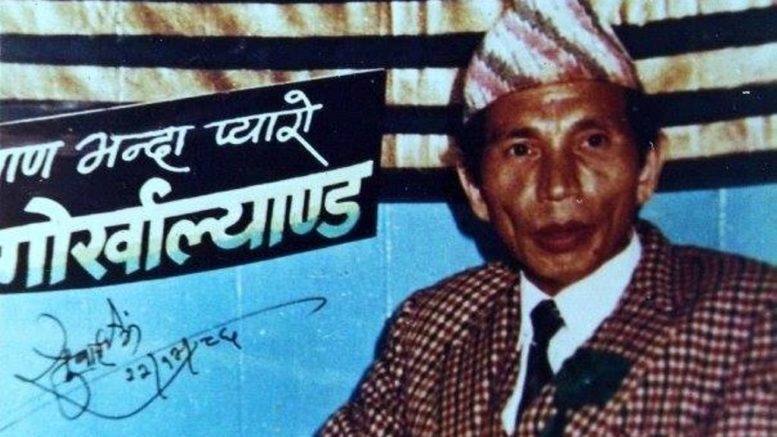
Subash Ghisingh led the Gorkhaland movement when the agitation first erupted in 1986. The Darjeeling Chronicle
Before the demand for statehood materialised, however, the movement concluded with a tripartite agreement on August 12, 1988. The accord resulted in the creation of the Darjeeling Gorkha Hill Council (DGHC), which was granted authority over 11 administrative departments.
For nearly two decades, Ghising remained the dominant political figure in Darjeeling under the DGHC arrangement.
Over time, however, dissatisfaction began to grow.
Many residents and political leaders argued that the council did not provide sufficient autonomy and failed to address the core demand for statehood. As frustrations mounted, the movement gradually re-emerged.
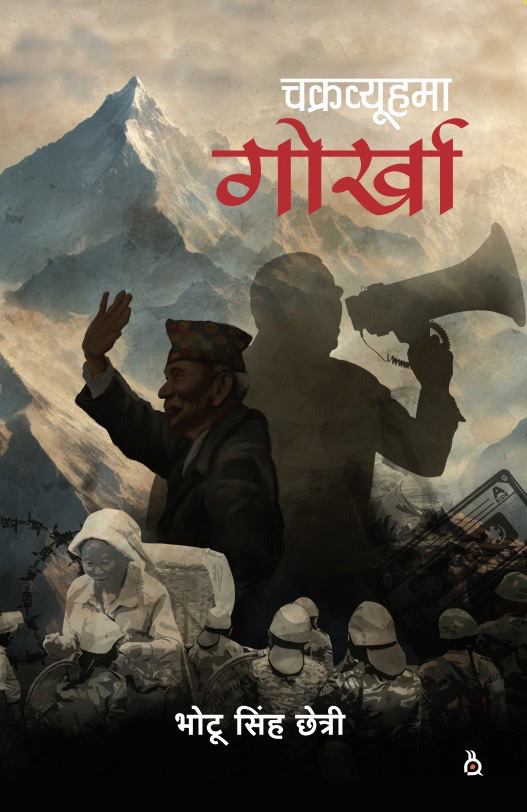
Bhotu Singh Chhetri, author of Chakravyuhama Gorkha, believes the turning point in Ghising’s political career came in 2004.
Ahead of scheduled DGHC elections that year, the West Bengal government postponed the polls and appointed Ghising caretaker of the council until a proposed Sixth Schedule Council could be implemented.
Ghising devoted considerable effort to campaigning for the Sixth Schedule arrangement, which would have provided a different constitutional framework for autonomy. However, many political groups in Darjeeling opposed the proposal, arguing that it represented a compromise that would permanently weaken the demand for statehood.
Although the proposal eventually secured parliamentary approval, opposition within the hills intensified.
The controversy also created an opening for emerging leaders.
The rise of Bimal Gurung
Among those who challenged Ghising’s leadership was his former associate Bimal Gurung.
The turning point came during the 2007 season of the reality television programme Indian Idol.
Prashant Tamang, a singer from Darjeeling, became a contestant and rapidly gained widespread support across the hills. While Ghising remained largely silent during the campaign, Gurung actively mobilised support for Tamang.
According to Tenzing Khambache, a former administrator of the DGHC, the episode significantly altered the political landscape.
“Public support shifted decisively towards Bimal,” Khambache recalled. “He effectively used that momentum, which marked the beginning of Ghising’s political decline.”
Capitalising on his growing popularity, Gurung established the Gorkha Janmukti Morcha (GJM) on October 7, 2007.
The formation of the new party revitalised the statehood movement.
On November 3 that year, a fresh phase of agitation began. The movement gathered momentum rapidly and further weakened Ghising’s position.
By March 10, 2008, Ghising resigned as chairman of the DGHC and left Darjeeling. He later lived in self-imposed exile in Jalpaiguri before dying in Delhi on January 29, 2015, at the age of 78.
Under Gurung’s leadership, negotiations resumed.
Between 2008 and 2011, several rounds of tripartite talks were held involving representatives of the Centre, the West Bengal government and Gorkhaland supporters.
Like earlier negotiations, these discussions stopped short of reaching statehood.
Instead, they culminated in another administrative arrangement.
On July 18, 2011, a tripartite agreement established the Gorkhaland Territorial Administration (GTA).
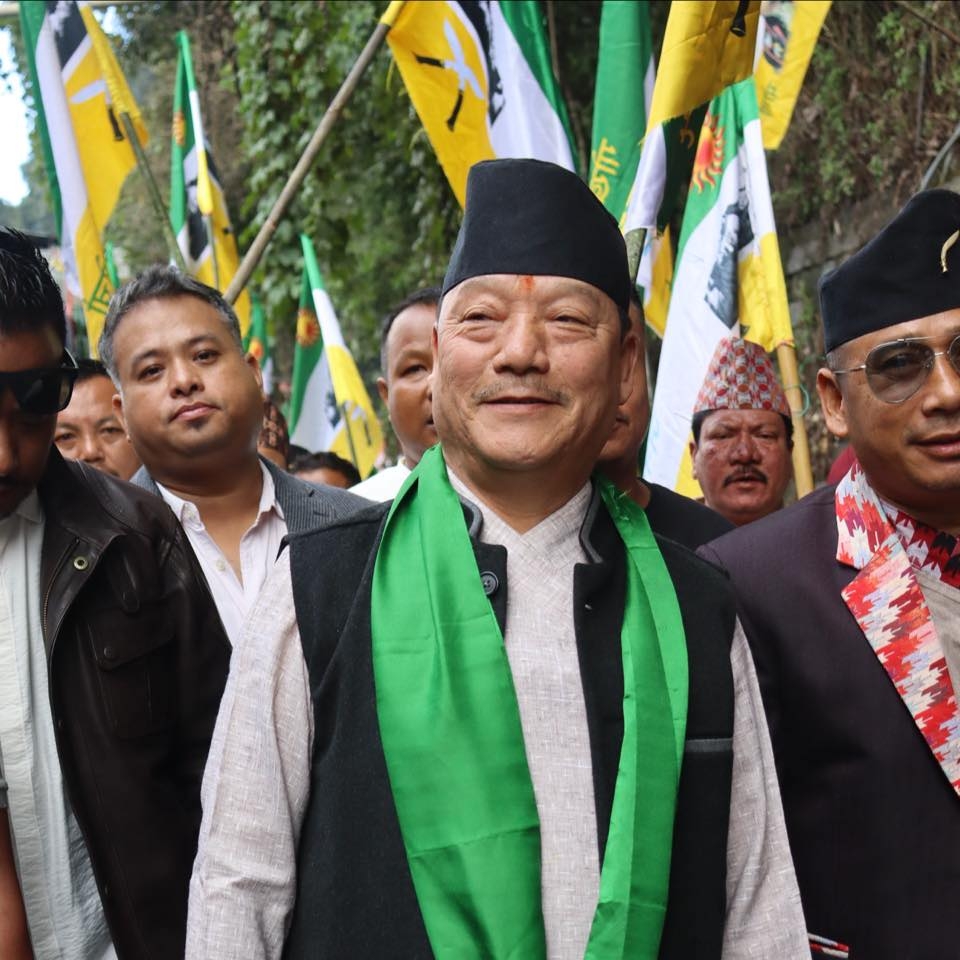
President of Gorkha Janmukti Morcha Bimal Gurung Photo: Courtesy of Bimal Gurung/Facebook
The limits of autonomy
The GTA remains the principal autonomous administrative body governing the hills today.
It exercises authority over sectors including education, agriculture, culture, rural roads and local development.
Supporters of the arrangement argue that it provides a framework for local governance and development while maintaining the territorial integrity of West Bengal.
Opposition groups, however, describe the GTA as a form of incomplete autonomy.
Key areas such as revenue collection, land administration, law and order, and legislative authority remain under the control of the state government.
Critics argue that the arrangement does not address the underlying issue of political identity.
As a result, tensions have periodically resurfaced despite the existence of the GTA.
Notably, the body was created only two months after Banerjee first assumed office as chief minister in 2011.
Now that Banerjee has been voted out after 15 years in power, statehood supporters believe a new political chapter may be opening.
Calls have also emerged for replacing the GTA with a different administrative arrangement.
Interestingly, some political leaders who previously championed statehood have moderated their demands.
Gurung, once among the strongest advocates of Gorkhaland, has increasingly focused on securing Sixth Schedule status, the same framework that Ghising promoted two decades earlier.
The 2017 agitation
The most recent major phase of unrest in Darjeeling began with a language dispute.
On May 16, 2017, the West Bengal government announced that Bengali would be taught in all schools across the state, including private English-medium institutions, as a second or third language.
While the policy generated little controversy elsewhere in West Bengal, it triggered strong opposition in Darjeeling.
Many Nepali-speaking residents viewed the move as a threat to their linguistic identity.
Protests began on June 6, 2017, and escalated rapidly after GJM leader Roshan Giri declared that the policy would not be implemented in the hills.
What initially appeared to be a language-related dispute soon morphed into a broader political movement.
The controversy carried particular emotional significance because Nepali had been included in the Eighth Schedule of the Indian Constitution only in 1992 after a long struggle.
Author Subhash Sotang argues that many residents saw the language issue through the lens of that historical struggle.
For them, the policy was not merely an educational reform but a challenge to an identity that had been fought for many generations.
Tensions escalated on June 9, 2017, when the West Bengal cabinet held a meeting at Raj Bhavan in Darjeeling amid ongoing protests.
Demonstrations turned violent, leading to clashes between protesters and police as well as incidents of arson.
The unrest soon spread to Kurseong, Mirik and Kalimpong.
The state government responded with a security crackdown.
Eight people were killed during the agitation, and the region remained shut down for more than 100 days.
The movement also had major political consequences.
Gurung was charged in multiple cases, including murder, arson and sedition, forcing him to go underground.
Banerjee accused him of coordinating with armed groups from Nepal and India’s northeastern states to fuel the unrest.
At the same time, the state government promoted the leadership of Anit Thapa, who later formed the Bharatiya Gorkha Prajatantrik Morcha (BGPM).
The BGPM eventually gained control of the GTA and emerged as a significant political force in the region.
Renewed expectations
For supporters of Gorkhaland, the current political environment differs significantly from previous periods.
The BJP now governs both New Delhi and Kolkata, removing what many regarded as a longstanding political obstacle.
Gyanendra Aryal, a GJM supporter from Darjeeling, believes this alignment could create opportunities that were previously unavailable.
“We believe the BJP government will facilitate a solution for Gorkhaland,” Aryal said.
The BJP has consistently included promises relating to Gorkha rights and identity in its election manifestos.
During a rally in Kurseong on April 21, Union Home Minister Amit Shah promised that the Gorkha issue would be addressed within six months of the formation of a BJP government.
He said any solution would be pursued through consultations with the community.
A few days earlier, at a rally in Gangarampur on April 15, Shah clarified that any resolution would be pursued through constitutional means and would not involve the partition of West Bengal.
He also spoke of transforming the hill region into an eco-adventure destination while seeking a constitutional solution that preserved the state’s territorial integrity.
Prime Minister Narendra Modi delivered a similar message during a rally near Siliguri on April 12.
Speaking partly in Nepali, Modi said a solution to the problems faced by the Gorkha community was within reach.
His remarks generated considerable enthusiasm among supporters of the movement.
Many observers noted that Modi had made comparable statements during previous election campaigns, including during the Lok Sabha elections a decade ago, when he said the problems of the Gorkhas were his own.
Following the recent state election victory, Darjeeling MP Raju Bista described the result as a victory for the people.
“The commitments made by the BJP before the elections will now be fulfilled,” Bista said. “The electorate has given a clear mandate against the GTA, and a new administrative framework will be introduced in Darjeeling.”
Scepticism persists
Despite the renewed optimism, many residents remain cautious.
Hanok Thapa, a journalist based in Kurseong, said the alignment of governments at the Centre and in the state has raised expectations.
“Earlier, the Centre and the state were governed by different parties,” he said. “Now there are fewer excuses, and many people expect structural changes.”
Others are unconvinced.
Manju Pradhan, a schoolteacher from Kalimpong, believes the issue has repeatedly been used during election campaigns without producing meaningful outcomes.
“The issue of Gorkhaland is raised before every election, but the hills are forgotten afterwards,” she said. “We will have to wait and see whether this time is different.”
Political observers note that one of the biggest obstacles remains opposition within West Bengal itself.
CK Shrestha, former president of the Bharatiya Gorkha Parisangh, an umbrella organisation representing Indian Gorkhas, argues that resistance to dividing West Bengal extends across party lines.
“Even under a BJP government, dividing Bengal carries significant political risks,” he said. “I do not believe that a change in government automatically guarantees Gorkhaland.”
That resistance has been formally expressed by the West Bengal Legislative Assembly.
In 2023, the assembly passed a resolution titled Banga Bhanga Hobe Na (“The Partition of Bengal Will Not Happen”).
The resolution, introduced by Trinamool Congress MLA Satyajit Barman under Rule 185, opposed proposals advocating a separate state or administrative restructuring in North Bengal.
Although the resolution is not constitutionally binding, it reflects a strong political consensus in favour of preserving the territorial integrity of West Bengal.
The slogan itself carries deep historical significance.
It recalls the mass movement that opposed the 1905 Partition of Bengal by British authorities, a decision that was eventually reversed in 1911.
More recently, on August 5, 2024, the assembly adopted another resolution opposing proposals to place North Bengal under the Ministry of Development of North Eastern Region (DoNER).
Together, these measures demonstrate the strength of sentiment against any territorial division of the state.
The strategic factor
The debate over Gorkhaland extends beyond identity politics and state boundaries.
The region occupies one of the most strategically sensitive locations in India.
Darjeeling and the adjoining Dooars lie near the borders of Nepal, Bhutan, Bangladesh and China.
Most importantly, the area contains the Siliguri Corridor, commonly known as the “Chicken’s Neck”, a narrow strip of land linking India’s northeastern states with the rest of the country.
The corridor is regarded as one of India’s most strategically important geographical features.
Because of its importance, analysts say the Centre approaches any proposal involving territorial restructuring in the region with considerable caution.
Shrestha believes these concerns are likely to influence decision-making.
“Given the security and geopolitical implications, the Central government is unlikely to rush into creating a separate state,” he said.
Questions of identity further complicate the issue.
Many supporters of Gorkhaland view statehood as a means of securing political recognition for Indian Gorkhas and distinguishing them from perceptions associated with migration from Nepal.
Rohit Gautam, a journalist based in Assam, argues that the demand is deeply connected to citizenship and identity.
“Gorkhaland is not merely an administrative demand,” he said. “It is a demand for recognition of the distinct political identity of Indian Gorkhas.”
What comes next?
Most analysts believe that the immediate creation of a separate state remains unlikely.
Instead, discussions may focus on expanding the powers of the GTA, introducing stronger constitutional safeguards or developing a revised autonomous framework.
Raja Puniani, a poet from Sukna near Siliguri, doubts whether the political landscape has changed enough to produce a fundamentally different outcome.
“If there had been sufficient political will, statehood could have been granted earlier,” he said.
The history of the Gorkhaland movement reveals a recurring pattern.
Major election promises are often followed by periods of negotiation, while demands for statehood are managed through the creation of new administrative structures. The DGHC in 1988 and the GTA in 2011 remain the clearest examples.
The BJP’s rise to power in West Bengal has undoubtedly revived hopes among supporters of the movement. Yet the challenges that have historically impeded statehood remain firmly in place.
The strategic sensitivity of the Siliguri Corridor, strong political opposition to the division of West Bengal and unresolved constitutional questions continue to present significant obstacles.
For now, the dream of Gorkhaland has once again moved to the centre of political debate. Whether this moment represents a genuine turning point or another chapter in a decades-long cycle of expectation and disappointment will depend largely on decisions yet to be made in New Delhi.




 20.85°C Kathmandu