Teacher held for TU paper leak within 5 minutes of exam commencement
The arrest of a teacher over the MBS paper leak has revived concerns over repeated breaches, commercialisation of education and weak oversight of Nepal’s examination system.Phone screenshots of the leaked question paper and examinees’ request to a teacher for solutions. Police have already arrested the suspected teacher.
Just days after a leaked medical entrance examination paper in neighbouring India triggered nationwide protests and forced Education Minister Dharmendra Pradhan to resign, a similar breach has emerged at Nepal’s largest university.
The question paper for Tribhuvan University’s Master of Business Studies (MBS) first-semester examination was leaked on July 24, the same day Pradhan stepped down in India. The incident came to light on July 25, after evidence showed that the paper had been circulating online while the examination was underway.
The paper was circulated in a WhatsApp group just five minutes after the examination began, exposing serious lapses in the security and confidentiality mechanisms surrounding university examinations. The incident has raised fresh questions about the integrity of Tribhuvan University’s examination system, which has faced repeated controversies over the years.
Police have arrested a teacher in connection with the leak.
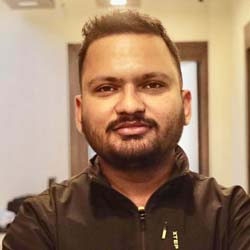
The Cyber Bureau of Nepal Police arrested Sandip Singh, better known among students as “Sulab Sir”, on charges of circulating the question paper as the examination had just begun. Investigators said Singh teaches at Himalaya College, Koteshwar and the KMC College, Bagbazar.
According to Senior Superintendent Anupam Shumsher Rana, spokesperson for the Central Investigation Bureau (CIB), police arrested Singh from Bhaktapur and launched an investigation against him for allegedly violating examination confidentiality provisions under the Education Act, 1971.
During questioning, Singh claimed that he had only forwarded a question paper sent to him by an unidentified person to a WhatsApp group named “MBS First Semester Section C”. Investigators said they have found no evidence so far that he received any financial benefit from the leak.
The breach came to light after a student in the group took screenshots of the exchange and shared them with a popular Facebook page, prompting the Ministry of Education to intervene.
After his involvement became public, Singh posted a message in the WhatsApp group, which had 1,023 members and carried the description “Let’s help each other”.
“Thank you, all my dear students,” he wrote.
He later sought to defend his actions, saying: “Sometimes, things like this happen in life. I have always tried to help from the bottom of my heart, and now I need your help. I merely forwarded a paper that was already circulating on social media and other WhatsApp groups. I was just at home, looking at my mobile phone.”
Screenshots obtained by Kantipur show an individual saved as “Sulab Sir” sharing a PDF file of the MBS question paper five minutes after the examination began on July 24.
Shortly afterwards, a student identified as “Keshav Bhatt” asked, “Sir, please send the solution as well.”
Singh replied, “Okay,” and later shared a 16-page handwritten solution to the examination questions.
The WhatsApp conversation also showed students discussing examination arrangements while the test was still underway.
One student asked whether candidates were allowed to enter the examination hall 30 minutes late and requested responses from anyone who had experienced the situation. Another student replied that it depended on the examination centre.
Another student, apparently referring to the upcoming Economics paper, requested that the questions also be uploaded on the group.
“I might have to go late for Eco [Economics] now, Sir. Please upload the questions like this,” the student wrote.
“I will provide Eco as well, please study well,” Singh responded.
At the time of the exchange, at least 35 members were visible as active in the group. Another student described it as the “best group” for working professionals.
During the investigation, police detained several other individuals along with Singh. However, they were later released after investigators said there was insufficient evidence to proceed against them.
Education Minister Sasmit Pokharel said the ministry coordinated with the Ministry of Home Affairs after receiving information about the leak on Saturday and instructed Inspector General of Police Dan Bahadur Karki to expedite the investigation.
“We forwarded the screenshots of the messages to the Cyber Bureau, and two individuals were arrested on Sunday morning,” Pokharel told journalists at the ministry. “The police are conducting further investigations, and they will provide detailed information.”
Pokharel said preliminary findings indicated that the leak was carried out by a teacher rather than a Tribhuvan University employee.
Following the leak, Tribhuvan University’s Faculty of Management formed a probe committee on Sunday to investigate the breach.
The committee, led by Prof Dr Achyut Gyawali, includes Pushkar Raikhala, deputy director of the Monitoring Directorate, and Mahesh Raj Ojha, a member of the Central Examination Steering Committee.
The Examination Control Division said the panel would determine whether the paper was leaked, how the breach occurred, who was responsible, and recommend legal action.
Education experts say the latest leak reflects deeper structural flaws in Nepal’s examination system, where weak oversight, commercial pressures and political interference have allowed such breaches to recur.
Educationist Binay Kumar Kusiyait said repeated question paper leaks were a consequence of the growing commercialisation of the education sector.
“These kinds of issues started surfacing over the last 15 to 20 years. The primary focus of educational institutions has shifted from producing quality students to finding ways to commercialise education and artificially inflate results. This is the root of the problem,” Kusiyait told Kantipur.
“When the focus shifts entirely to the quality of results rather than the quality of students, unethical practices are bound to happen. The drive to earn more money by spending money naturally leads to this.”
Kusiyait also criticised Tribhuvan University’s failure to strengthen monitoring mechanisms and improve its question paper distribution system.
“In many instances, action could not be taken due to political patronage and protection. That is precisely why these incidents keep repeating,” he said.
The leak has also triggered strong criticism from student organisations, with the Free Student Union (FSU) at Tribhuvan University demanding accountability from university officials.
The union has called for the resignation of Mahananda Chalise, dean at the Faculty of Management, and Bharat Rai, assistant dean in charge of examinations.
In a statement on Sunday, FSU president Deepak Raj Joshi demanded an impartial investigation within two days and the publication of its findings. He sought clarity on how the question paper was leaked and who was involved, while calling for strict legal action against those responsible.
Joshi said the leak of a question paper while an examination was underway had raised serious concerns about the confidentiality, fairness and credibility of the examination system.
Any act that undermines students’ hard work, public trust and the university’s reputation was unacceptable, he said.
The latest breach is not an isolated incident. The country witnessed repeated cases of examination papers being compromised, from Grade 12 board examinations to university and medical entrance tests, over the past decade and a half.
Earlier this year, on May 12, the Cyber Bureau arrested two people after question papers for Grade 12 Management and Science examinations conducted by the National Examination Board were leaked before the exams.
The bureau arrested 37-year-old Nirajan Shahi, a counselling officer at a local college, and 30-year-old IT officer Prem Kumar Shrestha. Investigators said Shrestha, who was responsible for printing the question papers, handed them over to Shahi shortly before the examination.
Police officials said, however, that this was the first time the bureau had investigated a question paper leak directly linked to Tribhuvan University.
One of the most prominent examination scandals occurred in December 2014, when the MBBS entrance examination was cancelled after its question paper was leaked.
The Commission for Investigation of Abuse of Authority (CIAA) raided a college in Battisputali, Kathmandu and arrested two people after they were found with the Biology question paper for the examination scheduled for 1:00 pm that day.
After a lengthy legal process, the Special Court convicted Prabhat Kumar Kushwaha, identified as the mastermind behind the leak, sentencing him to four years in prison and imposing a fine of Rs3.4 million.
His accomplices, Dharmendra Yadav and Diwas Yadav, were each sentenced to one year in prison and fined Rs900,000 and Rs500,000 respectively. Maheshwar Prasad Yadav received a two-year prison sentence and a fine of Rs1.7 million.
The court also sentenced the college director Devi Ram Pandey to nine months in prison and fined him Rs505,000. College teacher Khetarnath Sapkota was sentenced to one month and 15 days in prison and fined Rs2,500.




 15.69°C Kathmandu