



 17.12°C Kathmandu

Fri, Nov 13, 2026
National
Community forests turn to tourism, but potential remains untapped
Jeep, elephant and boat safaris bring in millions for some forests but most of Chitwan’s 93 forests outside the park buffer zone have yet to follow suit.
bookmark![]()
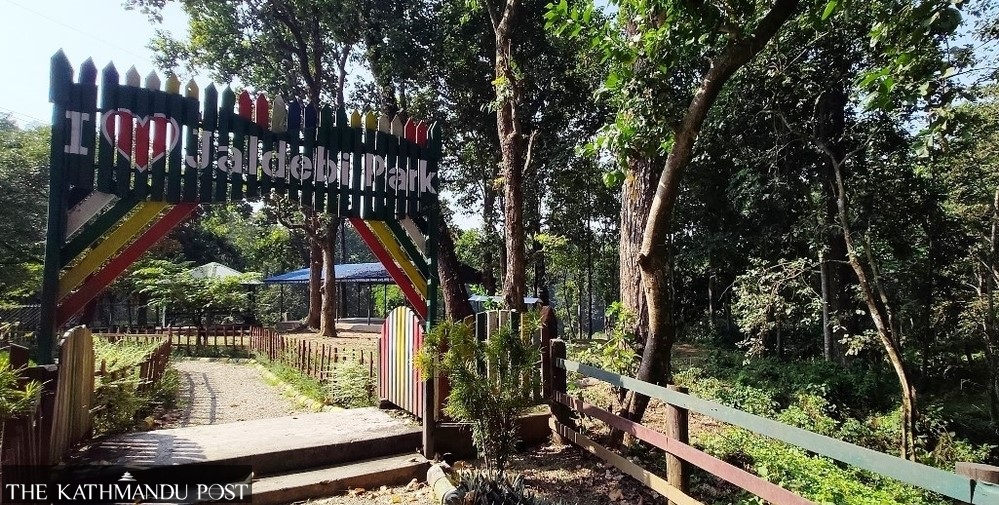
A park developed by Jaldevi Barandabhar Community Forest in Aaptari, Narayangadh. Ramesh Kumar Paudel/TKP ![]()
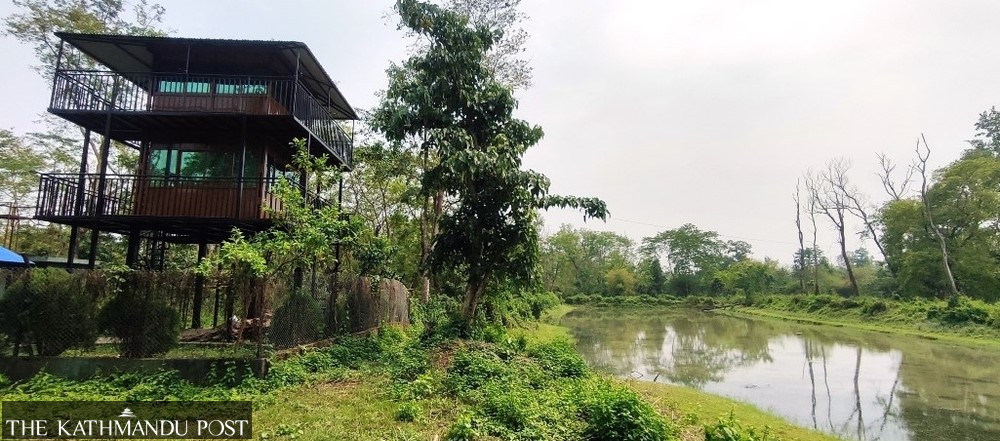
A wooden observation tower built for tourism activities and a pond developed for wildlife in the Barandabhar forest, Chitwan. Ramesh Kumar Paudel/TKP
Ramesh Kumar Paudel
Published at : November 13, 2026
Updated at : November 13, 2026 17:42
Chitwan
Community forests bordering Chitwan National Park are earning millions of rupees annually from jeep, elephant and boat safaris. Elsewhere in Chitwan, however, community forests have been slow to tap their ecotourism potential, despite opportunities to generate income while supporting conservation.
Some have developed parks and picnic spots, while plans to introduce safaris and birdwatching remain stalled in others. Investment and initiative in ecotourism, which could help improve local livelihoods while supporting conservation, remain limited.
Gyaneshwar Community Forest in Chitwan is considered one of the country's outstanding community forests. Located alongside the Narayani River in Mangalpur, ward 16 of Bharatpur Metropolitan City, the forest is also home to the endangered one-horned rhinoceros. Just five to seven kilometres west of Bharatpur and Narayanghat, the district's main urban centres, it attracts crowds of visitors for picnics, particularly during winter.
The forest administration has built 20 covered shelters for picnickers, according to its chairperson, Krishna Prasad Poudel. It also has a mini-zoo housing rescued small animals and a park featuring a water fountain.
The forest generates around Rs90 million annually, Poudel said, with picnic facilities and the park alone accounting for Rs30 million.
“We have plenty of rhinos, but we have not been able to start safaris to show them to visitors. We have also built an observation tower where tourists can stay. We invited applications from operators interested in running jeep safaris, and received some, but the service has yet to begin,” he said.
The forest plans to develop ecotourism activities in partnership with Setidevi and Siddhiganesh community forests to its west.
Gyaneshwar's ambition to introduce safaris remains unrealised. By contrast, community forests bordering Chitwan National Park have been earning substantial income from jeep, elephant and boat safaris, similar to those operating inside the national park, says Poudel.
According to Ganesh Prasad Tiwari, a conservation officer and information officer at Chitwan National Park, 79 community forests lie within the park's buffer zone.
“Some buffer-zone community forests earn as much as Rs600,000 to Rs700,000 a year from ecotourism,” Tiwari said.
Bishnu Prasad Acharya, divisional forest officer at the Division Forest Office in Bharatpur, said there were 93 community forests outside the national park’s buffer zone. Their performance in ecotourism, however, has been limited.
“Community forests appear to be in a weak position when it comes to ecotourism,” he said.
Acharya collected information from community forests ahead of a discussion on the state of ecotourism in these forests organised by the Division Forest Office in Bharatpur on November 6.
Only 34 of the 93 forests had introduced some form of ecotourism, he said, with most of them concentrated in the Bharatpur-Padampur area.
The forests have established a total of 151 picnic spots, and 11 have observation towers. Kankali Community Forest in Chitwan has even opened a swimming pool. Seven community forests have started jeep safaris.
“Some forests in the northern part of the Barandabhar forest are also planning to introduce evening jeep safaris,” Acharya said.
Government policy encourages community forests to develop ecotourism, he said, but traditional perceptions of forests as sources of timber and firewood continue to limit their ambitions.
“There is a widespread belief that forests are meant only for timber and firewood, and that forest offices deal only with these resources. We need to move beyond that thinking,” he said.
Experience from the buffer zone shows that ecotourism can generate more revenue than timber and other forest products.
Rishi Subedi, who works at the Sauraha office of the National Trust for Nature Conservation (NTNC), has also studied the economic potential of ecotourism in community forests.
“Just 15 to 20 years ago, Baghmara Buffer Zone Community Forest, near Sauraha, could not even afford to pay its forest guards. Today, it earns around Rs300 million annually from elephant and boat safaris,” Subedi said.
The Budhi Rapti river, which flows alongside Baghmara, was once leased out by the then Bachhauli Village Development Committee for fishing at an annual fee of Rs90,000. The forest committee later introduced boat safaris, a move that also helped conserve fish.
The Baghmara stretch of the stream has since become an important habitat for the endangered gharial crocodile. Boat safaris account for around Rs200 million of the forest's total annual income, Subedi said.
Figures from Chitwan National Park also illustrate the economic potential of ecotourism. According to conservation officer Tiwari, Kumroj Buffer Zone Community Forest earned Rs57.2 million in a year, while revenue from timber and other forest products amounted to just Rs900,000.
Ecotourism can therefore support conservation while increasing local incomes, he said. But he stressed that community forests must recognise that natural resources and wildlife are the foundation of tourism.
Around 300,000 domestic and international visitors come to Chitwan National Park each year, Tiwari said. Visitor numbers could rise further, but the park has limited capacity to accommodate more tourists without putting excessive pressure on its ecosystems.
“Tourism activities in community forests could help reduce pressure on the national park,” he said.
Developing tourism outside the park, however, requires adequate infrastructure and careful planning.
Forests need sufficient grasslands and wetlands to support wildlife, while existing wetlands must be properly managed, Subedi said. Suitable tracks also need to be built for safari vehicles.
“Our plans must bring tourism and conservation together,” he said.
He also called for proper planning and regular monitoring, with programmes developed under local leadership to ensure communities have a sense of ownership.
Gyaneshwar Community Forest, meanwhile, cannot afford to invest in safari operations on its own, chairperson Poudel said. Rather than running a safari independently, he believes it would be more practical for several community forests to operate one jointly.
He said the committee needed more time to secure investment and develop a framework for collaboration.
“Our focus is also on promoting ecotourism. We are preparing accordingly,” he said.
Ecotourism opportunities are not confined to the plains. Community forests in Chitwan's hill areas also have considerable potential, Acharya said.
“There are plenty of chiuri trees [butter trees] in the hills of Chitwan. A 13-kilometre hiking route could be developed there, and this would help improve the livelihoods of the indigenous Chepang community,” he said.
Birdwatching is another largely untapped opportunity in community forests.
Hathan Chaudhary, president of the Nepal Ornithologists' Association, said all community forests in Chitwan provide good habitats for birds.
The red-faced liocichla, believed to have disappeared from Nepal, was rediscovered in forests around Upardang Gadhi after 178 years, Chaudhary said.
The area also hosts numerous water-dependent bird species.
Birdwatching tourists are willing to spend generously, he said. Nature guides specialising in birdwatching charge two to three times as much as other guides.
With interest in birdwatching growing worldwide, Chaudhary believes Chitwan should make better use of its potential.
“Except for Phulchowki near Kathmandu, there are hardly any dedicated birdwatching programmes in Nepal. Chitwan should seize this opportunity,” he said.
Ramesh Kumar Paudel
Ramesh Kumar Paudel is the Chitwan correspondent for Kantipur Publications.


Most Read from National




Editor's Picks

Tihar’s electric glow threatens Bhaktapur’s clay-lamp tradition

After Nepal’s recent disaster, it wants to test whether COP31 can deliver climate justice

Jijivisha stitched Everest onto a red-carpet suit. Nothing came from Paris, Milan or New York.

Balendra Shah’s Facebook page used to hold power to account. Now it holds power.

Momo, mon amour: A Nepali bill of fare — and affair
E-PAPER | November 13, 2026

×