Nepal exported electricity worth Rs20.48 billion to India and Bangladesh in the first four months of the current fiscal year of 2026-27, earning more than it did during the same period last year despite disruptions caused by Bhotekoshi floods and delayed export approvals.
The Nepal Electricity Authority (NEA) sold surplus power worth Rs20.4837 billion between mid-July and mid-November, compared with Rs17.9254 billion in the corresponding period of the previous fiscal year. The earnings came from electricity left over after meeting domestic demand during the wet season, when higher river flows increase hydropower generation.
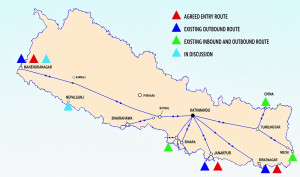
The authority sells surplus electricity in India through competitive bidding in the Indian Energy Exchange’s day-ahead and real-time markets. It also supplies power to the Indian states of Haryana and Bihar under medium-term bilateral power agreements, generally from June to October.
Exports to Bangladesh take place under a tripartite arrangement involving the power authorities of Nepal, India, and Bangladesh. Nepal supplies 40 megawatts from June 15 to November 15 each year, using India’s transmission network. Payments for electricity sold to India are made in Indian rupees, while Bangladesh pays in US dollars.
However, this year’s exports were affected after floods damaged hydropower plants and transmission infrastructure in the Bhotekoshi corridor. The August 26 flood in the Bhotekoshi river damaged the Chilime, Trishuli, and Devighat hydropower plants, which had been approved to supply electricity to India and Bangladesh. Exports were suspended after the damage.
The country had been exporting around 1,000 megawatts during the wet season, but the volume fell to about 650MW after the disaster. The floods also damaged other power projects and disrupted generation and transmission.
Exports resumed on October 23 after India approved alternative projects. Electricity generated by the Solu, Kabeli-1 and Lower Modi hydropower projects was cleared to replace supplies from the damaged plants, allowing sales to Bangladesh and Haryana state of India to restart.
NEA Executive Director Dirghayu Kumar Shrestha said floods in the Trishuli (August 26) and Kaligandaki river (October 11) had damaged both generation facilities and transmission structures, forcing some projects to stop producing electricity and affecting exports.
“Although some projects approved for export were damaged, the authority has succeeded in exporting a significant volume of electricity left over after domestic consumption,” said Shrestha.
Nepal’s growing export earnings reflect its emergence as a seasonal power exporter. Hydropower production rises during the monsoon, while domestic demand is generally lower than available supply. In the dry months, however, falling river flows reduce generation and the country relies on imports from India.
In the previous fiscal year, the state-owned power utility exported electricity worth Rs29.31 billion to India and Bangladesh and imported power worth Rs10.56 billion. The trade surplus has strengthened the role of electricity as a source of foreign currency earnings, although Nepal’s ability to sell power remains dependent on Indian market access and project-specific approvals.




 17.12°C Kathmandu