



 16.12°C Kathmandu

Sun, Nov 29, 2026
Money
Shah’s India visit delivers little new on energy, with old agreements and fresh loan pledge
India has announced a concessional loan of Rs184 billion for energy projects, but the projects and terms remain unclear. Nepal’s dependence on Indian approvals for power exports and imports also remains unchanged.
bookmark![]()
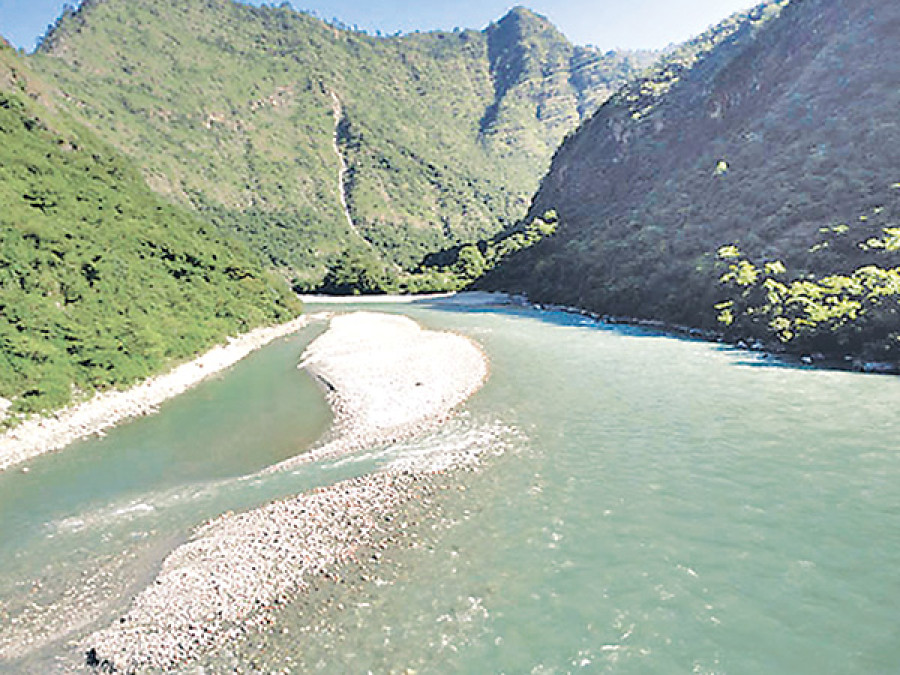
The Mahakali Treaty, which provides the basis for the Pancheswar project, was signed in February 1996, but the project’s detailed report remains unfinished nearly three decades later. File Photo ![]()
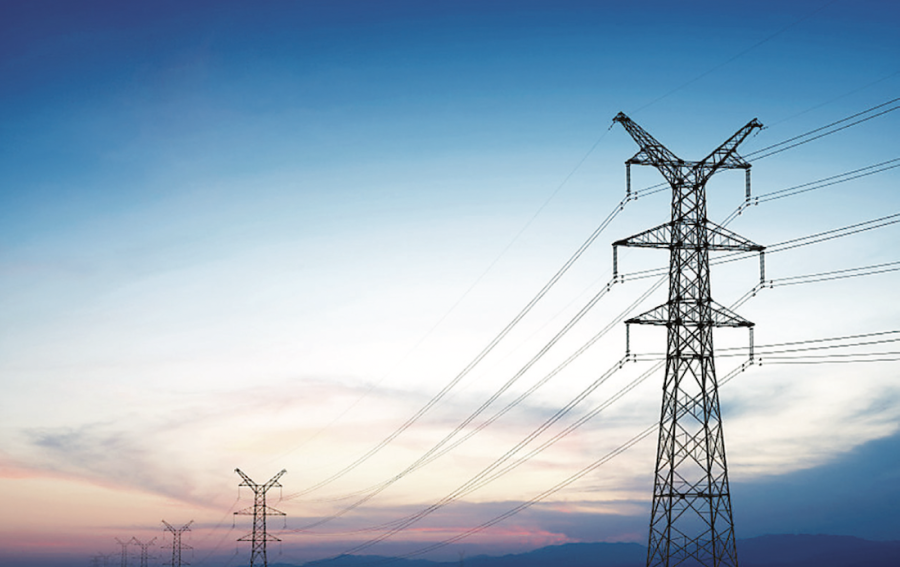
PM Shah's visit made no progress on Nepal’s plan to export an additional 20 megawatts to Bangladesh. India has authorised electricity imports of 600 megawatts through the 400kV Dhalkebar-Muzaffarpur transmission line and 54 megawatts through the 132kV Tanakpur-Mahendranagar transmission line. SHUTTERSTOCK
Seema Tamang
Published at : November 29, 2026
Updated at : November 29, 2026 10:42
Kathmandu
Most of the energy-related outcomes announced during Prime Minister Balendra Shah’s visit to India amount to a continuation of agreements, decisions and processes already in place, with few concrete new commitments.
India has announced a concessional loan facility of 115 billion Indian rupees (Rs184 billion) for energy projects in Nepal, but has yet to disclose which projects will qualify or the terms on which the money will be made available.
The projects to be selected and the process for mobilising the assistance will be decided through consultations between the two countries. However, experts say conditions attached to Indian loans could make it difficult for Nepal to use the facility. The Nepal Electricity Authority says hydropower projects that have already secured approval to export electricity to India must still renew their approvals every year.
India’s Central Electricity Authority also continues to determine when Nepal can import and export electricity. Nepal imports power from India during the dry season to meet domestic demand and exports surplus electricity during the monsoon.
For the current dry season, India has allowed Nepal to import electricity for 18 hours a day until December 31. The approved import window runs from midnight to 6 pm.
The visit also made no progress on Nepal’s plan to export an additional 20 megawatts of electricity to Bangladesh. India has authorised Nepal to import 600 megawatts through the 400kV Dhalkebar-Muzaffarpur transmission line and 54 megawatts through the 132kV Tanakpur-Mahendranagar line. Imports from January 2027 will be reviewed in December 2026. The timing of India’s approval and the number of hours for which power can be imported will remain at India’s discretion.
The proposal to increase electricity exports to Bangladesh by 20 megawatts had already been agreed at a meeting of the Nepal-Bangladesh Joint Steering Committee at the energy secretary level in Dhaka on November 27, 2025. The two sides had agreed to take the necessary steps to expand exports under the existing 40-megawatt arrangement.
A subsequent meeting between the energy secretaries of Nepal and India in Pokhara on July 15 discussed the proposal but reached no decision.
Following the Dhaka agreement, the Nepal Electricity Authority formally approached India’s NTPC Vidyut Vyapar Nigam Limited (NVVN) to facilitate the additional exports. NVVN, however, informed the authority that the India-Bangladesh transmission line, with a capacity of 1,000 megawatts, could not accommodate the additional 20 megawatts. Shah’s visit produced no breakthrough on the issue either.
Former energy minister Kulman Ghising said the visit had delivered little of substance on electricity trade.
“There were no concrete achievements in energy trade. Nepal should have prioritised open access to regional markets, including India and Bangladesh, and created an environment for electricity exports without restrictions,” he said. “Even after a project receives approval to export electricity, that approval has to be renewed every year. This annual renewal requirement should have been removed.”
Ghising said Nepal needed greater market access to meet its target of exporting 10,000 megawatts of electricity within 10 years. He said the government should have prioritised project approvals and a framework agreement to facilitate increased exports.
Although Nepal and India signed a 10-year agreement on January 4, 2024, under which Nepal aims to export 10,000 megawatts of electricity to India, the projects that will supply the power have yet to be finalised. Power purchase agreements for the proposed exports also remain unsigned.
India’s restrictions extend beyond electricity trade. Explosives are essential for constructing hydropower projects and road infrastructure, but Nepal has faced difficulties importing them for projects involving Chinese companies. India has also withheld export approvals for electricity generated by projects involving Chinese investment, contractors or equipment, including those awarded contracts through international competitive bidding.
The 456-megawatt Upper Tamakoshi hydropower project is a prominent example. Although Indian companies secured the contracts for its hydromechanical, electromechanical and transmission line works, a Chinese company carried out the civil construction. India has yet to approve electricity exports from the project, despite Nepal repeatedly raising the issue at bilateral energy mechanism meetings.
Under the procedures of India’s designated authority, electricity trade is restricted from projects involving investment from third countries that share a land border with India but do not have a bilateral agreement with it on cooperation in the power sector. In practice, however, India has also shown reluctance to approve exports from projects involving Chinese contractors or equipment, even where the investment itself may not be Chinese.
Dwarika Nath Dhungel, a former energy secretary, also said Shah’s visit had produced few concrete outcomes in the energy and trade sectors.
Dhungel said Nepal should not assume that selling electricity alone would make the country prosperous. He argued that hydropower development should primarily support domestic industrialisation, job creation, reduction of the trade deficit and economic growth. Nepal should export only its surplus electricity after meeting domestic demand, while securing access to third-country markets where it can obtain better prices, he said.
A new loan pledge, but questions over its use
India has previously announced a $1 billion assistance package for Nepal’s reconstruction following the 2015 earthquake. The package comprised $250 million in grants and $750 million in concessional loans. While the grant component was spent on reconstruction, a substantial portion of the loan remained unused.
In 2016, Nepal and India signed an agreement to mobilise the loan through India’s Export-Import Bank. The arrangement required Nepal to meet conditions on the use of Indian goods and contractors. At least 75 percent of machinery, equipment and services and 50 percent of civil construction materials had to be sourced from India, according to officials involved at the time.
Shankar Sharma, a former Nepali ambassador to India and an economist, said similar conditions had created difficulties in utilising Indian loans in the past. He said large hydropower and transmission line projects would be more suitable for the new facility because smaller projects could struggle to meet the requirements.
However, selecting large projects alone would not resolve all the difficulties, Sharma said. Conditions on construction materials and labour could again impede implementation, as even large projects require local materials, workers and contractors.
Lower Arun moves towards construction
During Shah’s visit, he and his Indian counterpart Narendra Modi virtually laid the foundation stone for the 669-megawatt Lower Arun Hydropower Project, estimated to cost Rs92.67 billion.
While the ceremony took place virtually at Hyderabad House in New Delhi, a commemorative plaque was also unveiled at the project site in Pukhuwā, Chichila Rural Municipality, Sankhuwasabha district. The project has now moved towards the construction phase.
Water discharged from the tailrace of the 900-megawatt Arun III project, which is under construction, will be channelled through a tunnel measuring approximately 17.3 kilometres from Chewabesi in ward 2 of Khandbari Municipality to the Lower Arun powerhouse.
Like Arun III, Lower Arun will provide Nepal with 21 percent of its electricity generation free of charge. For the first 15 years of operation, the project will pay the government capacity royalty of Rs400 per kilowatt and an energy royalty of 7.5 percent. After 15 years, the capacity royalty will rise to Rs1,800 per kilowatt and the energy royalty to 12 percent.
SJVN Lower Arun Power Development Company, a subsidiary of India’s Satluj Jal Vidyut Nigam, is developing the project. Its project development agreement was signed during then Prime Minister Pushpa Kamal Dahal’s visit to India on June 1, 2023.
Indian government and private companies have taken forward seven hydropower projects in Nepal with a combined capacity of 4,700 megawatts. However, only Arun III, with a capacity of 900 megawatts, is under construction, while Lower Arun has now moved into the construction phase.
The other projects are Upper Karnali (900 megawatts), West Seti (750 megawatts), Seti River-6 (450 megawatts), Phukot Karnali (480 megawatts) and Arun IV (490 megawatts), all at different stages of development.
During Shah’s visit, the two prime ministers welcomed the active involvement of Indian companies in Nepal’s hydropower sector.
The joint vision on India-Nepal power sector cooperation also states that India will encourage further investment in Nepal’s hydropower and transmission infrastructure, while Nepal will provide appropriate support and facilitation through an investment-friendly and mutually beneficial framework.
The joint statement, titled ’Developed India and Prosperous Nepal: Reimagining the Partnership’, says the two countries will explore ways to expand electricity trade based on mutual benefit and market demand.
It also commits both sides to accelerate the implementation of existing and proposed hydropower and multipurpose projects, including Pancheshwar, Saptakoshi and Sunkoshi, to harness shared water resources and mitigate the adverse effects of floods.
Sunil Poudel, joint secretary at the Ministry of Energy, Water Resources and Irrigation, who was part of the Nepali delegation, said Nepal would propose projects under the new loan facility.
“Transmission lines are our priority, and we will propose projects accordingly for the loan,” he said.
Transmission line agreements largely predate the visit
The two prime ministers also expressed satisfaction with progress towards setting up joint venture companies for the 400kV Inaruwa-New Purnea and New Lamki (Dodharā)-Bareilly transmission lines. However, the shareholder and joint venture agreements between the Nepal Electricity Authority and India’s Power Grid Corporation had already been completed.
The 13th meeting of the Joint Steering Committee at the energy secretary level, held on July 15, had already decided to expedite the process of establishing the companies.
Under the proposed arrangement, the Nepali company will have 51 percent Nepal Electricity Authority ownership and 49 percent Indian ownership. The Indian company will have 51 percent Indian ownership and 49 percent Nepali ownership.
Achyut Babu Ghimire, spokesperson for the Nepal Electricity Authority, said the process of securing foreign investment approval for establishing the Indian company was under way. Documents, including the memorandum of association, were also being prepared to register the Nepali company.
Long-delayed multipurpose projects remain unresolved
The two prime ministers directed the relevant authorities to expedite the finalisation of the detailed project report for the Pancheshwar Multipurpose Project and begin its implementation. The Mahakali Treaty, which provides the basis for the project, was signed in February 1996, but the project’s detailed report remains unfinished nearly three decades later.
The two sides also agreed to accelerate work on the detailed project reports for the Saptakoshi and Sunkoshi projects.
During the visit, they announced cooperation in a range of energy sources, from solar and underground energy to a pilot green hydrogen project.
However, as with several other announcements made during the visit, the implementation details and timelines remain to be established.
Seema Tamang
Seema covers business and economy for Kantipur Publications.




Most Read from Money
Nepal and India have revived stalled air route talks. Here’s what you need to know
Nepal, India agree to make Bhairahawa-Lucknow air route two-way
Buddha Air revives plan to launch international jet flights from Pokhara
India pledges Rs240 billion in fresh aid, but old loan remains a cautionary tale

Gold price slides by Rs78,400 a tola in 10 months
Editor's Picks
Balendra Shah’s India trip: From nationalist posturing to realpolitik
Patan’s Kartik Nach continues to enthrall, nearly 400 years on
Book Review: Rethinking Nepal’s geopolitical choices in an uncertain world order

Sushank Mainali’s long road back to the big screen

Five lessons in golf—and politics—for Prime Minister Balendra Shah
E-PAPER | November 29, 2026

×