Constitutional Bench resumes hearings after weeks of deadlock
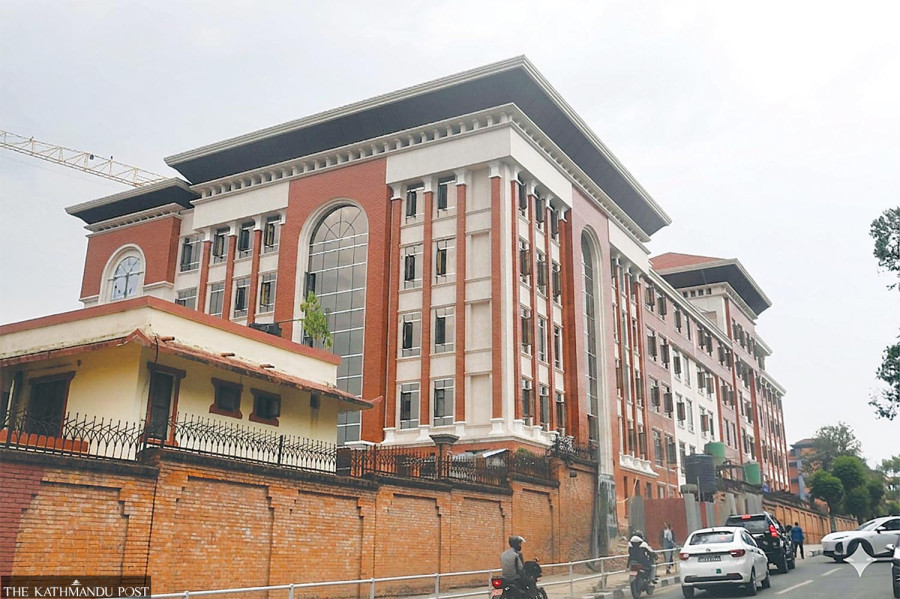
Seniority-based appointments end the discord lasting a month-and-a-half. The bench has 246 cases to hear, including some pending for eight years.The Supreme Court’s Constitutional Bench resumes hearings after nearly six weeks of deadlock, following Chief Justice Manoj Kumar Sharma’s decision to form the bench based on seniority. Post File Photo
The Supreme Court’s Constitutional Bench resumed hearings on Wednesday after nearly six weeks of deadlock, following Chief Justice Manoj Kumar Sharma’s decision to constitute the bench on the basis of seniority.
Sharma designated himself and the four senior-most justices on the roster—Sapana Pradhan Malla, Kumar Regmi, Nahakul Subedi and Saranga Subedi—to the five-member Constitutional Bench. Fifteen cases were listed for hearing. Four were heard, while proceedings on a petition filed by Deep Basnet were postponed after a justice concerned said the case could not be heard.
The bench had not been formed since October 7, leaving hundreds of constitutional disputes awaiting hearings. Sharma’s latest decision marks a departure from the controversial practice of selecting justices at his discretion, commonly criticised as a ‘pick-and-choose’ approach.
On Wednesday morning, while conducting the lottery process for regular benches, Sharma announced that the Constitutional Bench would be formed according to seniority. He then designated its members, after which other justices formed 10 single and joint benches through the lottery system.
Previously, the Constitutional Bench used to sit twice a week, on Wednesdays and Fridays. However, since Sharma assumed office, it has been scheduled for Wednesdays only.
“There was no dispute regarding the formation of the Constitutional Bench in the past. The Constitutional Bench could not be formed due to long Dashain and Tihar holidays and inadequate physical infrastructure. The court now returns to the seniority-based Constitutional Bench,” said CJ Sharma.
The Supreme Court currently has 246 cases awaiting hearings before the Constitutional Bench, some of them pending for eight years. Around 30 petitions still await preliminary hearings.
Kedar Koirala, a senior advocate and general secretary of Nepal Bar Association, welcomed Sharma’s decision, saying it had ended the prolonged uncertainty surrounding the bench.
“By including the senior-most justices, the chief justice has provided a way out after a long impasse. This is a positive development,” said Koirala. “The Bar had suggested two options: forming the bench according to seniority or selecting members through lottery among justices on the roster. Since the first option has been adopted, there are indications that the bench will function regularly.”
However, Koirala cautioned that the chief justice should not manipulate its composition in the future. He said previous controversies should serve as a lesson for the judiciary.
According to the Supreme Court, 14 categories of cases are pending before the Constitutional Bench. They include disputes concerning taxation, senior citizens, civil servants, elections, enforced disappearances and transitional justice, political parties, education laws, restoration of House of Representatives, property rights, local governments, tobacco sales, same-sex marriage, promotion and employee adjustment, and other constitutional petitions.
The pending cases also include challenges to ordinances introduced by the governments led by Sushila Karki and Balendra Shah. There are 39 petitions concerning the education sector alone.
The latest development follows repeated disputes over the bench's composition. During former chief justice Cholendra Shumsher Rana’s tenure, allegations of preferential selection led to objections from justices and initiation by the Nepal Bar Association. An agreement to follow seniority helped resolve the deadlock.
The controversy resurfaced under former chief justice Prakash Man Singh Raut following disputes over constitutional appointments, including 52 to constitutional bodies, and proposals to introduce a lottery system.
Under Sharma, disagreements intensified after justices objected to the selection of particular colleagues, alleging that the chief justice was favouring justices considered close to him. Some justices subsequently boycotted the designated bench, preventing hearings.
The Constitutional Bench, established under Article 137 of the 2015 constitution, comprises the chief justice and four other justices selected from a roster recommended by the Judicial Council. Unlike regular benches, its members are designated by the chief justice. The absence of clear selection criteria has repeatedly fuelled disputes over seniority and judicial discretion.




 10.12°C Kathmandu