Changing climate raises concerns over chauri fertility in Dolakha
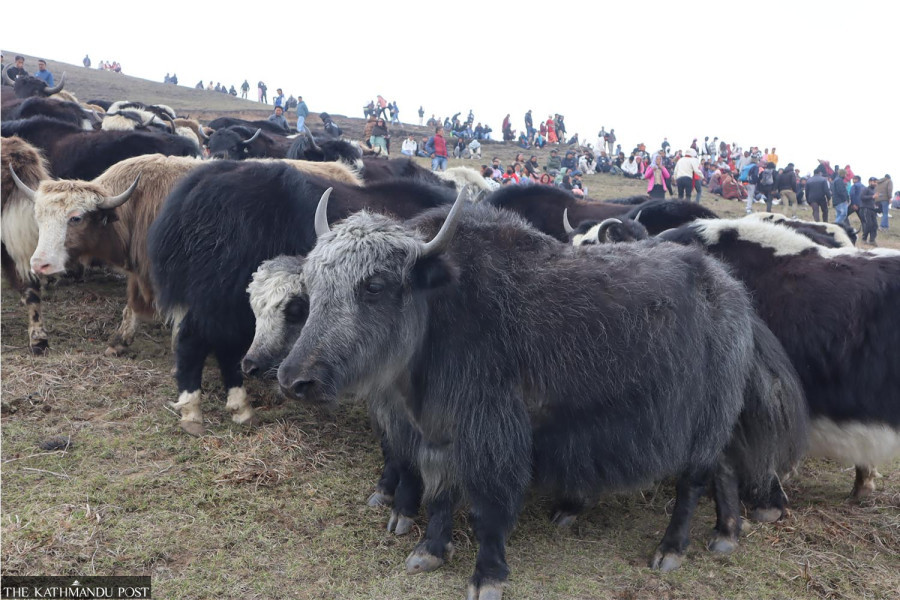
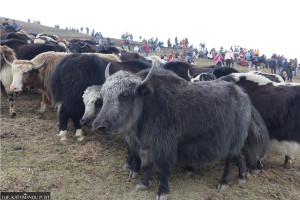
Three to five animals in each shed are failing to conceive every year, reducing milk production and farmers’ earnings from ghee and churpi. Post file photo
Chauri farmers in Dolakha are facing growing losses as three to five animals in each shed fail to conceive every year. The problem is reducing milk production and supplies of ghee and churpi, a traditional dried cheese, while eroding household incomes.
Janak Bahadur GC, 69, of Chilankha in ward 5 of Bigu Rural Municipality, spends most of his time at his family’s high-altitude chauri sheds. His two sons run the sheds, but infertility among their animals has increased over the past two to four years, reducing milk yields.
GC said he had never faced such a problem before, when almost all the female chauri in the sheds produced milk. “Two to four years ago, this was not a problem. Almost all the female chauri were milking,” he said. “Now, more of them fail to conceive and remain unproductive, causing us losses.”
Even one animal failing to conceive can mean a significant loss for a high-altitude farmer, he said. The family moves its sheds to Thulachaur in winter and to Choinang, a higher grazing area, during the monsoon. After two or three chauri in his sheds failed to conceive each year, GC turned to the Agriculture and Livestock Development Office for help.
Technicians visited the high-altitude sheds to investigate, but the problem remained unresolved. As similar complaints came from other farmers, the office sent a team to examine the causes.
A preliminary study of 42 sheds across Bigu and Kalinchowk rural municipalities and Jiri Municipality identified climate-driven changes in the seasonal grazing cycle as one possible cause of infertility.
The report says shifts in seasonal weather have reduced the availability of nutritious grass in grazing areas, affecting the animals’ reproductive health. Delayed or irregular snowfall and the spread of other grass species into pastures where nutrient-rich varieties once grew have also contributed to the problem.
Climate change is reducing the availability of nutritious forage in high-altitude and mid-hill pastures, with the loss of nutrient-rich grass affecting chauri reproduction, said Madan Bhandari, a livestock development officer.
According to Bhandari, three to five chauri in each shed are now affected by infertility every year. Changes in the timing of seasonal movement between lower elevations and high-altitude pastures have disrupted the animals’ access to nutritious grass.
“The entire cycle of taking chauri to the high pastures and bringing them down has changed,” he said. “As a result, the time when nutritious grass grows has also shifted.”
A shortage of nutritious grass during the breeding season is another concern, Bhandari said. Chauri are traditionally raised in open grazing systems in the Himalayan region, and inadequate nutrition when they are due to conceive can affect their ability to reproduce.
“If this continues and infertility keeps rising, farmers may eventually stop raising chauri in the highlands,” he said.
The study found that the problem had worsened in 15 of the 22 sheds examined in Bigu. Dolakha has more than 200 chauri sheds, with a total of 2,985 yaks, naks and chauri. Most sheds raise the Urang breed of chauri, while some areas also have the Dimjo breed.
Tek Raj Poudel, chief senior livestock development officer at the Agriculture and Livestock Development Office in Dolakha, said climate change had caused serious reproductive problems among chauri. Even a single animal failing to conceive can result in substantial losses for a farmer, he said.
Changes in weather have disrupted the seasonal movement of chauri between high pastures and lower elevations, making breeding more difficult and limiting the growth of herds. Poudel said a more detailed study was needed to establish the causes.
The office has also detected a worm infestation among chauri for the first time. “This is the first time worms have been found in chauri in the Himalayan region,” Poudel said. “How they have appeared in animals grazing in high-altitude pastures needs to be investigated. We are carrying out further studies.”
He said the infestation could also be contributing to infertility. The findings have added to the challenges facing the office’s efforts to expand chauri herds through a promotion programme that works directly with farmers at their sheds.
Chauri farming supports more than 200 sheds across Dolakha. Farmers earn between Rs500,000 and Rs900,000 annually from selling ghee and churpi (traditional dried cheese) from each shed. But declining fertility has begun to undermine that income.
More than Rs200 million worth of chauri products, mainly ghee and churpi, are sold outside the district each year, Poudel said. The growing reproductive problem now threatens both farmers’ livelihoods and a significant source of income for the district.




 20.12°C Kathmandu