Gen Z ordinance before President may pardon protesters
The proposed commission would settle non-grave offences through mediation, compensation or pardon, while murder and armed robbery cases would remain with the courts. A presidential aide says absolving those involved in heinous crimes in the name of reconciliation needs serious scrutiny. Post file photo
The government has recommended an ordinance to form a commission empowered to investigate incidents from the September Gen Z movement in 2025, compensate victims, and settle pending non-grave criminal cases through mediation or pardon.
Drafted by the Ministry of Home Affairs, the ‘Ordinance on the Investigation, Compensation and Reparation Commission for Incidents in the Gen Z Movement’ was approved by the Cabinet on November 20 and sent to the Office of the President. However, the measure remains under review by the President.
Senior advocate Baburam Kunwar, who is also legal adviser to President Ramchandra Paudel, confirmed that the ordinance arrived at Sheetal Niwas on November 24 and requires further examination before a decision is made.
“The ordinance to form a commission for the Gen Z movement incidents arrived on Tuesday. We need to sit and discuss it,” said Kunwar.
The proposed law seeks to implement a 10-point agreement signed on December 10, 2025, between the government and leaders of the Gen Z movement following the deadly unrest of September 8 and 9, 2025. Then prime minister Sushila Karki signed the accord on behalf of the state, while Bhoj Bikram Thapa signed as representative of the martyrs’ families and the injured of the September movement.
According to the ordinance’s preamble, immediate legal action is necessary to honour the spirit of that pact by conducting further probes into protest-related cases, facilitating reconciliation between disputing parties, providing compensation or reparation to those harmed, and swiftly clearing pending litigation.
The ordinance also incorporates provisions empowering the commission to adjudicate and dispose of cases. The commission has been vested with the authority to dispose of cases other than those involving grave offences.
“Notwithstanding anything contained in the prevailing law, the commission shall dispose of cases other than those relating to grave offences by facilitating reconciliation, or by providing compensation or reparation and granting pardon to the defendant in the case. Provided that, with the consent of the aggrieved party, the commission may dispose of such a case even without providing compensation or reparation,” the ordinance provides.
For minor offences, cases where financial loss is unspecified, or incidents involving damage to government and public property, the commission may close the files by pardoning defendants without ordering compensation or reparation.
In the definition clause of the ordinance, “grave offence” is defined to mean “any offence of culpable homicide amounting to murder and any offence of theft committed in a planned manner using arms and ammunition during the Gen Z movement.”
In cases where charges involve both grave offences and other crimes, the commission will separate the grave offence and adjudicate only the non-grave charges.
Once issued by President Paudel and published in the Nepal Gazette, the government will form a three-member commission led by a chairperson. Anyone who has served as or is qualified to become a High Court judge is eligible to chair the commission. Both the chairperson and members must be at least 35 years old, hold a minimum of a bachelor’s degree, have experience in human rights, law, conflict management, or sociology, and hold no political party membership at the time of appointment.
The ordinance does not specify a minimum number of years of professional experience. The commission will have a three-month mandate from the date of appointment, though the government may extend its term if its work remains incomplete.
Under the provisions governing investigation, the commission will collect details of all protest-related cases pending across district courts, High Courts, and the Supreme Court–including appeals–and gather complaints under police investigation. “Notwithstanding anything contained in the prevailing law, the commission shall investigate cases relating to incidents of the Gen Z movement that are sub judice in court at the time of the commencement of this ordinance, as well as complaints lodged with investigating officers that are currently under investigation,” the ordinance states. It is also empowered to determine whether a disputed incident falls within the scope of the Gen Z movement.
The ordinance grants the commission sweeping authority to close non-grave cases and grant pardons to defendants.
It has been stated that cases thus disposed of by the commission pursuant to Section 20 of the ordinance cannot be instituted or tried again in any court. “No case already disposed of by the commission under this section shall be tried again in any court.” The ordinance also provides that the records of disposed cases shall be struck off and forwarded to the respective court through the Attorney General.
The ordinance also makes provision for releasing individuals held in custody or imprisonment in connection with cases disposed of by the commission. “If the defendant in a disposed case is serving imprisonment or is in custody in connection with the same case, the commission shall write to the prison office concerned through the Department of Prison Management to release such person from imprisonment or custody,” the ordinance states.
For cases that involve grave crimes and cannot be settled by the commission, the ordinance mandates returning the original case files to the respective courts through the Office of the Attorney General for regular trial and adjudication.
Alongside case resolution, providing relief to victims forms a core mandate of the commission. “The commission shall make appropriate arrangements for compensation or reparation to persons who suffered damage in incidents during the Gen Z movement in accordance with this ordinance,” the text reads. Under the definition clause, “damage” covers physical harm to an individual as well as destruction or loss of government, public, or private property.
Applicants will not qualify if they have already received compensation or insurance payouts for the same incident. If an eligible victim dies before receiving relief, the payout must be handed over to their family members, based on criteria and standards set by the commission.
To finance relief efforts, the ordinance establishes a dedicated fund comprising contributions from the Nepal government, domestic individuals or organisations, and foreign governments or international agencies. Receiving funds requires prior approval from the Ministry of Finance, and the ordinance strictly prohibits spending money from the fund on administrative overheads.
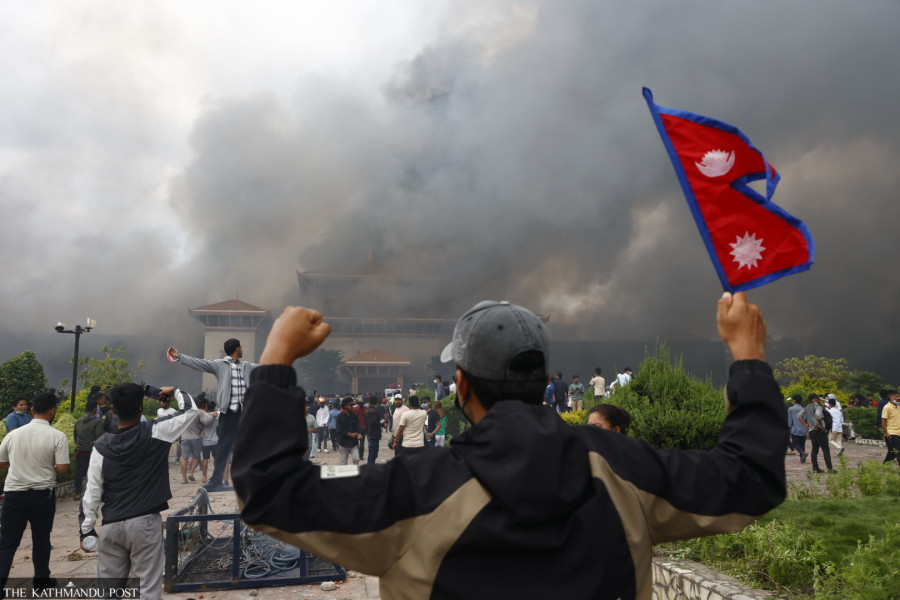
The Gen Z uprising erupted on September 8, 2025, after youth-led anti-corruption demonstrations—triggered partly by a sweeping social media ban and public anger over corruption—turned violent when security forces opened fire outside Parliament in New Baneshwar, leaving dozens dead over two days. The protests reshaped Nepal’s political landscape, eventually leading to the 10-point pact under Karki’s administration, and following parliamentary elections in March, the formation of Balendra Shah’s government.
The Gen Z commission ordinance is one of three Cabinet-recommended ordinances currently stalled at Sheetal Niwas amid strained ties and a lack of direct communication between Prime Minister Shah and President Paudel. Paudel has promulgated five other ordinances ahead of the winter parliamentary session, but the delay in approving the remaining three points to friction between the prime minister’s office and the presidency.
Another official at the Office of the President said President Paudel is preparing to thoroughly scrutinise the contents of the ordinance. “Opening a path to absolve those involved in heinous crimes in the name of reconciliation is a sensitive matter,” the official, requesting anonymity, said. “Choosing the ordinance route for such a sensitive issue appears wrong. It will undergo serious study.”
Former law minister and senior advocate Govinda Bandi said the government did not appear to have held adequate consultations before recommending the ordinance. He, however, added that it was difficult to comment in detail as the draft had not been made public.
Pointing out that both the Gauri Bahadur Karki-led commission and the National Human Rights Commission have already investigated the Gen Z movement, Bandi stressed the need for a commission focused on uncovering the truth. “Why were shots fired on September 8 and 9, and why did the Gen Z uprising happen? Neither commission could establish that. Any new commission must focus on finding the truth,” he said. “In the past, a commission was formed to examine why the armed conflict happened, but it failed to work on that.”
If promulgated, the ordinance will allow the government to clear hundreds of Gen Z protest-related prosecutions while leaving murder and armed robbery trials to the regular judiciary.




 20.12°C Kathmandu