Many children of Nepal’s Maoist war are done with politics
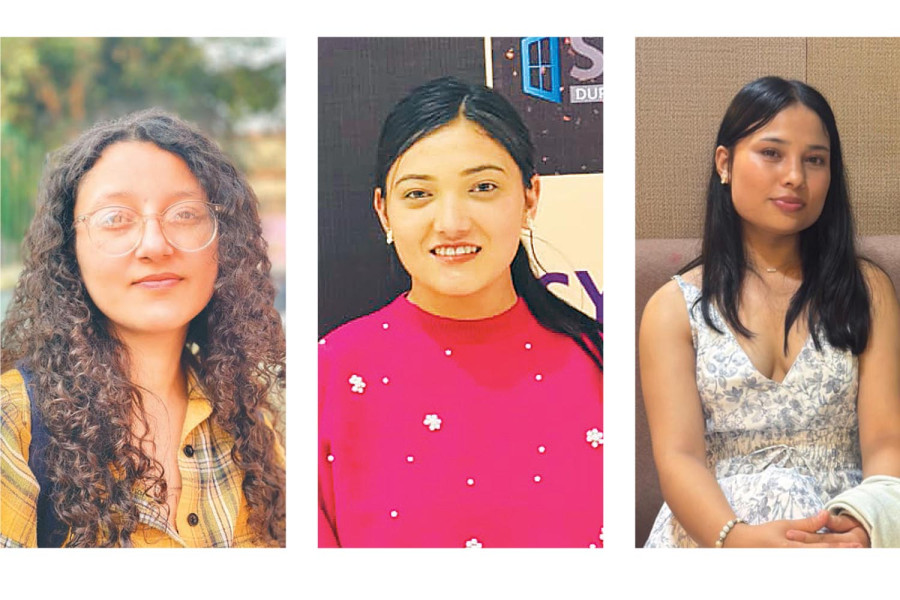
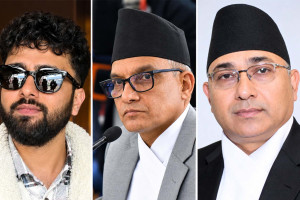
Two decades after the insurgency ended, the children of Nepal’s Maoist fighters are building careers in IT, fashion and insurance. A few still carry the cause. (From left) Agrani Chapagain, daughter of Maoist leader Dharmashila Chapagain; Anunaya Acharya, daughter of Phanindra Acharya and Sunita Magar; and Shikha Sharma, daughter of Nabin Acharya and Bhumika Thapa Magar. Photos: Courtesy of respective individuals
Agrani Chapagain grew up in prisons around eastern Nepal.
She was born in Biratnagar at the height of the Maoist insurgency. Her mother, Dharmashila Chapagain, was a Maoist cadre living in hiding. When Agrani was seven months old, police arrested her mother. The infant went with her into custody and eventually to prison.
As a child, she knew no other world. Guards, soldiers and fellow inmates were part of her everyday life. “We lived with other people in a cramped space,” she recalled to Kantipur recently.
Dharmashila was arrested in Biratnagar in late 2001. She was subsequently imprisoned in Morang, Sunsari, Jhapa and Ilam districts. Nepal was under a state of emergency, and Dharmashila remained under close surveillance even behind bars. “I was fortunate to have had my mother’s warmth and love,” Agrani said. “I was the youngest person there. The police, prison staff and other inmates all cared for me.”
She began school while her mother was being held at Ilam prison. She used to watch other children going to school from the prison gate. Her mother argued with the prison authorities until they let her enrol. “I carried a little lunchbox, and police officers took me to school and brought me back,” she recalled. “The other children called me ‘the prison girl’.”
Agrani said she also witnessed the brutal treatment of Maoist women in custody. “When we were at Ilam prison, I saw two women brought in, stripped and beaten on their first day,” she said. “They were so badly hurt they could barely stand or walk. I learnt later that my mother had been tortured in the same way.”
The Maoists launched their armed insurgency in February 1996, calling it the “People’s War”. Even as they fought the state, their cadres married and had children, often raising them in hiding and moving from one shelter to another. Some children, including Agrani, spent their earliest years in prison with their mothers. Most of them are now in their twenties, but few have followed their parents into politics. Many say the war is a past they would rather leave behind. Only a few have stuck to politics.
Ram Karki, former Maoist leader, sees three distinct paths among the children of the insurgency. “Some followed their parents into the movement but later earned a bad name,” he said. “Others experienced the hardships of war and have turned away from politics. Then there are some who want nothing to do with the conflict, or politics, anymore.”
***
Dharmashila was released on May 23, 2006, weeks after a mass uprising forced King Gyanendra Shah to end his direct rule and paved the way for Nepal’s peace process. For Agrani, who had spent much of her early childhood behind bars, freedom meant discovering a world she had known only from inside the prison walls.
“Only after my release did I realise how much of the world I had never known,” she said.
Agrani grew up without knowing her father. While she and her mother were in prison, security forces arrested Shankar Ghimire in Charali, Jhapa, and allegedly killed him in June 2002. Dharmashila learnt of his death while still behind bars, but Agrani would not learn the truth until much later.
Agrani believes the sacrifices made by her mother and others during the insurgency helped bring about political change in Nepal. Dharmashila was elected to the Constituent Assembly in 2008. She now divides her time between farming in Jhapa and political work. Agrani has since built a career in information technology. Based in Kathmandu, she works with IT companies in the United States and Australia. She resumed her education after Nepal’s peace process began in 2006, eventually completing secondary school and earning a degree in IT.
Having lost her father to the conflict and spent nearly five years in prison with her mother, Agrani has little interest in politics. “I want to pursue my career and support my mother financially,” she said.
Likewise, for Anunaya Acharya, 24, politics holds little appeal. She grew up in Liwang, Rolpa, a Maoist stronghold during the insurgency. But she is not drawn towards the political movement that shaped her childhood. Instead, the power struggles among political leaders have reinforced her view that politics is a dirty game. She is studying fashion design at IIFT School of Interior Nepal in Kathmandu. “I will probably start something of my own in fashion design,” she said.
Both her parents, Phanindra Acharya and Sunita Magar, were full-time Maoist cadres. When security forces began keeping a close watch on their home in Liwang, Phanindra went into hiding. He and Sunita married while he was on the run, crossing caste lines in a society where intercaste marriages have long faced resistance.
After Anunaya was born, her parents moved her between different places in Rolpa for two years to keep her safe. When she turned two, they left her with her paternal grandparents in Liwang. She grew up there. “My parents told me to do whatever I wanted. I chose not to go into politics,” she said.
Politics remains a part of Deepashikha’s family, but she wants nothing to do with it. She lost her grandfather, mother and paternal aunt during the insurgency, while her father and maternal uncle and aunt remain politically active. She has chosen a different path. “I see friends taking an interest in politics, but it has never appealed to me,” she said.
Deepashikha Nath was two when her mother, Pabitra Budha Magar, left her in the care of relatives in Kholagaun, in what is now Rukum West district, and travelled to Chaurjahari for party work in 1997. She was arrested there and later taken to a forest and allegedly shot dead.
Deepashikha’s father, Kal Bahadur Nath, was a commander in the Maoist People’s Liberation Army. She still remembers how her grandmother hid her from the police. “My grandmother would send us to the primary school in Phedikhola early each morning with sattu, a roasted flour mix, in our bags,” she recalled. “On school holidays, she would send us into the forest to hide. We were afraid the police would come looking for us and harm us. I remember Auntie Sunita Pariyar hiding us and giving us food. Sometimes we spent the night at her house.”
As a child, Deepashikha thought her mother had gone away for work and would one day come home. “I have so few memories of her that I try to piece together what she was like from photographs,” she said. “The war took my mother away, and I would rather not revisit those days.”
After completing a bachelor’s degree in business administration on a scholarship, Deepashikha found a job at an insurance company. “I’ve tried to move on, holding on to some memories and leaving the rest behind,” she said. “I don’t have any big ambitions.”
Shikha Sharma, who was born in Thabang, a Maoist stronghold in Rolpa, has also chosen to stay out of politics. She is studying for a bachelor’s degree in business studies in Ghorahi, Dang district.
Her parents, Bhumika Thapa Magar and Nabin Acharya, married while in hiding during the Maoist insurgency. “I was born in 2005, and my mother and I moved between different houses. It feels strange to think about it now,” Shikha said. “We returned to our home in Liwang after the peace process began in 2006. The transition was difficult at first, but things gradually got easier.”
Shikha sees the development of remote districts such as Rolpa and Rukum as one outcome of the war. “Rolpa has changed considerably since the war, with more hospitals, schools and roads,” she said. “The region could have progressed further if politics worked as it should.”
***
But not every child of Maoist insurgents is willing to leave it all behind.
Sandeep Pun, the son of a Maoist couple killed during the “People’s War”, remains active in politics. Sandeep was born in Musikot, Rukum. His parents, Surya Prakash Pun and Parampara Gautam, had been assigned by the party to work in Bajhang. They were allegedly killed by security forces in Bajhang in 2002, a week apart.
After their deaths, Sandeep was raised in several places, including Dang, Nepalgunj, Kapilvastu and Butwal, before being taken to Shimla in India. “I was five when I was taken to Kapilvastu,” he said. “People would flee whenever the army or police arrived, and Maoist fighters would turn up at night. For my safety, even my name was changed.”
In the March 2026 House of Representatives elections, Sandeep contested against Pushpa Kamal Dahal, coordinator of the Nepali Communist Party, in Rukum East. Sandeep stood for the Pragatisheel Loktantrik Party, which was formed by Janardan Sharma after he left the former Maoist party. The contest between two candidates with similar political backgrounds drew attention.
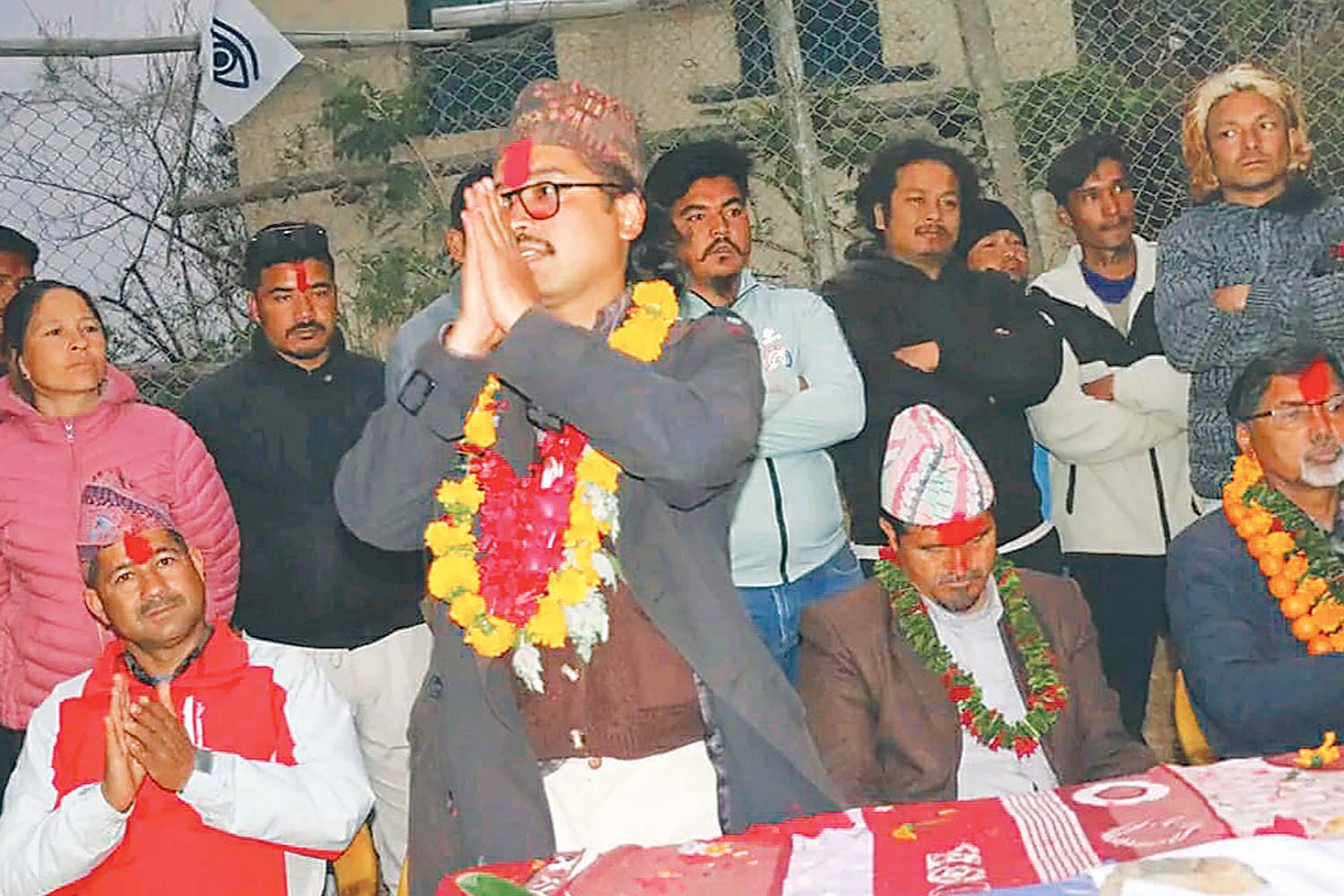
Sandeep Pun (front row, standing), the son of a Maoist couple killed during the ‘People’s War’, remains active in politics. He was born in Musikot, Rukum. Photo: Courtesy of Sandeep Pun
Sandeep believes Maoist leaders who took part in the insurgency later became politically and financially corrupt. “They gradually forgot their roots in the war,” he said.
Many joined the Maoist insurgency believing their sacrifices would lead to a better life. Sandeep says that promise has yet to be fulfilled for those who suffered through the war. “Neither the state nor the party has delivered on the promise of change to those who suffered during the war,” he said. “The leaders who fought in the insurgency lost touch with the very people and ideals they once represented.”
Sandeep said it was painful to see the children of Maoist fighters branded “terrorists” during the war. “Those who gave their lives lost everything, while others walked away with all the gains,” he said.
After the peace process began, Sandeep joined the Maoist-affiliated All Nepal National Independent Students’ Union-Revolutionary and eventually became its central vice-chair. He later left the party, disillusioned with its leadership. “The Maoists let down their honest leaders, cadres and supporters,” he said. “That’s why I left and joined another party.”
He lost to Dahal, receiving just 203 votes.
***
Former House speaker Onasari Gharti, now a Nepali Communist Party leader, says she is proud of having raised her children while continuing her work for the party during the insurgency. Gharti and fellow Maoist leader Barshaman Pun married while living in hiding during the insurgency. Their daughter, Shila, was born in Rolpa in 1998, and their son, Utsav, in Morang in 2003.
Maoist leaders depended on local communities to shelter them and help care for their children while they remained on the run during the war, Gharti said. “We relied on people for everything,” she said. “They gave us shelter and protection and helped raise our children. We had nothing of our own.”
According to Gharti, the party arranged for pregnant women and new mothers to be moved to safer areas. In some sensitive locations, the People’s Liberation Army provided security. Going to a hospital to give birth was often not an option.
Those living in hiding would usually stay in one house for no more than a week before moving to another hideout, she said.
Shila holds a master’s degree in economics, while Utsav has graduated in information technology. Both take an interest in politics but have stayed out of active political life.
There are no official figures for the number of children born to Maoist leaders and cadres living underground during the insurgency. A UNICEF assessment published in March 2016 estimated that between 52,000 and 57,000 children were affected by Nepal’s armed conflict between 1996 and 2003. During that period, state forces killed 155 children under the age of 17, while the Maoists were responsible for the deaths of 79 children.
The United Nations mission in Nepal verified that 2,973 people under the age of 18 had been recruited into the Maoist People’s Liberation Army. They were subsequently discharged from 27 temporary Maoist cantonments and reintegrated into civilian life. A February 2007 report by Human Rights Watch said more than 10,000 children had been displaced to avoid recruitment by the Maoists.
***
Karki, the former Maoist leader, said the lack of any organised system for educating or politically orienting children born while their parents were in hiding may also explain their limited interest in politics.
Sociologist Samjhana Wagle Bhattarai said children who were born and raised in conflict zones had a different understanding of society, its hardships, social values and conflicts from those who grew up in peacetime. Many of them may also have turned away from politics as their parents’ party splintered and drifted from its founding ideology, she said.
Man Bahadur Khatri, an associate professor at Tribhuvan University’s Central Department of Anthropology, said the effects of growing up amid violence and fear could linger long after the war ended. “Their reluctance to revisit the past and their lack of interest in politics may have stemmed from the fear and suffering they endured,” he said.




 14.33°C Kathmandu