Nepal, India to unveil 10-point vision for partnership during PM’s visit
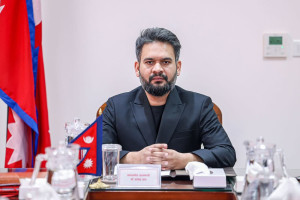
The document, based on ‘Samriddha Nepal, Samunnat Bharat’, aims to translate bilateral commitments into measurable outcomes. Combo of Post and Reuters photos
Nepal and India are preparing to unveil a joint vision document for bilateral partnership during Prime Minister Balendra Shah’s upcoming state visit to India, seeking to set long-term goals and concrete targets for cooperation across multiple sectors.
The proposed 10-point document, which is in its final stages of preparation, is based on the concept of ‘Samriddha Nepal, Samunnat Bharat’ (Prosperous Nepal, Developed India).
“Foreign ministers of both countries, with inputs from the prime ministers’ offices, foreign ministries and finance ministries, are jointly preparing the draft, which is now in its final stage,” a minister in the Shah cabinet told the Post.
Prime Minister Shah is scheduled to undertake the visit to India on November 22 and 23. Alongside the traditional joint communiqué, the two sides are expected to unveil the vision document identifying priority areas of cooperation and setting targets for the years ahead. The initiative comes as the new government seeks to align Nepal’s development priorities with opportunities arising from India’s economic progress while expanding avenues for mutually beneficial cooperation.
“Like what we did in the energy sector, where India has committed to importing 10,000 megawatts of electricity over 10 years, we are working to set targets in other areas as well,” the minister said.
The document identifies 10 broad areas of cooperation, including economic partnership, connectivity, investment, water resources and energy, digital connectivity, good governance, people-to-people relations, education, health, sports, and trade and transit. It is expected to be unveiled alongside the joint communiqué following the prime minister’s visit.
Nepal and India have reached numerous agreements and understandings across these sectors over the years. The proposed vision document seeks to consolidate existing commitments, identifying new avenues of cooperation and translating them into a long-term framework with measurable outcomes, the minister said.
The document was also discussed during meetings on Tuesday and Wednesday involving Prime Minister Shah, Foreign Minister Shisir Khanal and newly appointed Indian Ambassador to Nepal Sudhakar Dalela.
“We will set goals, priorities and targets in each specific area so that both sides can see concrete progress,” the minister said.
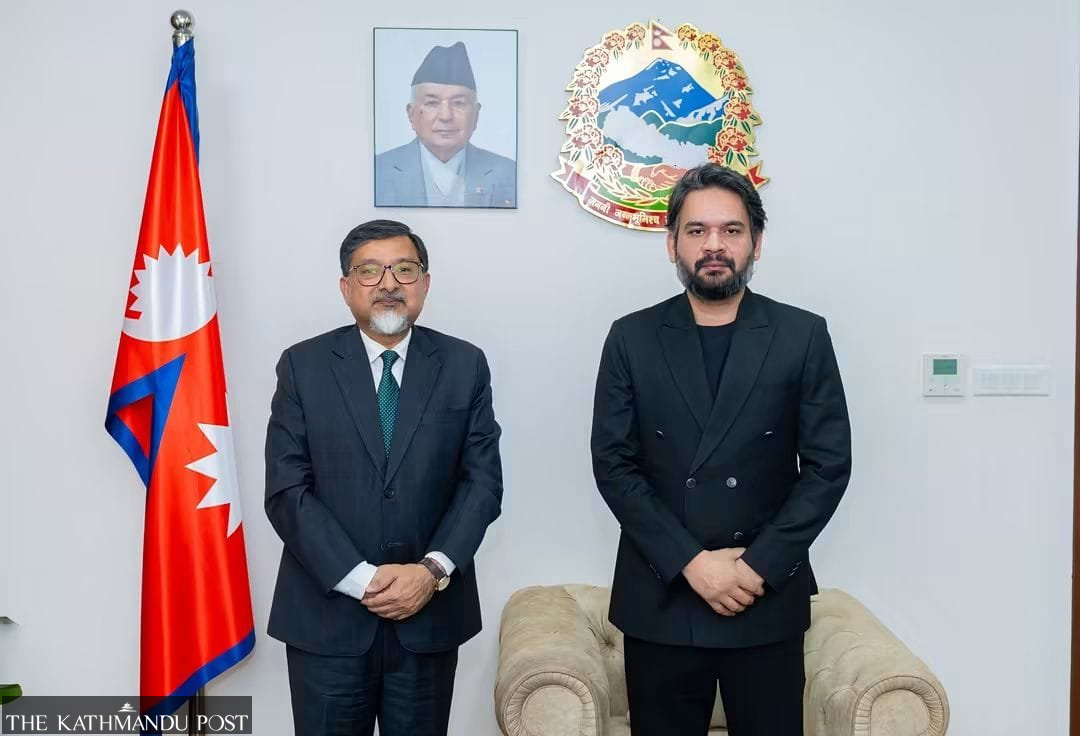
Prime Minister Balendra Shah (right) held a meeting with India's ambassador to Nepal, Sudhakar Dalela (left) on Tuesday. Photo: Extracted from Indian Embassy/X
The government wants to make bilateral initiatives more result-oriented and give Nepal-India relations a clearer direction, he added.
“Economic progress and development are the key mantras of this vision paper,” the minister said.
The proposed initiative has also drawn support from former Indian ambassador to Nepal, Ranjit Rae, who said the two countries needed to establish a clearer long-term vision for their relationship.
Although Nepal and India have numerous bilateral mechanisms, Rae said the time had come for the two governments to agree on what they wanted to achieve in individual sectors over the longer term.
Rae, who is in Kathmandu this week, has advocated a joint vision for long-term partnership during several interactions, arguing that it should build on past achievements and existing commitments while translating them into action-oriented plans and strategies.
He said the document should be made public and its implementation monitored by both governments and other stakeholders, including the media.
“It is equally important to establish clear targets. We already have a vision statement on energy that sets out what the two countries expect to achieve within a specified period. Similar targets should be established in other sectors, with regular assessments of progress. Where targets are not met, both sides should examine the reasons and identify the steps needed to address the shortcomings,” he said.
He also emphasised the regional dimension of Nepal-India cooperation, saying that connectivity and economic integration could create opportunities for countries across the region.
“Some progress has been made towards developing a sub-regional energy grid, and agreements on motor vehicle movement have been reached among some countries in the region,” he said.
“These initiatives should be strengthened to create an interconnected and open regional space in which every country has the opportunity to fully explore its comparative advantages.”
Anil Giri is a Chief Sub Editor covering diplomacy, international relations and national politics for The Kathmandu Post. Giri has been working as a journalist for more than two decades, contributing to numerous national and international media outlets.




 14.12°C Kathmandu