UML puts local, provincial elections at centre of national gathering
The party plans to mobilise its organisation for the upcoming polls while stepping up public outreach, defending democratic institutions and reshaping its political agenda.
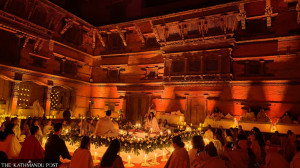
As the Election Commission prepares to consult political parties on dates for local and provincial assembly elections, the CPN-UML is preparing to hold a national gathering focused on the polls. At the November 18-19 gathering in Kathmandu, the party will make preparations for the two elections its immediate priority.
According to Neeraj Acharya, head of the UML’s publicity department, preparations for local and provincial elections will be one of the two key tasks that party chair KP Sharma Oli will set out at the gathering. “Based on the decisions of the recent central committee meeting, the party will now focus entirely on election preparations and making its organisation more active. The national gathering will take decisions to that effect,” Acharya said.
The UML has already issued an inter-party directive instructing its committees to prepare for local elections. “Local elections are approaching, and we suffered a heavy defeat in the last polls. We will face major obstacles and challenges in the days ahead, and we must start preparing now to overcome them,” the directive says, alleging a conspiracy against the party.
“Attempts to defeat us are continuing. But we must get down to work with the determination to win the next election. The entire party needs to prepare for the polls in a planned and coordinated manner,” it says.
Former president and senior UML leader Bidya Devi Bhandari is set to present her views in a written address at a national gathering for the first time.
Vice-chair Bishnu Paudel will present reports on the economic, social and infrastructure development achieved under UML-led governments. Another vice-chair, Ram Bahadur Thapa, who has drawn controversy over his parliamentary remarks on the Gen Z movement, is scheduled to present a report on the role the UML should play in Parliament.
General Secretary Shankar Pokhrel, who supported calls for changes to the party's policies and leadership at the central committee meeting in September, will present an organisational report covering internal reform, strengthening the party and preparations for local elections.
Around 3,300 delegates are expected to attend the gathering, which will also decide on other political campaigns aimed at mobilising the party for the elections.
The UML is also preparing to launch a campaign to defend the Constitution and the democratic system. In his report, Oli has argued that the party must take the lead in protecting democratic institutions.
“Parliament, the judiciary, constitutional bodies, the press, student organisations, trade unions, civil liberties and the federal structure are all pillars of democracy. The CPN-UML must be at the forefront of defending these institutions,” he says. “To restore democracy, we must keep ourselves prepared for a decisive movement. This requires strong internal unity within the party. If justice cannot be secured easily, we must make public mobilisation an even more effective tool.”
The gathering is expected to endorse 15 major initiatives to strengthen the party organisation. These include a “Truth and Dialogue” campaign in every district, public hearings in every municipality, and door-to-door outreach and open discussions in every ward. The party's mass organisations have also been instructed to engage with issues in their respective sectors by presenting facts and practical solutions.
Acharya said these programmes would be intensified after the national gathering.
Inflation, unemployment, prices for farmers, workers' rights, taxes on small businesses, students' futures, classroom conditions, healthcare costs, women's safety, housing for landless people, the dignity of residents in border areas and the hardships of Nepalis working abroad will all become part of the party's day-to-day political agenda, according to Oli's report.
“We will raise questions in Parliament, stand with people on the streets, defend rights in court, seek solutions through local governments and serve communities,” the report says.
The UML also plans a major digital overhaul, including the establishment of a central unit to manage fact-based communication and rebuttals. The party intends to prepare fact sheets in response to allegations against it and disseminate information through simple language, short videos, graphics, question-and-answer formats, local languages and young presenters.
It also plans to develop an organisational system that monitors whether party members are active and measures their performance.
The party intends to give young people substantive responsibilities at municipal, district, provincial and central levels. It will also form youth policy groups to work on technology, entrepreneurship, education, employment, climate change, urban governance, the digital economy, culture and civil liberties.
The UML plans to formulate policies to give women a stronger leadership role and ensure meaningful social representation. Its inter-party directive also calls for a balance between internal discipline and open debate, including regular discussions within the party.
Oli's report will also propose an alternative governance framework, with party departments playing a more effective role in developing policies on education, health, industry, trade and the environment. The gathering will discuss building a party focused on public service and knowledge, improving its working methods and restoring ethical standards.
As part of its election preparations, the UML plans to develop an organisation centred on local issues. Each ward committee will be required to compile a list of problems in its area. The party is also working on new ways to strengthen its ties with Nepalis living abroad.
The gathering will emphasise national unity and a clear policy of national sovereignty and diplomatic balance, including maintaining balanced relations with Nepal's neighbours.
Oli also plans to redefine the party's ideological framework of People's Multiparty Democracy, moving beyond its traditional role as a historical political doctrine. The updated framework will address contemporary issues including the digital economy, artificial intelligence, the climate crisis, youth migration, urban inequality, the gig economy, the commercialisation of education, healthcare costs, gender justice and cultural change.




 15.12°C Kathmandu