How’s BP Koirala tweeting? We asked the man behind it
A decade ago, a Twitter account began sharing the words of BP Koirala, bringing the thoughts of Nepal’s first democratically elected prime minister into today’s political conversations.
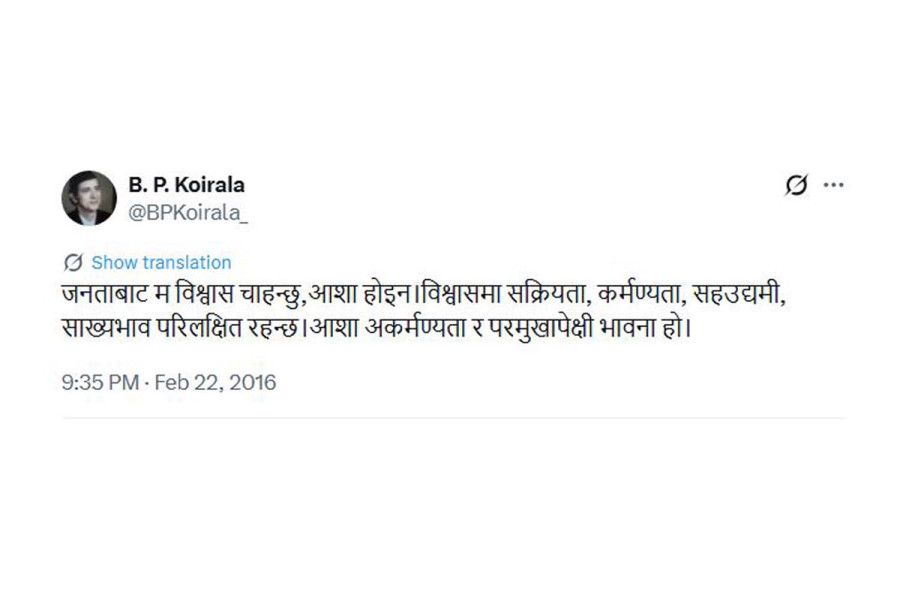
On February 22, 2016, a Twitter account bearing BP Koiralal’s name posted this: “I want trust from the people, not hope. Trust reflects a spirit of initiative, industriousness, collective endeavour and mutual cooperation. Hope, on the other hand, is a state of inaction and dependence on others.”
You might wonder how BP Koirala, Nepal’s first democratically elected prime minister, referred to simply as BP in most conversations and writings, could have said this nearly 34 years after his death.
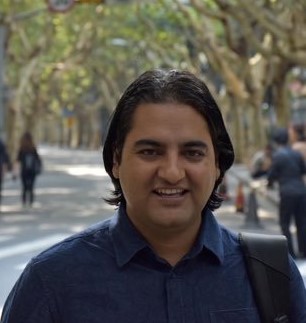
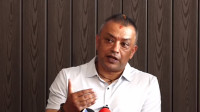
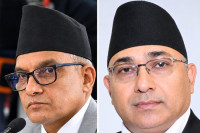
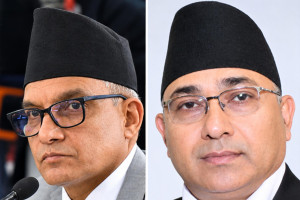
Well, he didn’t exactly take to Twitter, now X, himself. But his words did. And the man behind the account is Bipin Adhikari, a constitutional law expert who teaches at Kathmandu University School of Law.
Adhikari started the handle @BPKoirala_ on February 22, 2016. The statement above was its second post that day.
On March 26, 2016, when then prime minister KP Sharma Oli was wrapping up his visit to Beijing after signing a transit agreement with China, the account posted an audio recording of a speech delivery by BP in 1960, at a dinner he hosted for his Chinese counterpart, Zhou Enlai, at the conclusion of a two-week-long China visit.
The account has since published a total of 258 posts containing words of BP Koirala.
“When issues arise, BP’s own party, the Nepali Congress, hardly speaks up. Nor do the leftists, who claim to be nationalists,” Adhikari told Kanitpur, explaining why he started the account in BP’s name. “In such situations, one is left wondering what BP’s perspective on the matter was. I started this Twitter account in his name to show how a leader thinks about such issues.”
Adhikari does not select BP’s statements randomly. Instead, he chooses those that resonate with contemporary issues. For instance, in May 2016, when the Madheshi Morcha, which had been demanding constitutional amendments, announced plans to picket Singh Dubar, the account posted the following lines at 12:15 am on the night of May 19.
“If we introduce the sentiment of being either a Pahadi or a Madhesi, the country will not prosper. The country is like a boat. If the people aboard it begin fighting among themselves… who will survive if the boat sinks.”
On December 15, 1960, King Mahendra dismissed BP as prime minister through a royal coup and established the Panchayat system. Among the questions sent to BP seeking answers on the sixth day of his arrest was this: “Democracy requires certain prerequisites. What are those prerequisites?”
On December 14, 2021, on the eve of the 61st anniversary of King Mahendra’s royal coup, the account tweeted BP’s answer, drawn from the English edition of his autobiography:
"[D]emocracy needed no “preparation.” The only thing required was that the person who had the power to end a democratic exercise must have faith in democracy — that was the only kind of ‘preparation’ necessary.”
In September 2023, then prime minister Pushpa Kamal Dahal attended the UN General Assembly and travelled directly to China afterwards. The Twitter account posted BP’s statement, delivered at the General Assembly in 1960, that Nepal welcomed international assistance but did not want interference in its internal affairs.
BP had said: “While we welcome and we are grateful for the help that is being given to us by friendly governments of India, the United States, China...., the United Kingdom and others ..., we do not want any country to tell us how we would think, or how we would conduct our internal affairs.”
Adhikari told Kantipur that his objective was not to popularise BP. “What I try to do is present what the right perspective on a particular issue should be and what BP might have thought in similar circumstances,” he said.
The account, however, is not confined to contemporary political debates.
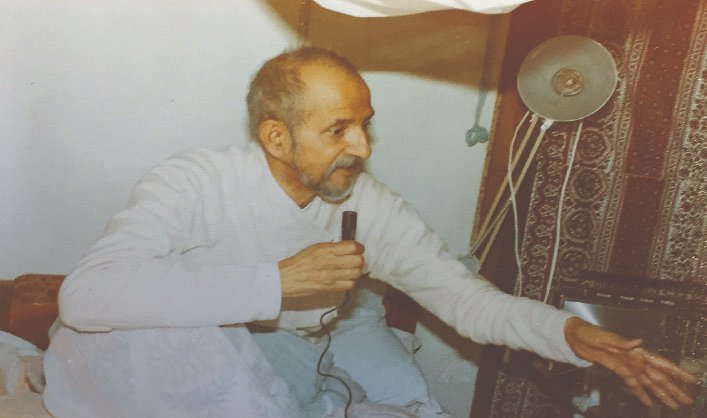
BP Koirala Photo: X.com/BPKoirala_
BP’s views on literary figures as Tolstoy, Chekhov and Bernard Shaw as well as world leaders such as Ho Chi Minh, Gandhi, Nehru, Mao, Zhou Enlai, Stalin and Kennedy, are also included in the tweets.
The sources for the Twitter posts include BP’s autobiography, Jail Journal, interviews with Bhola Chatterjee, and speeches he delivered at the United Nations, among others.
“I look at BP not merely as a politician, but as a statesman who understood Nepal,” Adhikari said. “I want to present only his ideas, without adding my own perspective on how he understood the country.”
The continuing relevance of BP’s ideas is perhaps best illustrated by the account’s more recent posts.
During September last year’s Gen Z movements, there was a heavy loss of human life. Even since then, citizens have continued to be killed by state gunfire. Against this backdrop, Adhikari tweeted an excerpt BP had written in the Tarun magazine in 1971, while in exile: “Revolution does not need anyone’s life to be sacrificed. What it needs is a teacher.
Adhikari believes that even 44 years after this death, his ideas have not lost their relevance. That’s why he intends to continue the Twitter account. There is, however, no fixed schedule for the tweets. Sometimes there are several posts in a day, while at other times there may be a gap of several days between posts.
As Adhikari explains, the tweets are driven by context. But he is clear about what he intends to achieve.
“It is not necessary to take the path of revolution every time. Change has already come, what is needed now is a teacher who can help institutionalise the change,” Adhikari said. “It is all more necessary to help today’s young people, who are carried away by their own fervour, understand BP’s ideas.”




 23.13°C Kathmandu