Deuba’s rival convention plan raises questions over Congress’ legitimacy
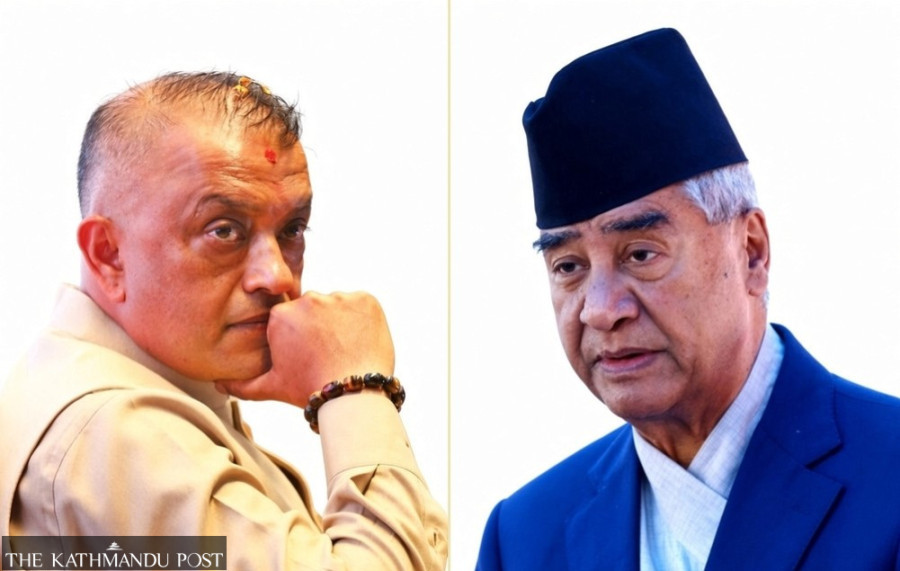
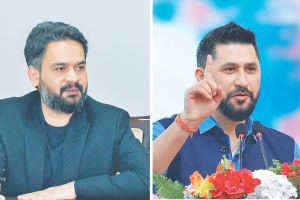
Despite the Election Commission and Supreme Court recognising Gagan Thapa’s leadership, Sher Bahadur Deuba’s camp is preparing its own 15th general convention, citing a pending court review. Nepali Congress chief Gagan Kumar Thapa (left) and former chief Sher Bahadur Deuba, who leads a dissident faction, in this combo photo. Post file photo
The Nepali Congress is facing a fresh challenge to its unity, with former party president Sher Bahadur Deuba and former general secretary Shashank Koirala preparing to hold a rival 15th general convention under the party’s four-star flag, despite the Election Commission (EC) and Supreme Court recognising Gagan Kumar Thapa’s leadership.
The dispute raises a question: Can the Deuba faction organise activities in the party’s name and use its symbols, or is its campaign merely a show of strength rather than a legally recognised party process?
The EC on January 16 recognised the central working committee elected at Thapa-led special general convention earlier that month. It concluded that the party statute allowed 40 percent of convention delegates to demand a special convention and that delegates were the party’s supreme authority. The Deuba faction challenged the decision, arguing that the gathering violated the party statute.
On April 17, the Supreme Court upheld the commission’s decision, validating the Thapa-led committee. Deuba and former acting president Purna Bahadur Khadka later sought a review. The court allowed their petitions to proceed on August 6, reopening the dispute. But the review did not overturn the April verdict or suspend Thapa’s leadership; the earlier ruling remains in force until a fresh decision.
Deuba’s supporters argue, however, that the ongoing review has left the party’s official status unsettled. “Where is the official Congress—in Sanepa? It is in the court,” said Prakash Sharan Mahat, a leader close to Deuba. He said the special convention was unlawful and that the commission and Supreme Court had erred in recognising its outcome.
Deepak Kuikel, another Deuba faction leader, said Deuba had neither resigned as party president nor been removed through a no-confidence motion. “Therefore, the 15th general convention held under his chairmanship will be the legitimate convention,” he claimed. He dismissed Thapa’s special convention as merely a gathering.
The Thapa-led leadership has not issued an official statement specifically responding to Deuba’s preparations, nor has it formally asked the rival faction to stop. General Secretary Pradeep Paudel said the party did not want to widen divisions by issuing statements about the rival convention and remained committed to unity. “Those who fought for rules, procedures, and systems should understand this issue,” he said, adding that the party would act under the Political Parties Act and its statute.
Despite their competing claims, the party establishment, which has moved ahead following the Election Commission’s decision and the Supreme Court’s ruling, does not appear to be making any concrete effort to bring the dissident faction back on board through dialogue.
Suman Ghimire, information officer at the Election Commission, said that the commission had already made its decision and the Supreme Court had upheld it. “We have no room to speak further on the Congress issue. We don’t know what any group is doing,” he said.
Senior advocate Yadunath Khanal, a former president of the Congress-affiliated Democratic Lawyers Association, said that Thapa remains the legitimate president unless the Supreme Court reverses its earlier ruling. “The Deuba faction has no legal validity. It cannot hold a convention,” he asserted.
Another advocate Ega Raj Pokharel disagreed. The legality of the special convention remains before the Supreme Court, while the responsibility for holding the 15th convention rests with the leadership elected at the 14th convention, he argued. “I cannot agree with the argument that the leadership elected at the 14th convention itself is illegitimate,” he said.
Krishna Khanal, a political analyst, said the dispute was primarily political, rather than simply legal. Deuba’s camp appeared to be trying to preserve its political presence and retain party workers through parallel activities. The dispute could become a legal issue if both factions sought to use the same election symbol and flag during an election, he said.
“Such parallel activities could eventually lead to a technical unity based on an agreement, as happened in the past,” said Khanal. The rival convention plans reflect a struggle over the party’s identity and an effort by each camp to maintain leverage while the court review remains pending.




 8.12°C Kathmandu