Commissions for Nepal’s marginalised left powerless
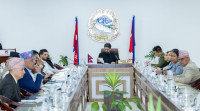
High expectations, meagre budgets and ignored recommendations have left seven commissions struggling to fulfil their constitutional role.The Madheshi Commission at Jwagal, Lalitpur. Post file photo
Seven of Nepal’s constitutional commissions established to safeguard the rights and interests of different communities, are facing growing criticism over their effectiveness. Commission officials and former office-bearers say chronic underfunding, weak legal mandates and government indifference have rendered them largely symbolic.
The commissions, created under Nepal’s Constitution, were intended to ensure the protection, inclusion and advancement of women, Dalits, Indigenous peoples, Madhesis, Tharus, Muslims and other marginalised groups. Instead, many now operate on barely enough funding to cover salaries and office expenses, while their recommendations to the government are routinely ignored.
The Constitution created 13 constitutional bodies. Six of them, including the Commission for the Investigation of Abuse of Authority, the Public Service Commission and the Election Commission, are long-established institutions with broad constitutional authority. The remaining seven, grouped under a separate constitutional chapter as “other commissions”, comprise the National Women Commission, National Dalit Commission, National Inclusion Commission, Indigenous Nationalities Commission, Madheshi Commission, Tharu Commission and Muslim Commission.
Unlike the older constitutional bodies, these commissions have struggled to establish themselves as effective institutions. Critics say they lack both the financial resources and legal authority needed to carry out the responsibilities assigned to them.
Their constitutional mandate is broad. They are expected to study the conditions of their respective communities, recommend legal, institutional and policy reforms, safeguard cultural and linguistic heritage, monitor rights violations and advise the government on measures to promote inclusion and social justice. In practice, however, officials say they have neither the budget nor the authority to fulfil those responsibilities.
Most of the commissions were established only in 2018, three years after the Constitution was promulgated, after Parliament passed separate laws governing each institution. Even then, only the chairs were initially appointed. Several commissions are now operating without permanent leadership, with the Tharu, Madhesi, Inclusion and Muslim commissions currently headed by acting officials.
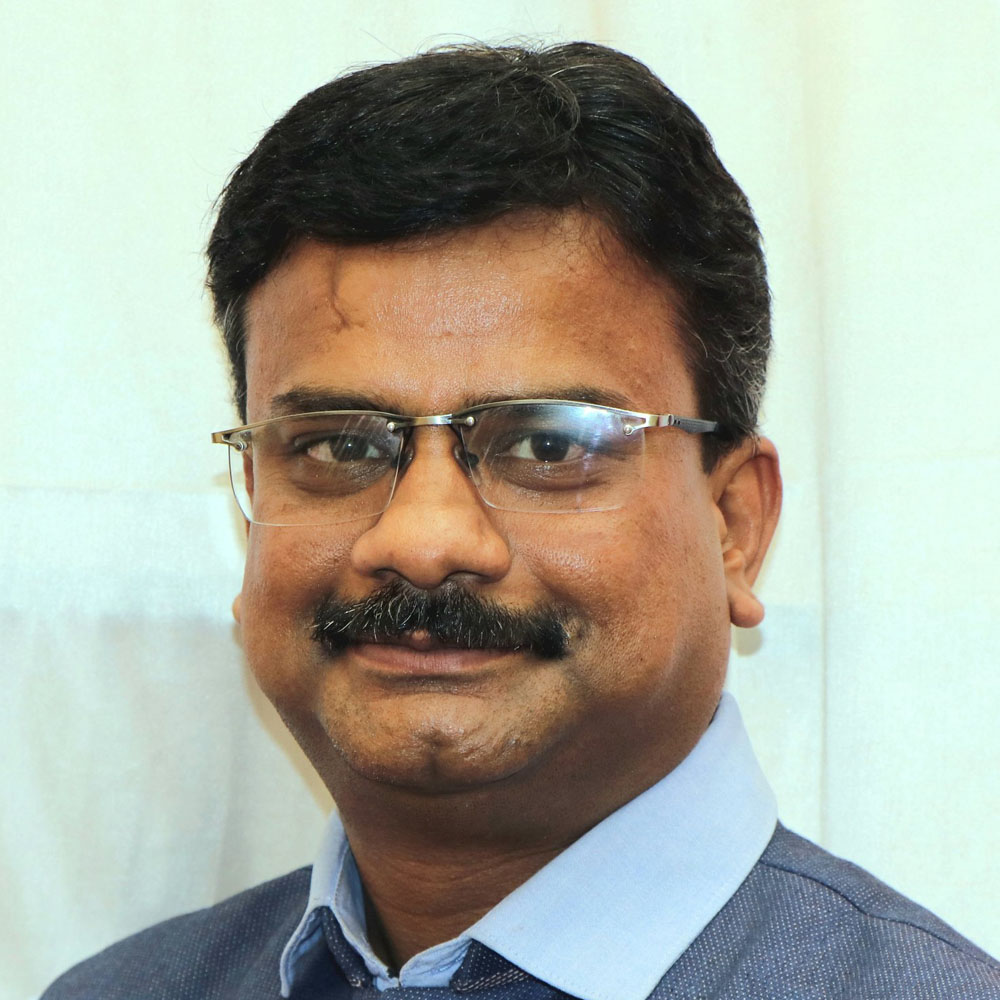
Vijay Dutta, former chair of the Madheshi Commission, says the institutions were created more to project an image of inclusion than to deliver meaningful change.
“Thesecommissions have become little more than showpieces,” he said. “The Constitution itself discriminated against them, and the laws that followed weakened them even further. Either they should be given real authority and adequate resources, or they should be fundamentally restructured.”
According to Dutta, during his six-year tenure, the commission received only around Rs500,000 to Rs600,000 annually for programmes targeting the Madhesi community, while administrative costs averaged around Rs30 million a year.
“The commission exists on paper to protect Madhesi rights, language, culture and social justice,” he said. “But without resources it cannot do anything. We can receive complaints, but we have no authority to investigate them. We simply forward them to the government and wait.”
He added that successive governments have largely ignored the commission’s recommendations, reducing it to issuing reports with little practical impact.
Tharu Commission member Shanti Modi says the government’s lack of commitment has undermined all such commissions.
“No research, documentation or protection work can be carried out without financial resources,” she said. “Most of our budget is spent on salaries and administrative costs. Around 99 percent of our recommendations are never implemented.”
Financial records illustrate the imbalance. In fiscal year 2023-24, the Tharu Commission spent Rs38.78 million in total, but only Rs900,000 went towards programmes directly benefiting the community. The remaining Rs37.88 million was spent on recurrent administrative costs.
“When you spend nearly Rs38 million to deliver programmes worth only Rs900,000, people inevitably begin to question whether these commissions are worth the public money spent on them,” Modi said.
The Indigenous Nationalities Commission faces similar constraints.
According to its sixth annual report, the commission received Rs35.66 million in fiscal year 2024-25, of which only Rs1.1 million was allocated for capital expenditure.
Commission member Sharan Rai says the government provides only token funding and this makes meaningful research, monitoring and policy work virtually impossible.
“The law prevents us from seeking external funding, while the government does not provide enough to carry out even basic programmes,” he said. “Despite these limitations, we continue trying to fulfil our constitutional responsibilities.”
Since its establishment, the commission has submitted 95 recommendations to the government, Rai said. Only five or six have been implemented.
“Our annual reports are submitted to the President and tabled in Parliament, but that is where the process ends,” he said. “There is no serious parliamentary debate and almost no follow-up.”
Rai argues that commissions established after years of political struggle and demands for inclusion deserve far greater attention from both the government and Parliament.
Another commission member, Min Bahadur Shrees, says Nepal established the Indigenous Nationalities Commission partly to meet its obligations under international labour standards relating to Indigenous peoples, but stopped short of giving it meaningful powers.
“These commissions cannot continue in their current form indefinitely,” he said. “They were never treated as a state priority. Reform is essential. Restructuring may be necessary, but abolishing them altogether would be the wrong approach.”
Appointments to the commissions have also drawn criticism.
Dutta says political parties have increasingly used the commissions to accommodate loyalists who failed to secure election tickets or lost elections, rather than appointing experts with strong records in research or advocacy.
“The credibility of these institutions has suffered because appointments have become political rewards rather than merit-based selections,” he said.
The National Inclusion Commission has perhaps the broadest mandate of all. It is responsible for protecting the rights of economically, socially and educationally disadvantaged groups, including Khas Arya, backward communities, persons with disabilities, senior citizens, labourers, farmers, minorities, marginalised populations, residents of Karnali and other remote regions.
Acting chair Hari Datta Joshi says the commission’s responsibilities stretch “from the Himalayas to the Tarai”, covering 11 different sectors nationwide.
“But without adequate staff or budget, we cannot produce meaningful results,” he said.
In fiscal year 2024-25, the commission received just Rs1.5 million for programme activities, compared with an administrative budget of around Rs41.7 million.
The National Dalit Commission faces comparable challenges.
Chair Devraj Bishwakarma says the budget for programmes is so small that “it is embarrassing even to mention.”
“The challenges facing the Dalit community are enormous,” he said. “Yet the resources available to address them are completely inadequate.”
Bishwokarma estimates that less than five percent of the recommendations made by the commission during his five-and-a-half-year tenure have been implemented.
“The government and parliament have failed to understand the scale of the commission's constitutional mandate,” he said. “Denying us resources, ignoring our recommendations and then portraying the commissions as ineffective creates a false narrative.”
Among these seven commissions, the National Women Commission is generally regarded as the most established institution. It predates the 2015 Constitution, having first been established in 2002 under an ordinance before later receiving constitutional status. It receives an annual budget of around Rs100 million and has a substantially larger permanent workforce than the newer commissions.
Dutta also points to disparities within the Constitution itself.
While the Constitution explicitly defines the functions, duties and powers of the Women Commission, Dalit Commission and Inclusion Commission, it leaves the powers of the Indigenous Nationalities, Madhesi, Tharu and Muslim commissions to be determined through federal legislation.
“Not all constitutional commissions were given equal constitutional status,” he said.
The Constitution requires a review of these seven commissions 10 years after its promulgation, a milestone that has now arrived.
Dutta believes the review should be used to overhaul the existing framework rather than preserving institutions that, in their current form, have failed to meet expectations.
“Communities have been let down,” he said. “One option is to merge these commissions into a single, stronger Social Justice Commission with greater authority, adequate funding and clear constitutional powers.”




 20.85°C Kathmandu