India, China begin trade through Lipulekh Pass despite Nepal’s territorial objections
Nepal has repeatedly protested the use of the route, saying Lipulekh lies within its territory. The two countries began using the pass for commercial purposes on Saturday. Photo: Courtesy of Vocal TV
India and China have resumed bilateral trade via the Lipulekh Pass, despite Nepal’s objections that the route runs through Nepali territory.
The Lipulekh Pass lies about 56 kilometres inside Nepal’s western frontier, from Limpiyadhura, according to Nepal’s official position on its boundary with India.
The two countries began using the pass for commercial purposes on Saturday. On the opening day, 16 Indian traders, accompanied by four support staff, crossed the pass and reached Taklakot in Tibet.
The Pithoragarh district administration in India has issued permits to 134 traders to travel to Tibet for business. However, Chinese authorities initially allowed entry to only 20 traders. Indian media outlets reported that trade with China through Lipulekh has resumed after a six-year suspension. The route had remained closed since 2019 due to the Covid-19 pandemic.
The reopening was initially planned for June 1 but was delayed due to preparations for infrastructure and administrative arrangements on both sides of the border.
Officials said delays occurred while finalising trader permits, designating banks for currency exchange, setting up customs facilities and completing coordination with Chinese authorities. Preparations also included arrangements for accommodation, transit camps, banking services, communication facilities, security and medical support for traders.
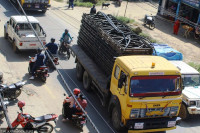
Local journalist Prem Punetha from Pithoragarh said this would be the first time goods would be transported using vehicles through the route. Earlier, traders relied heavily on traditional modes of transport such as yaks, horses and mules.
“With roads completed on both sides of the border, traders will have a much easier time this year,” Punetha said.
Ashish Joshi, district trade officer in Dharchula, India, told Kantipur that the schedule for the next group of traders would be decided after the first batch completes purchasing goods, transportation arrangements and discussions with Chinese officials.
“Road infrastructure is ready on both sides, so transportation will be smoother from this year,” Joshi said.
However, traders will still have to use animals to transport goods for around 500 metres near the border due to security and administrative restrictions. Beyond that stretch, vehicles will be used for transportation, he said.
Under the India-China border trade agreement, Indian traders are allowed to import goods including wool, pashmina, salt, silk, butter, yak hair and animal hides from China through the route.
India can export items including garments, blankets, spices, flour, dry fruits, vegetables, copper products, agricultural tools, stationery, footwear and vegetable oil, according to a press note issued by the Pithoragarh administration.
India also used the Lipulekh route this year to send pilgrims for the Kailash Mansarovar Yatra.
Nepal has repeatedly objected to both India and China using the route, maintaining that Lipulekh falls within Nepali territory. Kathmandu raised the issue through diplomatic channels with both countries.
On May 3, Nepal’s Ministry of Foreign Affairs issued a formal protest, reiterating that Kalapani, Lipulekh and Limpiyadhura are Nepali territories. The ministry said Nepal’s claim was based on the Treaty of Sugauli signed in 1816, which identifies the Mahakali Rrver as Nepal’s western boundary and places the territory east of the river under Nepal’s sovereignty.
Regarding the Kailash Mansarovar pilgrimage route through what Nepal considers its territory, the foreign ministry said it had once again conveyed Nepal’s concerns and position to both India and China through diplomatic channels.
Officials at the ministry said Nepal’s longstanding position on the issue remains unchanged.
The dispute dates back to 2015, when Indian Prime Minister Narendra Modi and Chinese President Xi Jinping agreed during Modi’s visit to China to promote trade through Lipulekh Pass. The agreement immediately drew protests from Nepal’s then government led by Prime Minister Sushil Koirala, which sent diplomatic notes to both countries.
Since then, Nepal has repeatedly raised objections over the use of the route.
Nepal also protested after India built a road through the disputed area. Tensions escalated in 2019 when India published a new political map showing Kalapani and Lipulekh, along with Limpiyadhura, within Indian territory.
Nepal sent another diplomatic note protesting the map and urged India to resolve the boundary dispute through dialogue. After India did not respond positively to calls for diplomatic negotiations, Nepal amended its constitution in June 2020 and issued a new official map incorporating Limpiyadhura, Lipulekh and Kalapani as part of Nepal’s territory.




 16.74°C Kathmandu