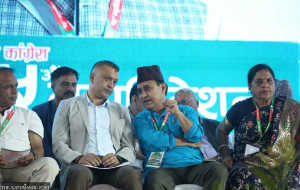
Thapa faction presses ahead with Congress convention despite Deuba camp’s legal challenge
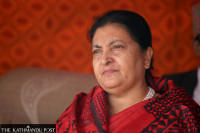
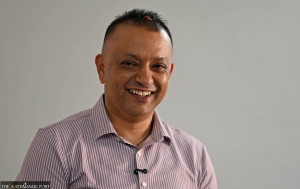
Party president Gagan Thapa insists the October 2-5 convention will proceed as planned as the rival faction seeks a court order to halt the process pending a Supreme Court review. Some Congress leaders have urged Thapa and Deuba to resolve the issue through dialogue. Post photo
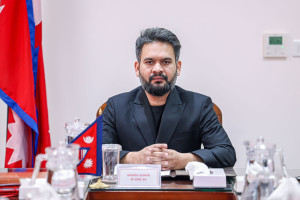
The Nepali Congress establishment faction led by party president Gagan Thapa has decided to proceed with the party’s 15th General Convention on October 2-5, rejecting the rival Sher Bahadur Deuba faction’s demand to suspend the process pending a Supreme Court review.
The Central Working Committee concluded its meeting on Monday after discussing the convention schedule and the party’s legal status following the apex court’s decision to review an earlier ruling that had validated Thapa’s presidency. The formal decision on the convention schedule will be announced on Tuesday.
Thapa said the party was constitutionally and legally bound to proceed with the convention.
“The convention will be held in October. There is no question of delaying it,” Thapa told reporters. “The process starts tomorrow, and we want every ward to take part. If anyone responsible for organising the process tries to obstruct it, we will assign the responsibility to someone else. The convention will not stop.”
The Deuba faction, however, says the convention process should remain suspended until the Supreme Court settles the legal dispute over the party’s leadership.
The Supreme Court on August 6 ordered a review of its earlier decision validating the Special General Convention and Thapa’s leadership, giving the Deuba faction new leverage in its challenge to the current party structure.
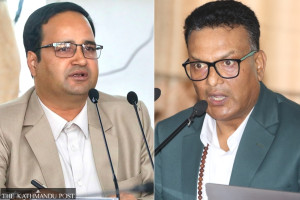
Congress leader NP Saud said the party should not take decisions with potentially far-reaching consequences while the court is reconsidering the earlier ruling.
“The review means the dispute is still before the court, so the party should not take steps that could fundamentally alter the situation,” Saud said. “If the establishment faction proceeds unilaterally, we will seek an interim order from the court.”
Thapa rejected the argument that the Supreme Court’s review order prevents the party from proceeding with its internal affairs.
“The court will deal with the legal questions, while the party must deal with its organisational affairs,” Thapa said. “The review will determine whether the earlier judgment was consistent with the constitution and the law. It does not mean the court will decide how the party should conduct its internal politics.”
The dispute has deepened a split that has been building since the party’s Special General Convention in January and has now widened into a contest over who has the authority to convene the next regular convention.
The Deuba faction, which met at Chundevi, has declared that the 15th General Convention must be organised by the 14th Central Working Committee under Deuba’s leadership. It has rejected the Special General Convention and the Central Working Committee elected by it as unconstitutional.
But the faction itself is divided over how far it should go in challenging Thapa’s leadership.
Senior leader Shashank Koirala, who led the Chundevi gathering, has called for dialogue between Deuba and Thapa and indicated that he is prepared to recognise Thapa as party president.
“I urged President Gagan Thapa to stay in the leadership and bring everyone together,” Koirala told reporters on Monday. “If that is not possible, we need to find another way forward. Our gathering was about unity, not personal differences. The leadership should sit down and resolve the dispute through dialogue.”
Koirala’s position differs from the formal resolutions adopted by the Deuba faction, which recognise Deuba as the party president and reject Thapa’s leadership. The faction has also placed Deuba’s nameplate at its party contact office.
The disagreement over leadership has been accompanied by differences over the party’s position on religion.
The Deuba faction was unable to release the final document from its Chundevi gathering on Sunday after leaders failed to agree on a provision concerning religion, according to Min Bishwakarma.
“Most issues were agreed upon, but we could not reach a common position on religion,” Bishwakarma said. “Because there was no consensus, we had to postpone the press conference where we were supposed to release the final document.”
The gathering had initially agreed on 19 of 20 proposed points. Disagreement centred on a provision on religion. A subsequent five-point proposal reflected Deuba’s preference for promoting Sanatan religion as a national identity and seeking changes to the constitutional provision on secularism.
Senior leaders including Krishna Prasad Sitaula, Bimalendra Nidhi, Prakash Man Singh and Bishwakarma opposed the revised proposal, preventing the faction from reaching consensus.
The internal differences have complicated the Deuba faction’s attempt to present a united challenge to Thapa’s leadership.
The establishment faction had kept its Central Working Committee meeting running since August 9 while waiting to see how the Deuba faction would position itself after the Chundevi gathering.
Thapa said the party had already moved ahead through decisions taken by the Special General Convention, subsequent parliamentary processes and updates to the party’s legal and organisational framework.
He also criticised Deuba for returning to active party politics after stepping down from the leadership on October 14, 2025, saying his former allies were now drawing him back into an internal power struggle.
“The Central Working Committee gave you a respectful farewell, and we were proud of your contribution,” Thapa said, addressing Deuba. “But some people came back and told you that previous positions would be restored or that you should still be treated as president. Before you returned, none of them had raised these issues.”
Thapa said Deuba would be given due respect as a former party president during the 15th General Convention, but rejected the political significance of the Chundevi resolutions.
“Party policy is decided by the Mahasamiti, General Convention or Special General Convention,” he said. “Decisions taken at an informal gathering cannot change the party’s constitution or official policy.”
General secretary Pradeep Paudel also criticised Deuba for aligning himself with the faction rather than helping resolve the dispute.
“We expected the former president to return as a referee, but he came back wearing the jersey of one side,” Paudel said. “That has made reconciliation more difficult. Instead of weakening the party, he should come to the party office at Sanepa, help strengthen it and take part in shaping its policies.”




 14.7°C Kathmandu