Speaker instructs PM Shah to attend parliament, answer lawmakers
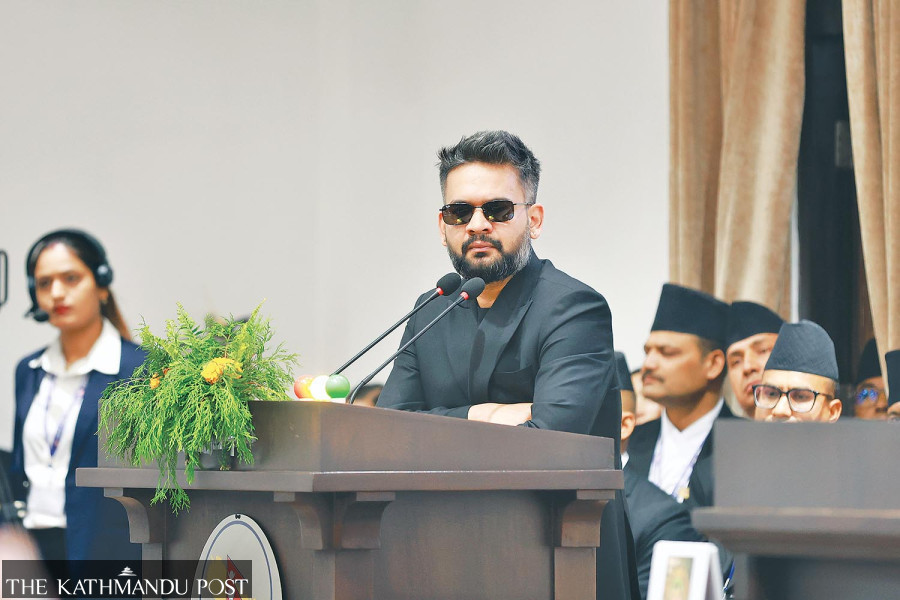
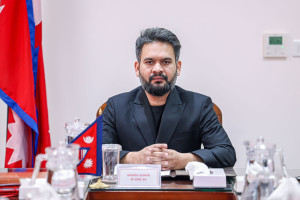
After weeks of pressure from opposition parties, Speaker Aryal has ordered the prime minister to appear in the House on August 26 amid a prolonged dispute over his repeated absence and controversial remarks. Post file photo
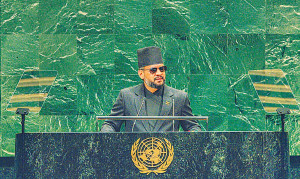
Prime Minister Balendra Shah, who has been absent from the House of Representatives for a long time, will now have to stand at the parliamentary rostrum and answer lawmakers’ questions. Speaker DP Aryal issued the ruling after Shah repeatedly skipped the monthly question-and-answer session required under parliamentary rules.
Speaker Aryal had to issue the ruling as Prime Minister Shah has been violating the House of Representatives regulations, which require the prime minister to answer lawmakers’ questions during the first week of every month. Lawmakers had been demanding that Shah come to parliament and clarify his position since he made controversial remarks about the border in the House of Representatives on May 31. Earlier, lawmakers had also demanded that the prime minister respond to questions during discussions on the government’s policies and programmes, but Shah had ignored their demands.
“Members of parliament have been raising this issue for a long time, and it has come to my attention,” said Speaker Aryal before directing the prime minister to attend the House and answer questions as per House of Representatives Regulations, 2026.
Speaker Aryal clarified that each parliamentary party will be guaranteed at least one question during the direct question-and-answer session. Up to 15 additional questions will be selected according to the parties’ numerical strength in the House. Lawmakers can submit written questions to the parliamentary secretariat by 1 pm on Friday.
The dispute dates back to Shah’s first appearance in the House of Representatives on May 31, when he answered questions after weeks of pressure from opposition parties. Responding to a question about Nepal-India border disputes, Shah said Nepal had also encroached on Indian territory in several places, a statement that immediately drew criticism.
“You may find this surprising, but I too only recently learned, after becoming prime minister, that Nepal has encroached on Indian territory in many places, not just India on Nepali territory,” PM Shah had said while addressing parliament.
In response to Shah’s controversial remarks, the opposition parties demanded that Shah retract the statement, provide evidence and clarify his position in parliament. They also protested against the Speaker’s handling of the session, arguing that Shah’s appearance had not followed the normal format of the monthly direct question session.
The controversy has since led to repeated deadlocks in the House. The opposition parties had already been demanding Shah’s presence after he repeatedly skipped parliamentary discussions on the government’s policies and programmes. The dispute intensified when the prime minister designated Finance Minister Swarnim Wagle to respond to lawmakers on his behalf.
The latest ruling is therefore significant for both the government and the Speaker. Aryal himself has faced criticism from opposition lawmakers, who have questioned whether he has acted independently of the ruling Rastriya Swatantra Party RSP), from which he came to the Speaker’s post. Critics said the opposition’s trust in Aryal had weakened over his handling of the dispute.
RSP Chairman Rabi Lamichhane, General Secretary Bipin Acharya, deputy parliamentary leader Ganesh Parajuli and chief whip Kabindra Burlakoti, among other senior leaders were present at Monday’s meeting of the House of Representatives.
CPN-UML parliamentary party deputy leader Padma Kumari Aryal welcomed Monday’s ruling. “The opposition has been seeking an answer on the same issue in parliament for a long time. I want to thank the Speaker again for issuing a ruling that ensures an answer,” she said in the House.
The ruling party also welcomed the development. RSP chief whip Burlakoti said the Speaker had coordinated with the prime minister and set a date for his appearance.
“The Speaker took the initiative and coordinated on this matter, and it has now been decided that the prime minister will come [to parliament] on August 26,” said Burlakoti. “There had been discussions and coordination, and after today’s ruling the prime minister will come to parliament and move the matter forward.”
He said the ruling could help end the dispute that had paralysed House proceedings. “The initiative to resolve the problem is positive,” he said, adding that Shah’s busy schedule should not prevent him from attending parliament.
A member of Shah’s secretariat said the prime minister had already been preparing to answer lawmakers. “The prime minister had been preparing to answer lawmakers’ questions this time. The process of collecting written questions and preparing responses was under way,” the official said. “After the Speaker issued the ruling, the prime minister will attend the House.”
Nepali Congress whip Nishcal Rai said Prime Minister Shah must use the opportunity to answer lawmakers’ questions and address the controversy over his earlier remarks. He credited the Speaker with helping hold executive accountability to parliament.
“We wanted the Speaker to issue such a ruling,” Rai said. “The Speaker has a primary responsibility to uphold parliament’s dignity and plays a key role in holding the executive accountable to the legislature.” Rai said opposition lawmakers had ended their protest because they had faith in the office of the Speaker. “We believe the prime minister will attend parliament as instructed by the Speaker, clarify his earlier remarks and, we hope, correct or withdraw them from the record,” he said.
The government’s willingness to have Shah attend parliament could ease a dispute that has dominated House proceedings since his first appearance. But Monday’s ruling also highlights how difficult it has been to enforce parliamentary procedures that require the prime minister to answer lawmakers’ questions regularly.
Before issuing the ruling, Aryal had twice visited the prime minister’s office to meet Shah and urge him to appear in parliament. According to people familiar with those meetings, the Speaker told the prime minister that it would be better for him to appear in person and answer lawmakers’ questions. Shah did not set a date, responding only that he would attend at an appropriate time.
Former parliament secretary-general Manohar Prasad Bhattarai said Speaker Aryal would not have had to issue a ruling if Prime Minister Shah had understood his responsibilities and attended parliament regularly.
“An accountable government must answer questions raised by elected representatives in parliament. This should not have needed to be said,” said Bhattarai.
Bhattarai said it would be good parliamentary practice for Shah to address national and international issues in the House. “The prime minister cannot ignore parliament. He must be accountable to the House under the Constitution, parliamentary rules, practices, and conventions,” he said.




 18.18°C Kathmandu