Factional feud over proportional candidates hits RSP-UNP unity
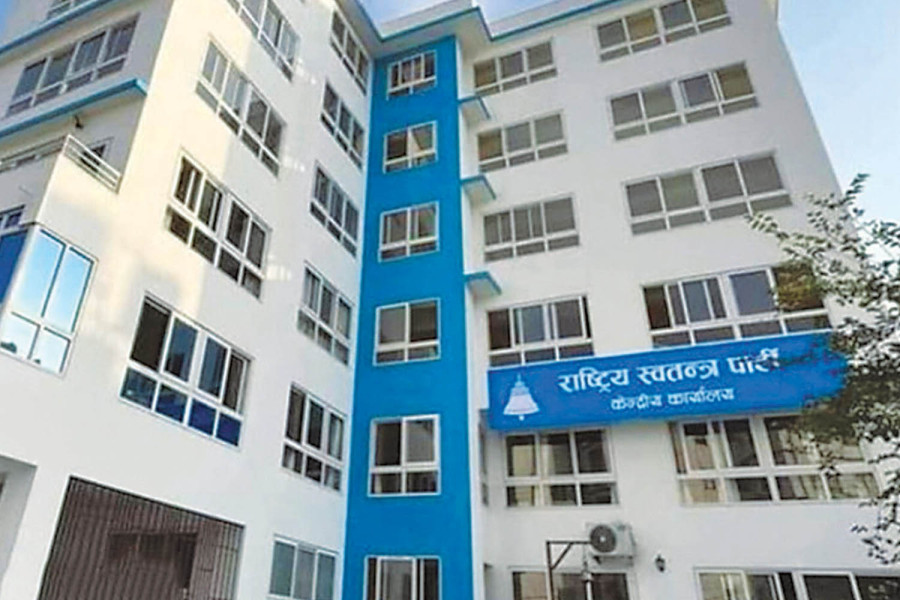
Ujyalo Nepal side members absent from RSP’s Pokhara meet saying they didn’t have clear instructions from the centre. The RSP central office in Banasthali, Kathmandu.
Within days of the Ujyalo Nepal Party’s (UNP) merger with the Rastriya Swatantra Party (RSP), the newly unified force confronts factional issues as it faces questions over the selection of candidates for the proportional representation category of the March elections.
Some of the proposed candidates have withdrawn their names after the party was widely criticised for recommending individuals from well-off backgrounds under the inclusive category meant for underrepresented and underprivileged sections or society.
The Rabi Lamichhane-led RSP and the UNP, which is backed by Energy Minister Kulman Ghising, forged a unity deal on December 29, the final day given by the Election Commission for the parties to submit the list of candidates under the PR category.
But members from the UNP side became unhappy upon knowing the names on the list submitted to the commission.
Amid the discontent in the faction coming from the UNP, leaders from the group visited the Election Commission on Friday to inquire whether it was possible to submit their own list, according to Anup Kumar Updhaya, who chaired UNP before its merger with the RSP.
However, a leader from the group argued that the issue is irrelevant, citing Upadhyay’s public dismissal of ‘wrong portrayal’ by the media of his visit to the commission.
The party has acknowledged “some errors” in its PR list and has expressed its commitment to correcting them. Leaders however blamed time constraints for the errors as the two parties had to prepare their joint list at the last minute after forging unity the same day.
But, according to some leaders of the UNP faction, there are more reasons behind their dissatisfaction with the PR list submitted to the commission. According to a leader, during the unification agreement, the group [UNP faction] had been assured of 18 seats under the PR quota. “But only 14 names from our side were put on the list,” the leader said.
They have also objected to the placement of some names from their side at the bottom of the PR list, making their election less likely. As per the PR selection process, those who figure high on the list have higher chances of being elected lawmakers.
This, they say, is another reason for the group’s discontent.
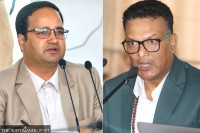
Nirdesh Silwal, who was a central committee member of the UNP before uniting with the RSP, admitted that there are concerns over the selection of PR candidates.
He, however, believes the concerns could be addressed in the time the Election Commission gives to make changes to the order of names in the closed list. “There are some mistakes in the initial list, but they can be corrected,” Silwal said.
The commission has said that any candidate included in a party’s closed list under the PR system may withdraw their names within the stipulated timeframe, and that the concerned party is allowed to nominate another candidate to fill the vacant spots.
According to the commission, 64 political parties submitted their PR lists on December 28 and 29 and the nomination process is currently under review.
Commission spokesperson Narayan Prasad Bhattarai said the lists will be examined to ensure compliance with legal provisions on inclusive representation. Political parties will be informed of any discrepancies by January 4, after which they must submit corrected lists by January 11.
If any candidate listed in the revised submission wishes to withdraw, January 12 has been set aside for that purpose. The poll body will notify the relevant party of such withdrawals, and the party will then be allowed to propose a replacement candidate.
The closed lists will be made public on January 18. Members of the public may file objections if they believe any candidate on the list is legally ineligible. Following an investigation into such claims, the commission will publish the final lists of candidates on February 3. No changes will be allowed after that.
After widespread criticism, some individuals proposed as PR candidates from the unified RSP have withdrawn their names.
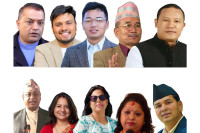
Singer Trishala Gurung, who was included in the RSP’s PR list on the UNP’s recommendation, announced through social media that she has withdrawn her name from the list. However, Prabin Tamang, who served as the UNP’s provincial coordinator before party unification, said that although they are aware of Gurung’s decision, she has yet to formally notify the party about it. Tamang added that the party will decide who, or anyone, should be recommended as her replacement.
Tamang also acknowledged that the UNP had raised questions after only 14 of its nominees were included as proportional candidates of the RSP, despite being told during the unity deal that the group would receive 18 seats under the inclusive category.
According to Tamang, former party chairperson Upadhyay visited the commission on Friday to inquire whether a person with disability from the party had been included in the list—and that the visit had no other motive. He further insisted that, apart from Trishala Gurung, no other name on the party’s PR list would be changed.
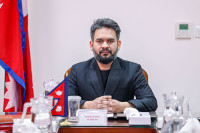
After differences emerged between the two sides over the PR list, a meeting was held on Saturday at the RSP central office between party chair Rabi Lamichhane and a delegation that included Ghising.
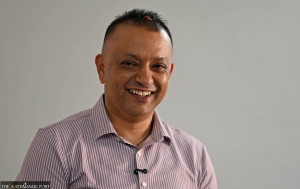
RSP vice-chair DP Aryal told the Post that there was no dispute between the two factions on the PR list. “There is no problem between us,” Aryal claimed. “If there are good suggestions, the number from their side could be 19 instead of 18. There is absolutely no issue.”
Amid criticism that the RSP had included some influential figures in its PR list in violation of the spirit of the inclusion, several other nominees have withdrawn their names. Film director and television presenter Asif Shah, Sachin Dhakal—son of businessman Chandra Dhakal—and Tashi Sherpa, all of whom had been listed for the party’s PR quota, have announced to withdraw their names.
Earlier, Mahendra Lawati, who was on the PR list from the UNP, also withdrew his name.
Shah later announced that he would run for the House of Representatives seat from Kathmandu-5 under the first-past-the-post category. Lawati and Gurung, who withdrew their names from the RSP list, belong to the UNP group, while Shah, Dhakal and Sherpa were recommended from Kathmandu mayor Balendra Shah's side, who joined the RSP before Ghising’s party.
In the past, traditional political parties were criticised for using the PR system to elect individuals against the spirit of the PR system.
The backlash this time has been particularly sharp against the newer forces that claim to represent alternative politics but are now apparently following the same misguided path.
On Wednesday, speaking to journalists in Pokhara, RSP chair Lamichhane had pledged to correct the mistakes made in the party’s PR list.
When the political parties recommend new PR candidates to replace those who withdraw, the cluster and the order of the original list should be maintained, said Bhattarai, spokesperson for the Election Commission.
RSP vice-chair Aryal said that any replacement for candidates who have withdrawn their names from the list will be recommended strictly in line with the rules and procedures. “We will submit a new list in accordance with legal provisions,” Aryal told the Post.
Meanwhile on Saturday, members from the UNP side didn’t participate in an event organised by the RSP in Pokhara. The gathering was addressed by central leaders including Vice-chair Swarnim Wagle, General Secretary Kabindra Burlakoti and spokesperson Manish Jha.
Manraj Gurung, who was Gandaki provincial coordinator of the UNP before merger, said that they didn’t participate in Saturday’s programme as “we didn’t get any clear instruction from the central level”.




 14.7°C Kathmandu