Proportional candidates: New faces dominate lists but old pattern remains
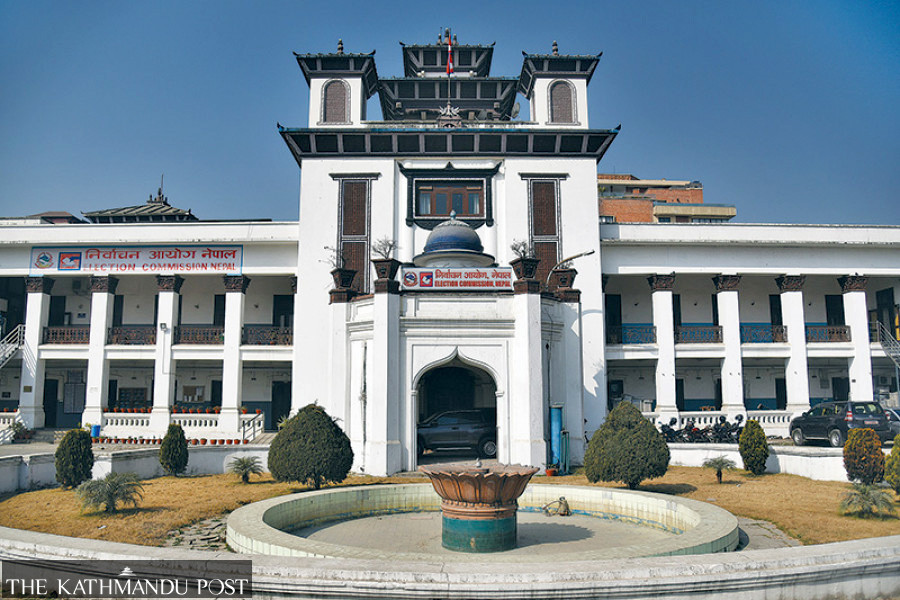
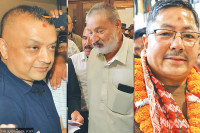
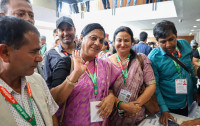
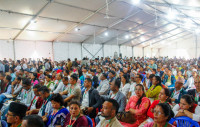
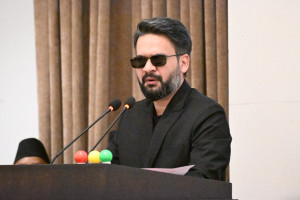
Analysts say while old parties such as the Congress and the UML have fielded more new candidates, new forces’ lists too aren’t free of criticism. The office of Election Commission Nepal. Post file photo
Most political parties have adopted a policy of not recommending individuals who had previously entered the House of Representatives through the proportional representation system. As a result, this time the PR election has opened up opportunities largely for new faces.
For the new election to the House of Representatives, called after its dissolution under pressure from the Gen Z movement in September, the spirit of that movement lives, albeit partially, evidently in political parties’ selection of PR candidates, experts say.
In the past, major parties often included the wives or family members of senior leaders in their PR lists, but this practice appears to be in significant decline in the current election cycle, which political observers and experts believe is a welcome change brought on by the Gen Z movement.
However, the original intent of the electoral system, under which 40 percent of the 275-member Parliament, or 110 members, are meant to be elected through PR, does not appear to have been fully upheld by most political parties, said experts.
Constitutional expert Bhimarjun Acharya says that the PR system, introduced to address specific shortcomings in Nepal’s electoral system, has failed to live up to its intended purpose. One of the main reasons for criticism of the country’s electoral system, Acharya argues, is the failure to select PR candidates as per the constitutional spirit.
“The constitution’s preamble itself enshrines the concept of inclusion of marginalised communities and groups deprived of equal opportunities through the PR system,” Acharya told the Post. “However, political parties have undermined this principle while selecting PR candidates, a trend visible in this election as well.”
Sachin Dhakal, the son of Chandra Dhakal, president of the Federation of Nepalese Chambers of Commerce and Industry (FNCCI), has been included on the PR list of the RSP. He has been placed second under the Khas Arya category, following Bipin Kumar Acharya, the party’s joint-general secretary.
The RSP also included Asif Shah, a well-known TV presenter, under the Muslim quota. Shah is the brother of Asim Shah, who previously served as a PR member of parliament from the RSP.
The RSP also lists Rachana Khatiwada, the mother of Gen Z martyr Rasik Khatiwada, among its PR candidates.
These are only representative examples. Similar questions have been raised about other individuals selected for the RSP’s proportional representation list. The newly restructured party also faced criticism for charging interested individuals Rs50,000 each to be on the PR list.
Meanwhile, RSP leaders say that their PR list did not go as expected due to last-minute developments, such as their unification with Kathmandu mayor Balendra Shah and the Ujyalo Nepal Party (UNP).
Analysts said while the PR lists of established parties were familiar, this time even those of the new entrants drew questions. The RSP only merged with Mayor Shah on Sunday and the UNP formed by Kulman Ghising on Monday. These factions consider themselves key stakeholders of the Gen Z movement.
The PR lists of the Nepali Congress, the CPN-UML and the Nepal Communist Party (NCP) are also not without problems.
There had been serious doubts over whether the Congress would embrace change, but its list gives some reason for optimism, political analysts say. During the Gen Z movement, Dhiraj Shrestha of Kathmandu was killed, and the party has included his father, Narayan Shrestha, among its PR candidates.
Shankar Tiwari, a Congress leader, said that, amid widespread doubts over whether the Congress would truly embrace change, its PR list provides some room for hope. Tiwari adds that if the party also reflects this commitment while fielding direct candidates by introducing new and young faces, it might lead to positive outcomes.
Despite Tiwari’s claims, several district leaders of the party appear to have nominated individuals close to them as PR candidates. On the other hand, the party also took considerable time to finalise its PR list, submitting the closed list to the Election Commission only on Tuesday morning.
Despite the commission stating that the closed list had to be submitted by Sunday and Monday, the party requested time on Monday and eventually submitted its list on Tuesday. The Congress faced immense internal tussle but the delay was blamed on technical problems.
Even though the Congress had previously adopted the policy of not nominating those who had got similar opportunities, a party official said that relatives and close associates of some leaders still found place on the list.
The list featured figures such as Sandhya Pokhrel, daughter of President Ram Chandra Paudel, Dr Chandra Mohan Yadav, son of former President Dr Ram Baran Yadav, Bimlendra Nidhi’s niece Ninu Karn, and Rina Upreti, wife of leader Bal Bahadur KC.
Previously, the party had decided not to put past proportional or directly elected lawmakers on the PR list. However, a party official noted that there was a dispute over whether or not to include Arjun Narasingh KC. Amid these disagreements, KC’s name was ultimately placed under the Khas Arya category in the list submitted to the commission. KC had earlier announced that he would not take part in the direct election.
Within the UML, responsibility for selecting PR candidates was entrusted to party chair KP Sharma Oli. Although the party attempted to include three generations, Gen Z, youths and senior figures, this time, the list is not free of criticism.
Party leaders allege that individuals close to Oli have dominated the list. UML leaders also admit that it failed to select candidates in a way that addresses the core spirit of the PR system.
Previously, close associates and relatives, especially of top leaders, often secured spots as PR candidates, but this time the list seems somewhat different, according to political analyst Keshav Dahal.
However, Dahal notes that when individuals close to leaders receive fewer opportunities, the list ends up having people who are unlikely to make a significant mark on politics or whose political participation is optional, such as celebrities and businesspeople.
The current PR list reflects the populist character of current politics, Dahal said.
Regarding the PR candidates, Dahal observes that the level of criticism previously directed at older parties is somehow repeated by the so-called new parties. This suggests that even these new parties have not been able to follow a completely different approach.
Meanwhile, for the March 5 snap polls, 64 parties have submitted their PR lists.
According to Narayan Prasad Bhattarai, spokesperson for the Election Commission, 54 parties are contesting under their own election symbols, while 10 parties are contesting under a total of four symbols. This means there will be 58 election symbols in total on the PR ballot.
Among the parties registering candidates under PR, 18 have submitted full lists of 110 candidates each under their own symbols. Eight parties have jointly submitted 110 candidates across three different symbols.
The remaining 38 parties have submitted lists with fewer seats.
Parties were required to submit a closed list with a minimum of 11 and a maximum of 110 candidates. The majority of parties chose to submit fewer than the maximum number of candidates, Bhattarai said.




 20.25°C Kathmandu