Five and half decades of KP Oli in Nepali politics
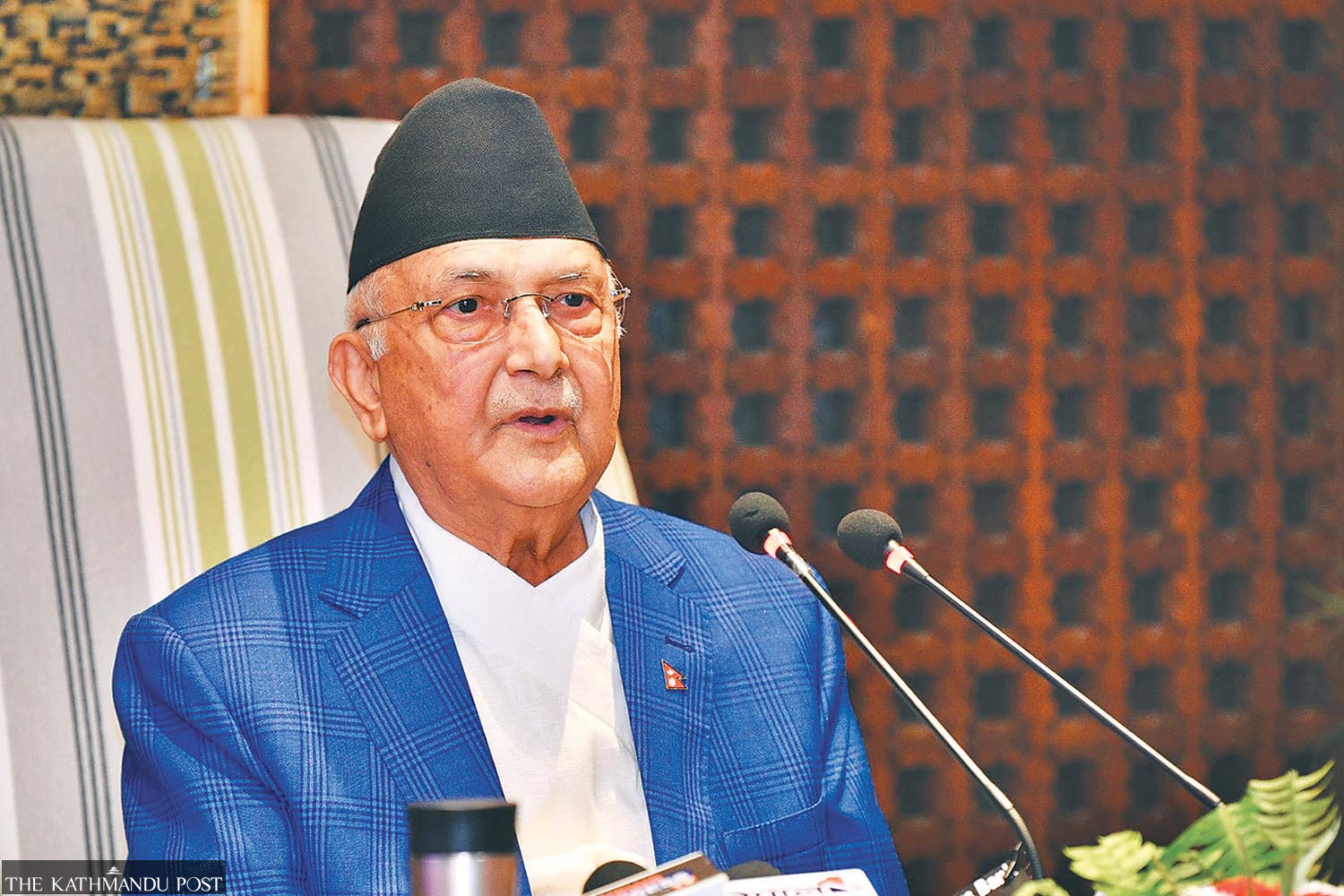
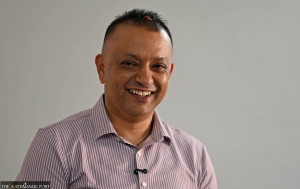
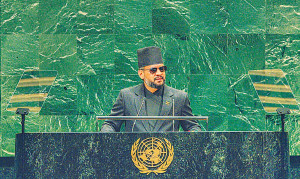
To supporters, Oli is ‘Ba’—a father figure. To critics, he weakened intra-party democracy and shut his eyes to corruption. Now Oli could be fighting his final battle against Balen. Post file photo
After the Gen Z movement of 2025, a new chapter began in Khadga Prasad Sharma Oli’s life—which many analysts see as his “political obituary”.
Before the Gen Z uprising toppled his administration, Oli was at the peak of his power, ruling the country as a prime minister of a strong coalition government. As protesters torched his Balkot residence during the demonstrations of September 8-9, 2025, Oli had to take shelter in a Nepali Army’s barracks in Suparitar of Makawanpur district.
After returning from the barracks, Oli began a new life in a rented house in Gundu, Bhaktapur, with his wife Radhika Shakya.
“We had thought of gifting a library to the new generation,” Shakya said, standing amid the charred remains of their home. “In the end, we have to give them ashes.”
Oli’s life reveals a blurred canvas filled with memories—of joy and sorrow, passion and struggle. Yet adversity has rarely unsettled him.
His political journey stretches from long years of imprisonment to repeatedly occupying the highest office in the land. Having devoted his life to politics and struggle, he flourished in moments of upheaval. But the Gen Z youth, questioning the moral decline of established leaders, successfully pushed several heavyweights, including Oli, to the margins of power, even if momentarily.
At the head of a near two-thirds majority government, twice, following the 2017 elections, Oli nonetheless failed to last long in power. Former prime minister Pushpa Kamal Dahal—who now heads the Nepali Communist Party—is contesting the polls from Rukum East. Meanwhile, Oli’s former coalition partner and a five-time prime minister Sher Bahadur Deuba has lost even the presidency of his own party and, for the first time in decades, is not contesting from his traditional stronghold in Dadeldhura, his home district.
But despite the Gen Z movement, Oli secured a third term as chair of the CPN-UML at its 11th General Convention held in December 2025.
Accused of ordering police to suppress the Gen Z uprising, Oli has dismissed the government’s investigation commission as a “scarecrow”—“an artificial mechanism designed to deliver predetermined conclusions”.
“They prepared 27 questions and tried to dictate the answers,” he said. “This is not a commission; it is an artificial construct set up to follow instructions,” he asserted.
Even after the upheaval, a sizable section in the UML insists that only Oli can steer the country through the crisis. His supporters believe his active leadership will restore the party’s rhythm.
Critics, however, argue that his “arrogant and self-centred” style has eroded his political credibility and pushed the UML into a defensive position. They say Oli should shoulder the responsibility for governance shortcomings having led the party for a decade, and twice headed majority governments.
Political analyst Rajaram Gautam says that Oli’s dominance stifled generational transition within the party. “Second and third-generation leaders may have shown opportunism but Oli failed to nurture new leadership,” Gautam said. “He fostered factions and personality cults rather than collective growth.”
Historically, ideological groupings have shaped Nepali communist politics. Yet observers note that within the UML, personality-centred factions have overshadowed ideological debate. Ironically, Oli himself once championed internal democracy and collective leadership. Today, critics say, his priority appears to be retaining power by hook or crook.
Still, Oli has undeniable strengths. He is known for his firm political stance and fearless articulation of arguments. During the time of Maoist insurgency, when the UML’s organisational base had weakened after the first Constituent Assembly election, he emerged as one of its most vocal critics. His anti-Maoist posture, analysts argue, helped revive the UML’s organisational confidence.
Later, he unified with the Maoists, contributed to constitution-making and stood firm against the 2015 Indian blockade—moves that elevated his nationalist image and popularity. “An insatiable appetite for power, disregard for peers, and go-it-alone style fractured the communist movement,” Gautam said. “Governance issues went unaddressed, and corruption scandals mounted.”
Now, in the eyes of many, Oli stands as the villain of the Gen Z crackdown that killed scores of people. That perception has left not only him but the entire UML rank and file politically defensive. Whether 2025 marks the twilight of Oli’s five-decade career or just another bend in his undulating political path remains to be seen.
***
A true politician, it is argued, is one who can at any moment play on the emotions of voters, say whatever needs to be said, sell dreams—whether or not those dreams are meant to be fulfilled. The politician simply keeps playing with the hopes and feelings of the people. In politics, what value does emotion have?
Perhaps that is why politics in Nepal often resembles what Indra Bahadur Rai portrayed in his celebrated novel Aaja Ramita Chha (There’s a Carnival Today). In it, there are aging and youthful protagonists, both old and new, while countless spectators—the people—watch from below. In the election season, the spectacle turns into a battleground. Leaders visiting doorsteps canvassing for votes or addressing mass rallies unleash scathing attacks on their opponents, trying to strip them of credibility.
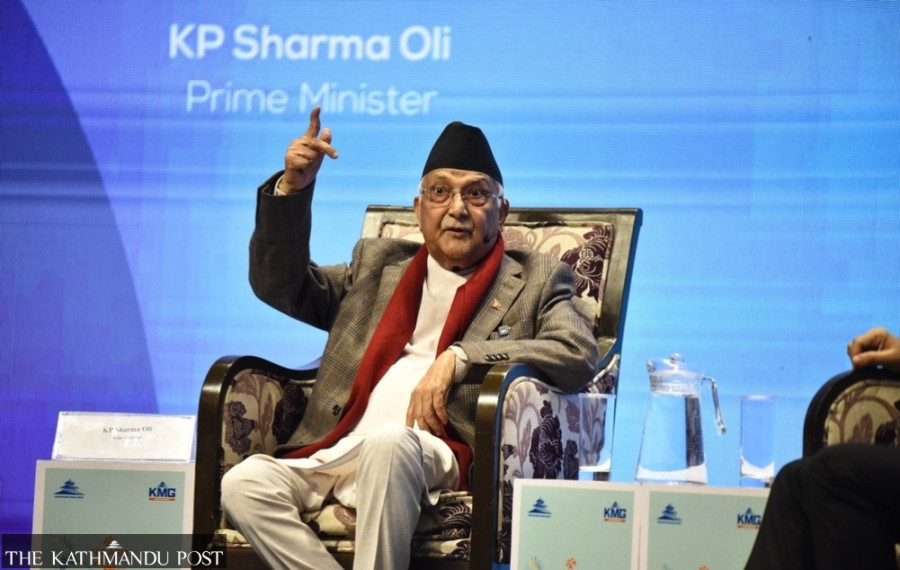
KP Sharma Oli Post file photo
A vivid example of this national theatre is unfolding in Jhapa Constituency 5, widely seen as the epicentre of the current election: a contest between the veteran Oli and young, rapper-turned-politician Balendra Shah, popularly known as Balen.
It was when politics became a spectacle and a profit-oriented enterprise that the Gen Z movement erupted. In the eyes of Generation Z, politics had turned into a cynical game. Branding senior leaders as corrupt and unaccountable, Gen Z protesters drove them away from power. Even before the fires at the national parliament were doused, the House of Representatives was dissolved and an interim government led by former chief justice Sushila Karki announced fresh elections.
In this new electoral season, Oli—like hundreds of other dream merchants—is again knocking on doors. “Give me your vote again,” he tells constituents, promising action against those who torched public and private property during the Gen Z protests. The rank and file of the UML echoes the refrain: “Again Oli, again UML.”
***
For Oli, the Gen Z uprising marks a strange historical coincidence. He rose to prominence in the 1971 Jhapa rebellion, and now, more than five decades later, finds himself navigating another upheaval that may define the twilight of his political career. In Jhapa-5, his long-held bastion, he faces a challenger nearly four decades younger: Balen, a figure of youth aspiration and anti-establishment energy.
During previous elections, Oli campaigned nationwide and spent limited time in his constituency. This time, he has barely left Jhapa-5. Observers say the presence of Balen, a senior leader of the Rastriya Swatantra Party and the party’s prime ministerial face, has compelled Oli to stay rooted to Jhap-5. Each day, he visits households, listens to people’s grievances, attends meetings and rallies, and personally seeks votes.
Asked whether Balen’s candidacy has put him under pressure, Oli dismissed the notion. He questions what contributions Balen has made to democracy and development, accusing him of populist actions such as bulldozing the settlements of landless squatters along riverbanks during his mayoral stint in Kathmandu.
Oli argues that Damak in Jhapa is already a well-managed municipality and suggested Balen might have more to learn than to teach. Yet, political observers insist that this election is anything but routine for the UML chair. The Gen Z revolt has sullied his once formidable brand.
The race in Jhapa-5 is not just for a parliamentary seat. It symbolises a broader clash between generational legacy and generational impatience—between experience and youthful ambition. Both Oli and Balen stand at potential turning points in their careers. For Oli, defeat would signal an irreparable political setback; for Balen, victory would catapult him into unprecedented power.
***
Oli’s political life has been defined by struggle. Born on February 23, 1952 in a farming family in Tehrathum, he lost his mother Madhumaya at an early age and was raised by his grandmother. As a teenager, he gravitated toward radical politics, joining a Marxist study group led by Ramnath Dahal. In the late 1960s and early 1970s, he became involved in the Jhapa rebellion—an armed leftist uprising influenced by China’s Cultural Revolution and the Naxalite rebellion in India. State repression was swift and brutal. Oli spent 14 years in prison under the Panchayat regime, enduring torture and isolation.
After the restoration of multiparty democracy in 1990, Oli transitioned into mainstream politics. Over the decades, he has served as prime minister four times. He championed the slogan “Prosperous Nepal, Happy Nepali,” stood firm against the Indian blockade of 2015, and oversaw the publication of a new political map incorporating disputed territories of Limpiyadhura and Lipulekh. Admirers see him as decisive and an ardent nationalist; critics view him as a power-hungry politician who is intolerant of dissent.
Political analyst Nilambar Acharya once described Oli as a leader with command over language and subject matter, capable of presenting himself confidently on the world stage despite lacking formal university education. His memory and rhetorical skill are widely acknowledged. Indeed, Oli’s speeches—rich in proverbs and biting metaphors—linger in public memory. Yet his opponents argue that charisma cannot compensate for governance failures, corruption allegations and perceived authoritarian tendencies.
Post file photo
In recent years, dissatisfaction has mounted, mainly after the Gen Z uprising. Many young Nepalis, mainly his party cadres who once chanted “I love you, KP Ba” turned to the streets in frustration. Development projects stalled, governance became synonymous with power-sharing bargains, and public trust eroded. Had his prosperity agenda translated into action, critics contend, he might not have faced such resistance.
Still, Oli insists that democracy is not just a game of power but a continuous journey towards national dignity and sovereignty. His supporters believe he remains a leader capable of steering that journey. Detractors argue that the era demands new leadership attuned to digital-age aspirations.
Thus, Jhapa-5 has become more than a constituency. It is a mirror reflecting Nepal’s political crossroads. Will Oli’s fortress hold firm, reaffirming the endurance of experience? Or will it yield to the surge of a new generation? The answer lies with voters.
***
In 1973, Oli was arrested, along with other key leaders of the Jhapa revolt. Oli was then an active young communist cadre who had plunged into an underground struggle against the partyless Panchayat regime, in the process facing brutal torture, long imprisonment and the constant shadow of possible death penalty.
At the time, the Jhapa rebellion was viewed through many lenses. Critics branded it violent adventurism; sympathisers labelled it a tide in which seeds of national self-respect, people’s liberation and social transformation were sown. For the young communists involved, it was less an insurrection than a declaration that the established state order could be challenged.
In prison, the sword of capital punishment hung over Oli’s head. Yet he remained unbowed.
He spent four years in Golghar, an infamous detention facility. In his serialised prison memoirs published in Yugdoot magazine and edited by Raghu Pant, Oli recalled the inhuman conditions: prisoners were not allowed to stand upright or stretch their legs to sleep; they were forced to relieve themselves in the same cramped space; rats scattered filth from waste tanks; damp clothes clung to their bodies through the night. “We had to fight rats in the corners of Golghar,” he wrote. “They would splash filth from the sewage tank. It was extreme torture.”
Five of his comrades were taken out under the pretext of prison transfer and shot dead in Sukani forest. In the book ‘2028 BS: The Inside Story of the Jhapa Rebellion’, Niroj Kattel recounts how the authorities ordered the transfer of five specific prisoners—Ramnath Dahal, Netra Ghimire, Biren Rajbanshi, Krishna Kuinkel and Narayan Shrestha—to Ilam jail, citing overcrowding. They never reached their destination.
In a book named Unwritten History, Radha Krishna Mainali writes that between May 1971 and November 1973, seven ‘feudal landlords’ were targeted in actions by the rebels, while the state killed 11 of their fighters. Many more were arrested.
Oli himself claims he narrowly escaped a similar fate. In his memoir, he recounts being taken from Gaur police station at night on the pretext of transfer to Birgunj jail. Handcuffed and surrounded by police officers carrying digging tools—apparently to bury his body—he realised there was a plan to kill him in the jungle, accusing him of trying to escape. He survived, he says, because a sub-inspector named Mohan Prasad Adhikari intervened.
Even before his arrest, Oli had been expelled from his party. Yet while still in jail, in 1978, he became a founding member of the Communist Party of Nepal (Marxist-Leninist). Upon his release in 1987, he was soon appointed a central committee member and Lumbini zonal in-charge.
After the 1990 People’s Movement toppled the Panchayat system, he became founding chair of Prajatantrik Rastriya Yuwa Sangh, Nepal. Later that year, following the merger of the CPN (ML) and CPN (Marxist), he was elected a central member of the Communist Party of Nepal (Unified Marxist-Leninist).
Elected to the House of Representatives from Jhapa-6 in the 1991 general election, Oli won again in mid-term polls three years later from Jhapa-2. Within the party, he served as politburo member and headed the foreign affairs, publicity and parliamentary departments. UML supporters often repeat that he was “the first successful home minister of the multiparty era,” credited with strengthening law and order and initiating administrative reforms.
In 1994, he became home minister in the government led by Manmohan Adhikari—the first democratically elected communist government in Nepal. Oli frequently claims that during his tenure “not a single bullet was fired,” and that he set new standards in security and public trust.
In 1995, returning after inspecting flood-hit areas in Nepalgunj, he survived a helicopter crash alongside Prime Minister Adhikari—another brush with death that echoed his prison years.
At the UML’s sixth general convention in 1998, his policy document ‘Power Consolidation’ was endorsed by a majority, and he was appointed standing committee member and head of the party’s foreign department.
At the seventh convention in Janakpur in 2002, he proposed a multi-post leadership system to strengthen internal democracy. Though initially deferred, the proposal was eventually passed at the eighth convention in Butwal in 2008. However, he lost the party chairmanship to Jhala Nath Khanal.
Finally, at the party’s ninth convention in 2014, he defeated Madhav Kumar Nepal to become UML chair. He declared then that the party had gained clear ideological direction under his leadership. He first became prime minister in October, 2015.
His supporters argue that he defended national sovereignty amid external pressures. His foreign policy mantra was “Friendship with all, enmity with none.” Although he resigned in 2016 after a no-confidence motion, he returned as prime minister following the 2017 elections.
During his first stint as prime minister, he faced India’s blockade, signed a landmark transit agreement with China in 2016 to diversify Nepal’s trade routes, and issued a new political map incorporating Lipulekh, Limpiyadhura and Kalapani—moves that bolstered his nationalist image.
In May 2018, the UML merged with the Maoist Centre under his and Pushpa Kamal Dahal’s initiative, forming Nepal Communist Party. The unity collapsed after three years. Oli argued the merger was necessary to prevent instability and advance development.
Oli became prime minister for the third time in 2021, but was shortly removed following a Supreme Court verdict. He was re-elected party chair at the tenth general convention in 2021 and became prime minister for the fourth time in July, 2024. He has repeatedly declared, “Prosperous Nepal, Happy Nepali is our destination. It is our national aspiration.”
His tenure saw ambitious infrastructure pledges: north-south rail links connecting China and India, an east-west railway, highway expansions, tunnel roads, irrigation projects such as the Sunkoshi-Marin diversion, and exploration of iron mines. The 2016 trade and transit agreement with China is another turning point in Oli’s life. The agreement broke India’s near-monopoly on Nepal’s foreign trade, granting the country access to seven Chinese ports.
Post-earthquake reconstruction—Dharahara, Rani Pokhari and Basantapur Durbar Square—along with the Amlekhgunj petroleum pipeline, Pokhara International Airport, Gautam Buddha International Airport in Bhairahawa, and expanded road networks, remain notable milestones of his administrations. Yet debates persist over the success and sustainability of these projects.
Following the Gen Z uprising and the UML’s 11th general convention in November 2025 where he was elected party chair for a third term, Oli has plunged into the electoral battlefield in Jhapa-5.
Few leaders in Nepal have experienced such intense praise and criticism like Oli. To supporters, he is “Ba”—a father figure. To critics, he weakened internal party democracy and fostered centralised control. They use words such as “egoist” and “arrogant” to charactarise him.
Political analyst Jhalak Subedi describes Oli as a tireless and active leader, suggesting that 1971 marked his political ascent while 2025 may signal a terminal decline. “He rose by questioning entrenched state power. Later, he gained popularity by questioning Maoism itself, by challenging India, then reconciling with both—his life has been full of such oscillations,” said Subedi.
Accusations that he contributed to the erosion of democracy in the UML still fly. Subedi argues that Oli should have balanced power consolidation with broader inclusion. “He emerged by questioning authority but did not always tolerate questions from within,” said Subedi. “His own distinctive style of reflection, contemplation and study also helped him rise above many other leaders.”
Is a political resurgence possible for Oli? Subedi is sceptical. “For him to rise again, he would have to retreat from the anti-communist and anti-democratic positions he adopted at various points in his political life,” Subedi said. “I do not see that happening. The likelihood of his political resurgence is virtually nonexistent now; at best, he can have a dignified exit.”
As Nepal heads into elections shaped by the Gen Z uprising, the UML’s performance remains uncertain. No definitive scientific surveys predict outcomes, but public discourse—from tea shops to digital platforms—suggests this will be a stern test for the UML.
At a time when many said Oli should retire, he instead amended party statute and secured leadership again. Now, Oli will be tested by the people.
Analyst Gautam observes that Oli’s victory would signal that centralised leadership can still win public trust; a defeat would expose the cost of undermining internal democracy.
The upcoming House of Representatives elections will determine what gets written in the final chapter of Oli’s long political journey, and perhaps even decide the future of the UML.




 22.11°C Kathmandu