A spectaculardefeat of top leaders and the poor performance overall of the Nepali Congress and the CPN-UML, two dominant political parties since 1990, in the March 5 vote have stunned their cadres and posed serious questions before the leadership. Almost all top leaders of the Congress and the UML have lost the elections as the Rastriya Swatantra Party, formed in 2022, surges towards a two-thirds majority, in a rare mandate since 1959.
In Nepal’s first elections, the Congress under BP Koirala secured a two-thirds majority, winning 74 out of the 109 seats. After 67 years, the Rastriya Swatantra Party is likely to achieve the feat. This achievement comes despite criticism of the mixed election system adopted in 2015 that it was unlikely to hand a strong mandate to any political party.
There are multiple reasons behind the dismal performance of the old parties in the election held after the September Gen Z movement.
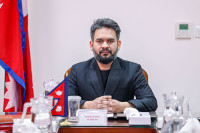
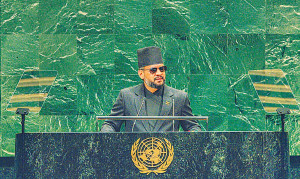
Besides mounting public frustration with the old guard, a brutal repression of the youth uprising last year, the audacity of the party leadership, shifting allegiance to the Rastriya Swatantra Party and, most important, Balendra Shah's entry into the RSP as senior leader are some key factors that contributed to the old parties’ humiliating defeat, according to observers.
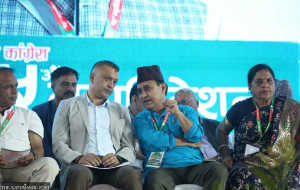
Nepali Congress President Gagan Thapa lost to Amaresh Kumar Singh in Sarlahi 4. Some office bearers of the party, such as general secretaries Gururaj Ghimire and Pradeep Poudel, joint general secretaries Uday Shumsher Rana, Farmullah Mansur and Prakash Snehi have lost election. Congress Joint Secretary Yogendra Chaudhary was set to lose in Dang as the Post went to press.
The top leadership of the Communist Party of Nepal (Unified Marxist–Leninist) has suffered major defeats in the House of Representatives election. Party chairman KP Sharma Oli lost to Balen Shah in Jhapa-5.
Several senior UML leaders, including vice-chairmen Bishnu Paudel and Gokarna Bista, general secretary Shankar Pokharel, and secretaries Mahesh Basnet, Bhanubhakta Dhakal and Rajan Bhattarai have lost the House race.
Another vice-chairman, Prithvi Subba Gurung, was also unlikely to win. Leaders of the Rastriya Prajatantra Party and Madhesh-based parties have received humiliating defeats and some are unlikely to become the national party by crossing the 3 percent vote threshold.
In a video message on Saturday evening, Congress Vice-president Bishwa Prakash Sharma said he was ready to take the responsibility for the party’s drubbing.
Sharma, who led the party’s election mobilisation committee, said the Congress will now proceed with its regular general convention along with a serious review.
Speaking with the News Agency Nepal on Saturday, Sharma said a meeting of the Central Working Committee would critically review the party’s defeat.
Sharma also urged Congress supporters, well-wishers, and members to “remain united with patience and maturity”.
Rather than continuing to blame one another, “we need to conduct a united and objective review and chart the future course”, Sharma said, adding that there would be serious consultations with the party’s present and past leadership on the new reality.
“The Nepali Congress will recognise this adversity, confront it with unity, and develop new possibilities,” he added.
After a humiliating in his hometown Rupandehi by RSP's Sulabh Kharel,
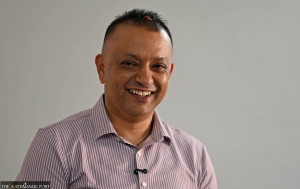
UML Vice-chairman Paudel vented his ire on Facebook. While congratulating Kharel and the voters of his constituency, Paudel urged all UML leaders and cadres not to be discouraged.
“Politics is a long journey with many ups and downs. Under any circumstances, our commitment and determination must not weaken. Therefore, I sincerely urge everyone to remain even more dedicated to serving the people,” Paudel wrote.
“I also express my commitment to seriously review the mistakes and shortcomings on our part, to transform ourselves in line with public expectations, and to take the initiative to reorganise the policies, leadership, organisation, and working style of the CPN-UML according to the expectations of the people, while remaining steadfastly committed to serving the people and the nation.”
Similar kinds of sentiments and reactions came from the Congress and UML leaders who could not win the election.
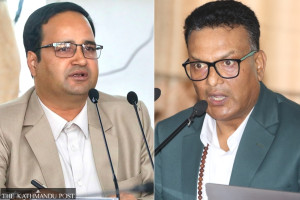
Some political observers and experts said that both Congress and UML should go for a major restructuring and their leadership must quit. Political analyst Shri Krishna Anirudh Gautam said this is not the first time that the Congress and the UML have seen such humiliating defeats. “Earlier in 2008 and later too, both the Congress and the UML faced similar kinds of defeat but they rose up. They can again rise if they fulfil their duties honestly,” said Gautam.
Not only top leaders of the Congress, the UML and the Maoists but senior leaders of the Madhesh-based parties such as Upendra Yadav, Rajendra Mahato, CK Raut and Sharat Singh Bhandari have lost elections.
They blamed the strong “Balen wave” across Madhesh, the anti-incumbent factor, and repeated faces for their losses.
So, said analyst Gautam, the old parties should restructure their organisation.
“As per the spirit of the Gen-Z movement and the recently held polls, their leadership should step down, hand over the party reins to new faces and provide fresh momentum to the party organisation,” said Gautam.
The defeat has sent a shockwave across the old parties so they have yet to decide what to do next.
But they have no option but to accept the outcome, said political analyst Indra Adhikari.
“First of all they need to accept the people's verdict. Second, they must admit that they could not deliver in the past as per people's aspirations. Third, they have to do a serious introspection that they were not up to the mark,” she said.
Since the RSP is touching a two-thirds majority, the outcome also proves that there is no problem in the present system.
“In a real sense, this has proved to be a truly representative system. Without the proportional representation system, the Congress and the UML would probably not cross 20 seats [each]. So this is not a fault of the system but rather the problem of the political parties,” Adhikari said.
Absence of internal democracy in the old parties, she suggests, led them to this situation.
Since they cannot mislead the new generation, the top leaders of the Congress, the UML and the Nepali Communist Party should resign, Adhikari said. “The change brought about by the March 5 election should be accepted by all parties. They have to hold party conventions and disseminate a message that they are really changing.”
Since the Congress, the UML, the erstwhile Maoists and the Madhesi parties have won majority seats in local governments, they still have the opportunity to perform, Adhikari suggests.
Anil Giri is a Chief Sub Editor covering diplomacy, international relations and national politics for The Kathmandu Post. Giri has been working as a journalist for more than two decades, contributing to numerous national and international media outlets.




 17.6°C Kathmandu