
Can Gagan Thapa
convince
Nepal that experience
still
matters?
Nepal’s most patient politician spent three decades insisting its oldest party could still save itself. Now, with the country on fire and the party finally his, he has to prove it.
Two days after the mob burned his house down, Gagan Thapa sat in a friend’s living room and did something most other politicians don’t have the courage to do. He turned on his phone, looked into the camera, and said sorry.
It was September 11, 2025. Kathmandu was still smouldering. The army had taken over the streets. Government buildings, police stations, and the homes of political leaders bore a post-apocalyptic look – smoke still rising from the beams of Singha Durbar, the air over the already polluted valley too hazardous to breathe. Prime Minister KP Sharma Oli had resigned. Young Nepalis took to Discord servers to debate whether to dissolve the constitution entirely. A truce, hastily brokered by the army, was taking shape to appoint a caretaker prime minister.
Thapa was visibly shaken. His hands trembled. “I apologise for the deaths of the 19 individuals who were killed on September 8,” he said, “although I was not directly involved in this.”
In an interview with the Post earlier this month, he said he felt like his job was to bring everyone together instead of taking sides. “We needed to open channels of conversation, with all humility,” he said.
Thapa’s decision to post the apology video was calibrated, but it also felt genuine. That combination is what has defined Thapa’s three-decade career in Nepali politics. He is a man who understood, earlier than almost anyone in the Nepali Congress, that the monarchy had to go. He pushed for republicanism when his own party president called him a royalist for it. He spent time in detention on sedition charges and came out more popular. He aimed to reform the health ministry in ways his predecessors hadn’t and then waited, patiently, for the moment when the party would finally be his.
That moment, it turns out, required a violent revolt.
Now, a week before the March 5 elections, 49-year-old Thapa leads the Nepali Congress into its most consequential vote in a generation — a party he wrested from its old guard in the chaos following the September uprising, in what his critics call an opportunistic gambit and his supporters call a democratic reckoning. He is contesting from Sarlahi-4, deep in the Madhes, pitching himself as simultaneously the newest politician in Nepal — as well as the most experienced. He is the establishment candidate running against the establishment.
Standing in his way, among others, is Balendra Shah — the former Kathmandu mayor turned prime ministerial candidate who has spent the past month touring the country as the leader of the Rastriya Swatantra Party (RSP). Where Thapa’s entire career has been an argument for why institutions matter, Shah’s has been a pitch for why they don’t. Whether voters believe Thapa may determine not just who leads Nepal's oldest party, but what kind of country Nepal becomes.
The moment that forced Thapa to post the video last September was not his first crisis. It was only the most public.
Thapa’s political awakening came during the People’s Movement of 1990, when he was a ninth-grader in Kathmandu. By 1994, he was in student politics at Tri Chandra College and within the next decade, he had been appointed the general secretary of the Nepal Students’ Union, the Congress’s student wing. He was good at it — charismatic, strategic, a skilled organiser with the instincts of a coalition builder — but student politics felt narrow to him.
The decade after democracy’s restoration had been a slow unravelling: Congress and UML enmeshed in the making and breaking of governments, a Maoist insurgency closing in from the remote hills, a palace that had lost its moral authority after the assassination of King Birendra’s family and the rise of the unpopular Gyanendra Shah.
Thapa read the moment. While party president Girija Prasad Koirala was still using republicanism as a bargaining chip with the king, Thapa was already calling for the monarchy’s abolition outright. He met intellectuals, debated with communist student leaders, and built momentum within the party for a position the party itself wasn’t yet ready to hold. “Our friends are pointing their fingers at the palace and saying, ‘This is the twenty-first century, your majesty! We are not slaves even to Lord Pashupatinath, forget about the criminal king,’” he said in one video at the time.
Koirala’s response was to call him a royalist, more or less accusing him of being exactly what he was loudly opposing. The party stripped him of his general secretaryship. On April 26, 2005, the the state arrested him under the Public Security Act. He was rearrested on release, freed again only after Supreme Court intervention.
After that, Thapa was present for all of what followed: the 19-day People’s Movement of April 2006, the reinstatement of parliament, the Comprehensive Peace Agreement with the Maoists, the abolition of the monarchy. In 2008, at 32 years of age, he entered the first Constituent Assembly as a proportional representation candidate.
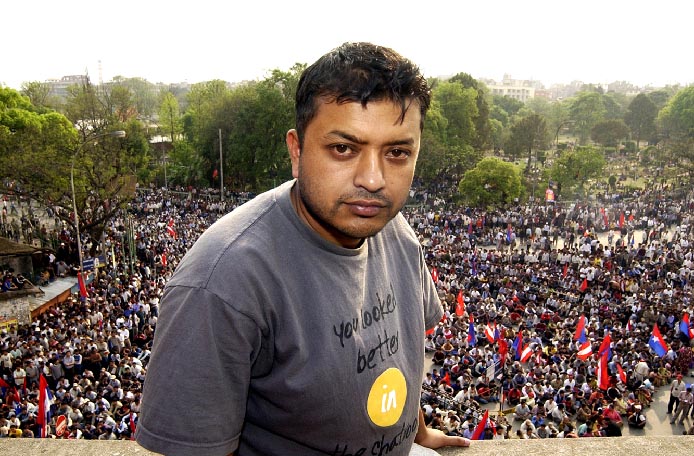
What followed was the longest education in patience that Nepali politics has to offer. The Constituent Assembly, and then its successor, were theatres of exhausting negotiation — Maoist insurgents turned parliamentarians, Madhesi parties that had launched a plains insurrection now sitting across the table, identity groups asserting claims suppressed for generations. Thapa, once a revolutionary, often had to play a broker.
Binda Pandey, then UML’s chairperson of the Committee for Fundamental Rights and Directive Principles, remembers Thapa as someone who would arrive late and sit in the last row, but who she could text when debate spiraled and trust to bring it back.“Whenever any debate went off track, I would text him on his mobile to intervene,” she said.
While Thapa learned to hold the system together through negotiation and compromise, a generation of younger Nepalis was drawing its own conclusions from the same evidence. Among them was Balendra Shah, then in his early twenties who went by his rap name balen, writing songs mocking police brutality and turning up at pro-constitution protests — not to engage with the process but to indict the people running it. Thapa was betting on the institutions. Shah’s generation had already decided the institutions weren’t worth the bet.
Nepal’s constitution passed in 2015, after hasty negotiations and threats of both internal social insurrection and external political intervention. The coalition era that followed — parties swapping allegiances, governments rising and falling with metronomic cynicism, the public’s trust leaking away with each new betrayal — was the environment in which Thapa quietly began what he calls Project Government.
In an interview with the Post, Thapa described the project as a deliberate programme to prepare himself for the prime ministership he believed was coming. He brought in Rameshwor Khanal — now the finance minister — as a mentor. He studied governance from the inside and kept studying it.“I was ideologically clear, but I needed to learn from the knowledge and experience of someone who knew better,” he said.
A senior economist at a multilateral development bank who asked to stay anonymous told the Post that Thapa was surrounding himself with experts who had first-hand experiences of working in the public sector. “I advised him on public finance management, procurement systems, and employment generation,” said the economist who started advising Thapa in 2020. .
Pratap Paudel, Thapa’s political adviser, told the Post the project consisted of 16 sectors and 31 subsectors, ranging from infrastructure to health, with around 60 experts advising voluntarily. “The Congress manifesto for the 2026 elections takes substantially from the work we did as part of Project Government,” Paudel said.
Another event that gave him a head start with Project Government was his first executive test, a nine-month tenure as health minister in the Congress-Maoist coalition beginning August 2016. What he did with the job was, by the standards of Nepali ministerial politics, concrete: free kidney transplants at major hospitals, expanded dialysis services at district hospitals, wider coverage of financial support for critical illnesses, curbs on the use of state funds for treating political leaders. He also institutionalised the National Health Insurance scheme, which was until then a pilot project under the health programme. Nine years later, the scheme, though, is at the brink of closure owing to, among other things, low enrollment, limited coverage, and a lack of coordination between the finance and health ministries.
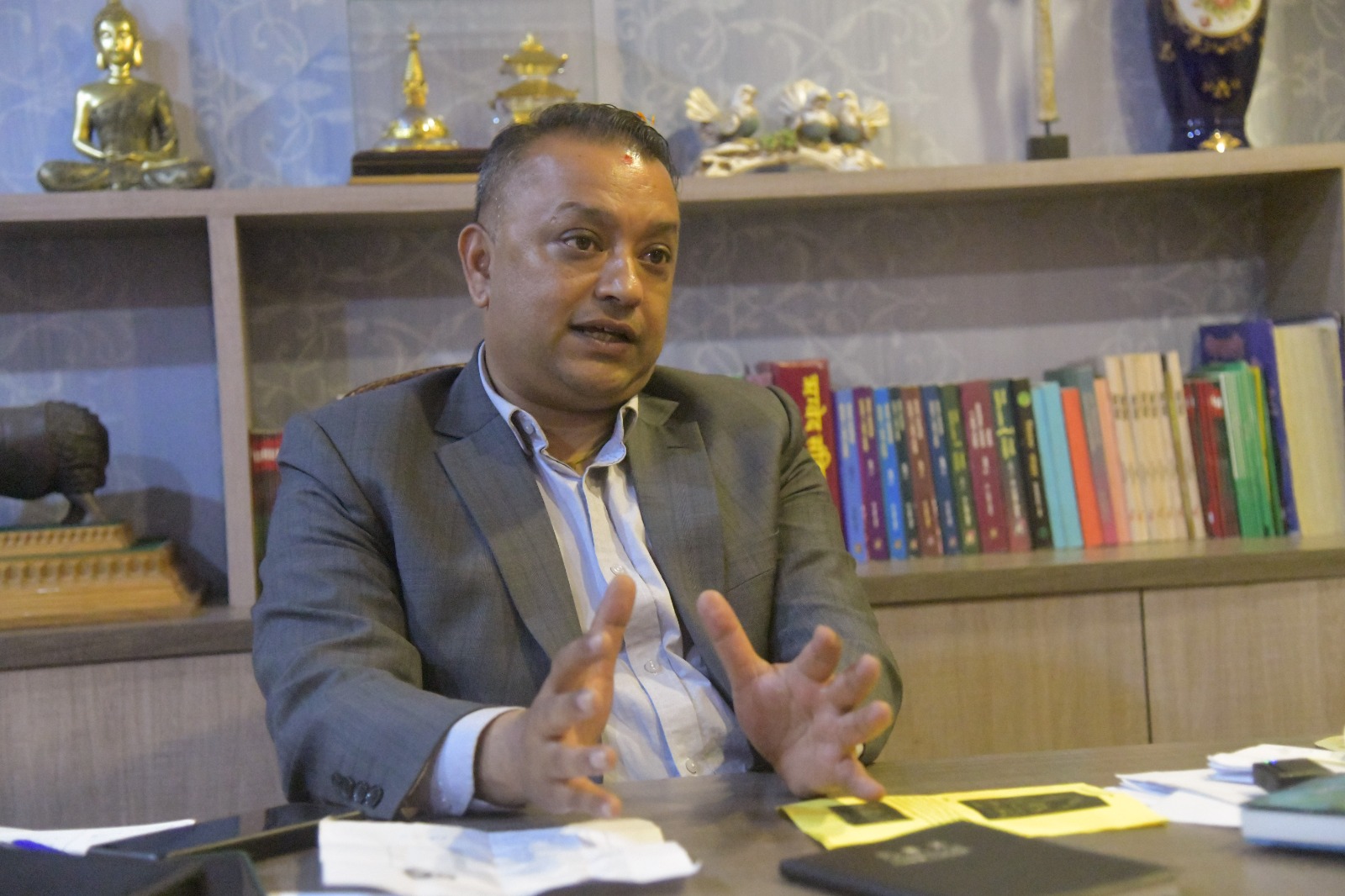
Senendra Raj Upreti, who served as Secretary of the Ministry of Health during Thapa’s tenure, says his lasting legacy, apart from the expansion of services, was the formulation of health laws. “What made him stand out as a minister is that he read every document thoroughly before making a decision,” Upreti said. “What he accomplished as a cabinet minister within the limited time of nine months was quite effective. Not everyone has the kind of commitment he did,” he said.
Thapa told the Post the short stint at the ministry inspired him to prepare for a bigger role in statecraft.“I began building a team for what was to come in the next few years.”
In July 2024, KP Oli and Congress president Sher Bahadur Deuba struck a power-sharing deal that caused widespread alarm — two former rivals forming a coalition that effectively hollowed out any meaningful parliamentary opposition. Thapa dissented within the party. He still joined a high-level mechanism to draft a common minimum programme and then resigned from it. He went back to doing what he’d always done: questioning the government from within.
On August 21, 2025, just weeks before the Gen Z protests, he stood in parliament and said what he’d been saying for months, this time on the record. “The citizens are unhappy. This government doesn’t have the right speed, focus, skill, and intention.” He described it later as an attempt to echo the anger of society through official channels. “But things had gone so far that what I was doing wasn’t enough,” he told the Post.
The Gen Z protests that began as a campaign against corruption, nepotism, and a government social media ban turned into something unexpected when the security forces opened fire and killed protesters. Thapa called on Deuba to pull away support from the government, but Deuba didn’t. The home minister, a Congress leader, resigned. But Oli, the prime minister, didn’t. The following morning, a mob came to Thapa’s house in Ratopul. He got his family out before it burned.
While Deuba was in Singapore for treatment, the party was pretty much leaderless and widely discredited. “The cadres who weren’t with me earlier felt the need to conduct the special general convention and that gave me a space to take action,” Thapa said. “Within the party, the numbers were always against me, although I had immense support outside.”
His critics say he moved too fast — eyeing the leadership before the wounded leader’s bandages had dried. His supporters say he was doing what the moment demanded. What is incontestable is that he moved decisively. Thapa and his allies gathered signatures of 54 percent of general convention members and called a special convention.
Members of the Deuba faction said the convention was against the party charter. Acting president Purna Bahadur Khadka maintained that only the Central Committee had the right to call for a convention, and since the regular convention had been scheduled for May, the Thapa faction’s convention was invalid.
Thapa and his friends went ahead anyway, beginning on January 11. As the convention was under way, the Deuba faction on January 14 expelled Thapa, along with fellow general secretary Bishwa Prakash Sharma and joint general secretary Farmullah Mansoor, for five years.
Later that day, the convention elected Thapa as the president. The Election Commission and then the Supreme Court sided with Thapa’s committee. He then drew up a candidate list of 165 names — of which 106 were first-time contestants. Deuba’s name was conspicuous by its absence in the list. A new Congress was being heralded, whether or not the old guard agreed.
The question now is whether any of this matters to voters.
Thapa’s pitch is elegant but precarious: he presents a party that is simultaneously the oldest in Nepal, with a history of fighting for democracy, and the newest, having just elected an entirely new leadership. His campaign team in Gyaneshwor Chowk — thirty-odd young professionals, about a third of them women, hunched over laptops on a Saturday afternoon — is working hard to make that into a brand. His team organized a town hall at Bhrikutimandap on February 19 where he answered questions for nearly three hours. The explicit contrast the campaign tries to draw is with Balendra Shah, his most compelling rival, who tours the country while barely speaking about his vision or policy.
“Once the stardom created by social media bursts, our vision will become more visible,” says Raghav Gautam, from the campaign’s publicity team. For Thapa and his camp, it is a bet on substance over spectacle.
Political analyst Hari Sharma estimates that without the leadership change, Congress would have slid from its traditional 24-26 percent vote share to around 18 percent. Whether Thapa’s takeover has arrested that slide is genuinely unknown. What does seem clear is that the candidate list — heavy with first-timers, light on the familiar faces of failure — has prevented an open rupture. “To the bewilderment of all,” Sharma says, “he brought together supporters and fence-sitters alike and thus dispelling the fears of a split.”
Monalisa Adhikari, senior lecturer in International Politics at the University of Stirling in the UK, thinks that distinction matters. “Thapa’s attempts at reforming the party from within are in stark contrast with the new parties and leaders who seek to strip politics from their agendas and promote apolitical technocratic versions of change,” she said. “The new political parties and figures have yet to clarify if their politics aims to gain space within the existing political landscape with a revised agenda, or if they’re seeking to redefine Nepali politics entirely.”
But not everyone is persuaded. Prakash Bhandari, a political science lecturer based in Kathmandu, thinks an ecosystem of image-building has helped Thapa consolidate his position in the party in the aftermath of the Gen-Z protests. “But I don’t think he can give a new lease of life to the party,” Bhandari told the Post. “He is a good manager, but having served in the old Congress machinery for so long, he can’t be expected to radically reorient the party.”
CK Lal, one of Nepal’s sharpest political observers, backs Bhandari’s reading of Thapa as a ‘status quoist’. “People are jaded now. There was no need for Singha Durbar to burn for the Congress party to reform itself,” Lal said. “For you to be new in politics, you need a new agenda and a new ideology.”
Lal likens Congress’s attempts at internal reforms to a passenger holding on to the handle of a moving bus. Like Bhandari, he too doesn’t expect the party to undergo a radical change under Thapa. “He seems to be trying to make a comeback as a reformist,” he said, “but we have yet to see if they will just change the driver or overhaul the engine altogether.”
Thapa’s more critical detractors often share images of him engaging in street-level political organising tactics common in the run-up to the 2006 protests. In one photo, he is shown pelting stones at the police; in another video, he is heard telling his fellow protesters to send veiled threats of violence to the principal of the Tri-Chandra Multiple Campus. “He is a heart patient. If he threatens us with the police, we must threaten him with telephone calls,” he says.
These images, his opponents say, undermine his carefully cultivated avatar of a thought leader. In his defence, Thapa has said more than once that these images should be read in context.
On the question of his reformist stance, Thapa’s answer is to turn the question around. His case against the new parties, including RSP, are no less populist than what came before. “They are also hinged upon the politics of hatred and the politics of negation,” he said. “The politics of populism needs an enemy. So I don’t see too many meeting points.”
Reformist or populist, there is another question the star campaigners, including Thapa, are largely avoiding: what happens to the culture of coalition politics in the upcoming parliament? A hung parliament seems inevitable, and with it, a return to the old cycle of making and breaking of governments.
Rakshya Bam, a young political activist who participated in the Gen-Z protests, is hopeful that the parties and their leaders will be careful not to tread the old route this time.
“This is not a regular election. It has come amid a difficult political situation in which the people reclaimed their mandate from the parties,” Bam said. “If they repeated the musical chair of power in the new parliament, that would be a contempt of the people’s mandate.”
Even as he tries to write a new destiny for the Congress through his decisive intervention, Thapa is headed to Sarlahi-4, leaving his old constituency, Kathmandu-4, to his protege, 33-year-old Sachin Timalsena.
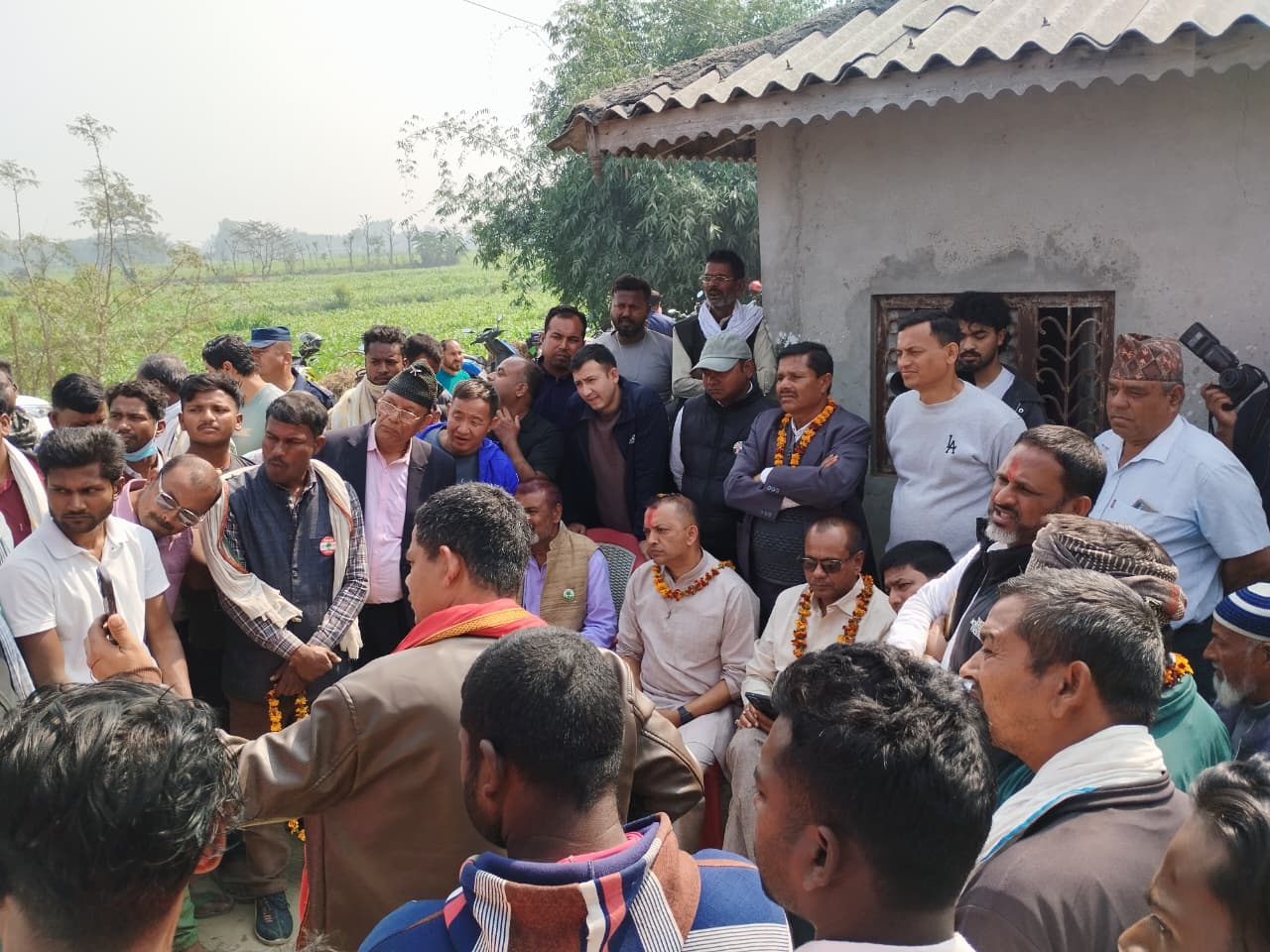
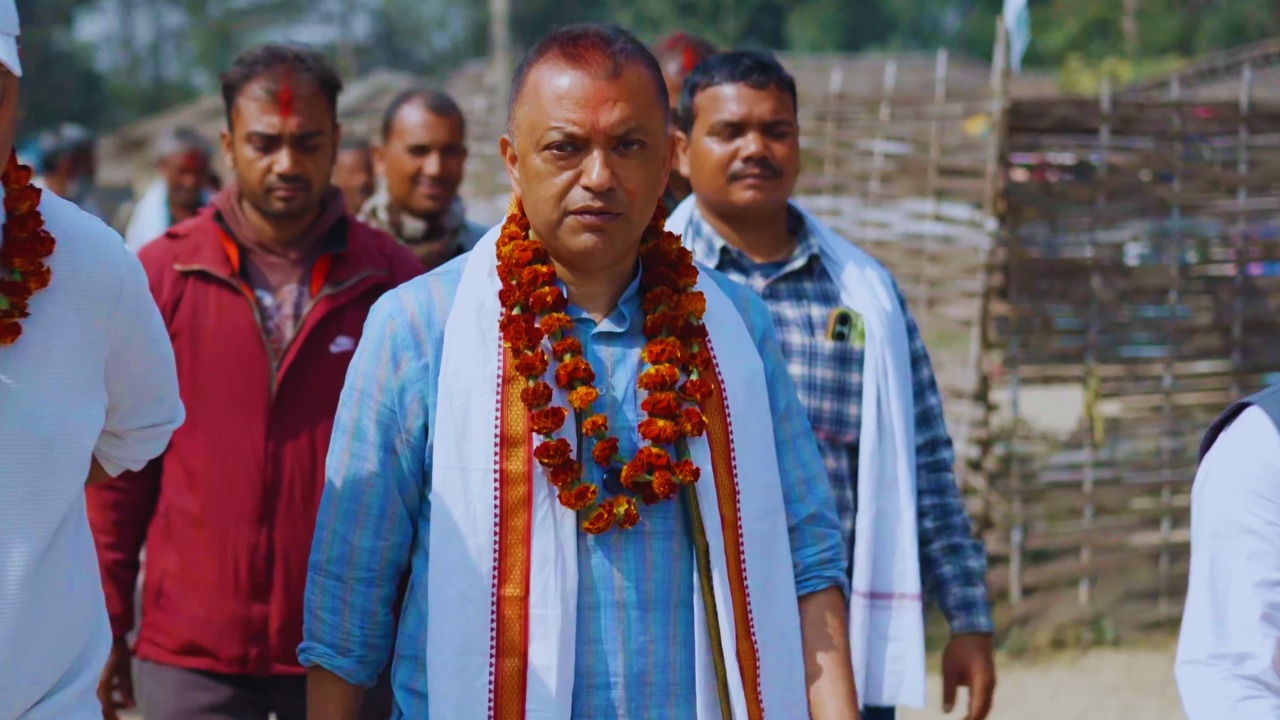
Despite his long political career at the national level, Thapa is relatively unknown in his new constituency. While he hasn’t ventured much into other constituencies in Madhes, observers say his sojourn into the plains may help consolidate support in what has been a traditional vote bank of the Congress.
Madhesh-focused political analyst Tula Narayan Shah says Thapa’s pitch on governance and delivery makes him stand out.
“Madhesi parties could not move beyond identity politics,” Shah said. “The structural issues of representation have been resolved through the constitution, and it is now time to focus on the questions of governance and delivery. Thapa’s arrival has brought these questions into the limelight.”
When Thapa was detained in Hanuman Dhoka in 2005, he wrote an article for Kantipur with a question that has followed him through his career: “Why does every generation have to fight for democracy?”
He was asking a rhetorical question. The democracy he took part in building — first against the palace, then through the Constituent Assembly, then across twenty years of coalition governments that tested its limits — is now being tested again, this time by a generation that finds it inadequate. The protesters who burned the buildings last September were not opposing democracy; they were demanding that it work equally for everyone.
Twenty years on, Thapa’s answer to that question remains the same: that the institutions themselves are worth fighting for. He shows up, he explains, and he takes the next question.
His opponent, Balendra Shah, has built a campaign on a different wager entirely. He tours the country while Thapa holds town halls, stopping mid-rally to greet a face in the crowd, rarely speaking at length, letting the crowds fill the silence with something close to devotion. Where Thapa arrives with a ten-point vision and an explanation for each point, Shah arrives with his presence. Where Thapa’s argument is that change requires understanding how things work, Shah’s is that the people who can't get things done should be taught a lesson. Both have read a country with the same problems and reached different conclusions.
The question this election will answer is which version of Nepal Nepalis want right now.