Under mounting criticism, parties pledge to correct lists of their proportional candidates
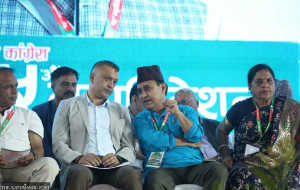
Parties are found to have undermined constitutional spirit of representing marginalised communities so as to award their relatives and favourites. Representatives of a political party prepare to submit their PR list at the Election Commission on Monday. POST PHOTO: SURYAMS UPRETI
Political parties have been severely criticised over the lists of proportional representation (PR) candidates they submitted to the Election Commission earlier this week.
Following widespread criticism, leaders from some of the major political forces have pledged to correct them. They have argued that some flaws remained in the lists as they had to submit them amid a tight schedule.
As per the election schedule, Sunday and Monday were marked to submit the closed lists of proportional candidates for the House of Representatives election scheduled for March 5.
A look at the PR lists submitted within the deadline shows that both old and new parties have put individuals from well-off families under the inclusive category allocated for the historically marginalised and underprivileged communities.
The Nepali Congress and the CPN-UML, like other traditional parties, have been accused of listing the relatives or favourites of their leaders as PR candidates.
Notably, this time around, the Rastriya Swatantra Party, a new force that presents itself as an alternative force, has faced the strongest criticism over the names on its PR list.
While older parties viewed the Gen Z revolt with a degree of scepticism, the RSP claims to embrace the spirit of the Gen Z movement against corruption, nepotism and favouritism. Yet the RSP’s list of candidates under the inclusive quota includes those from the top business community as well as “nepo kids”, raising serious questions about the RSP’s claim.
The party leadership has been accused of sidelining marginalised and underprivileged groups that were meant to be represented to give space to the forces the Gen Z movement sought to challenge. The backlash stems from the perception that the party has undermined the rationale of the movement it claimed to have championed.
The party, however, has defended itself by arguing that the list was prepared in haste at the last moment, as it had to accommodate pressure from multiple sides following its unification with Kathmandu Metropolitan City Mayor Balendra Shah’s group and the Ujyalo Nepal Party. This, it says, led to errors in the selection process.
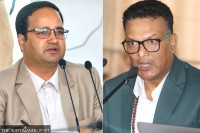
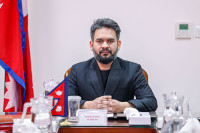
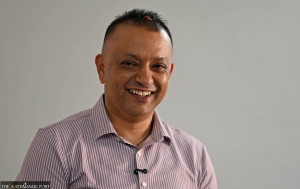
The RSP forged unity with the Kathmandu mayor Balendra Shah’s group on December 28 and RSP chair Rabi Lamichhane and Mayor Shah jointly talked to Ujyalo Nepal Party’s Kulman Ghising. Then, the Lamichhane-Shah team forged unity with Ghising’s party as well on December 29, the final day to submit the PR lists.
Following widespread criticism, some individuals on the PR list, such as Mahendra Lawati, have publicly requested that their names be withdrawn. And, the party has said it will revise and correct the list.
RSP chair Lamichhane has said that he personally asked some candidates whose names appeared on the party’s closed list to withdraw. He made the remarks in Pokhara on Wednesday in response to the controversy that has emerged over the PR list.
The party has also come under criticism for not giving priority to the candidates securing popular votes in its internal contest even after holding a primary election. Some publicly raised questions about the credibility of the process itself, as they accused the leader of ignoring the outcome of the primaries and undermining both internal democracy and the party’s stated commitment to transparency and alternative politics.
Lamichhane, however, argued that the primary was never meant to be the sole deciding factor.
“We follow a system we designed ourselves, under which voting accounts for only 50 percent of the total weight,” he told journalists in Pokhara. “The remaining 50 percent is determined by evaluating various aspects of the aspirants. So winning the primary does not automatically guarantee a place on the closed list.”
Lamichhane acknowledged that there were shortcomings in the PR list and assured that they would be addressed.
“We still have time to revise the list. There are more problems that we ourselves have identified than what has come out in public, and these will be corrected in time,” he added.
According to Kul Bahadur GC, assistant spokesperson for the Election Commission, political parties can correct their submitted lists from January 5 to 11. The commission will examine the corrected lists from January 12 to 17 before publishing the final lists on February 3.
RSP is not the only party facing criticism over selection of PR candidates. The Nepali Congress submitted its list of PR candidates in an equally chaotic way. It arranged the names of its 110 candidates province-wise.
The parties needed to submit their lists under clusters designed by the commission such as Adivasi-Janajati, Khas-Arya, Tharu, Dalit, Madhesi and Muslim.
Although Congress leaders claimed to have selected candidates according to provincial clusters, it failed to properly categorise them before handing in the list.
An official at the party office said the Congress opted for a province-wise list after failing to reach consensus on who should be prioritised in the cluster-wise order.
The inclusion of senior leaders and relatives of top figures—such as Arjun Narsingh KC, joint general secretary Bhishma Raj Angdembe, former defence minister Bhimsen Das Pradhan, Rina Upreti (wife of leader Bal Bahadur KC), Chandramohan Yadav (son of former President Ram Baran Yadav), and Sangya Pokhrel (daughter of President Ramchandra Paudel)—has angered party members.
Congress cadres unhappy with the selection argue that leaders who have repeatedly benefited from party positions had tried to exploit the inclusive electoral system as well.
The Congress list also has drawn censure over names representing some districts such as Sarlahi. Some Congress leaders from Sarlahi claim that an individual running a business in India has been recommended from the district.
Acting district president Dr Saroj Kumar sent a letter to the party’s Central Working Committee formally raising the issue on Wednesday. According to him, Mohammad Ansar Khan, whose name appears on the PR list, was never recommended by any party committee and is not known to have been active in the organisation at any level.
“How and under what criteria was a person who has been engaged in business in Ludhiana, India, for the past 20 to 25 years recommended as a PR? This is both surprising and questionable,” he writes.
Congress publicity department head Min Bahadur Bishwakarma said the party is ready to correct its PR list to remove any irregularities. If confirmed that someone living in India for business is on the party’s PR list, that can be rectified.
“The PR closed list was prepared after lengthy discussions within the party, but we acknowledge that mistakes could still occur,” Bishwakarma told the Post. “If there are any errors in the list, they can be corrected.”
Similar objections have also been raised from within the CPN-UML over the selection of PR candidates. Party leaders have complained that the list is dominated by individuals close to party chair KP Sharma Oli and that it fails to ensure fair and meaningful representation under the PR system.
However, speaking on condition of anonymity, one UML leader said the chances of the list being revised were slim. “Any changes would only be possible if chair Oli himself acknowledged problems in the list and initiated amendments,” the leader said, asking not to be named. “Unless the chair sees flaws and decides to make corrections, there won’t be any change to the closed list.”
A similar situation is seen in the Rastriya Prajatantra Party, whose PR list has attracted criticism from among its own leaders.
In contrast, the party that faces little criticism—internally or externally—over its PR list is the Nepali Communist Party, which was formed only recently through the merger of several leftist groups.
The party didn’t face much criticism as it adopted a policy of not repeating any individual who was elected under the category in the past. Thus, the party incorporated many new faces in its list.
Nepal adopted the PR system in its electoral framework with the stated aim of bringing communities that had long been excluded from state power into the political mainstream. Under this arrangement, 60 percent of lawmakers are elected through the first-past-the-post (FPTP) system and 40 percent through PR.




 14.59°C Kathmandu