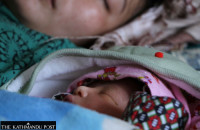
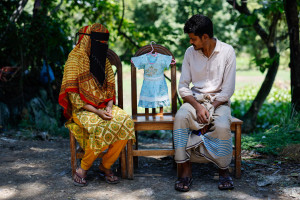
A few weeks ago, a 20-year-old woman from ward 3 of Tila Rural Municipality of Jumla district succumbed to maternity-related complications.
The woman, who had given birth to her baby at the Karnali Academy of Health Sciences, was airlifted to the Provincial Hospital in Surkhet after she suffered from high blood pressure.
Doctors later found that she was suffering from renal and liver failure at the time she was admitted to the hospital. She died of complications.
Including this case, 69 other women from 56 districts died of maternity-related complications in the first eight months of the fiscal year, according to the data provided by the Family Welfare Division under the Department of Health Services.
Officials admit that the actual number of maternal deaths could be higher than government data show, as the maternal and perinatal death surveillance programme is implemented in just 56 of the country’s 77 districts.
“We are working to expand maternal and perinatal death surveillance in an additional four districts in the ongoing fiscal year,” said Nisha Joshi, a public health officer at the division. “Not all maternal deaths are reported even from districts where the maternal and perinatal death surveillance programme has been implemented.”
Maternal health experts say pregnancy is not a disease, yet hundreds of women in the country die each year due to complications. Most complications during or after childbirth are avoidable through timely interventions, according to them.
“Mandatory antenatal care visits, risk identification, and timely referral to appropriate centres could help save many lives in Nepal,” said Dr Pawan Sharma, a maternal health expert, who retired from the Patan Hospital a few months ago. “Delays in receiving timely medical help and a lack of access to expert care at referral centres also contribute to these deaths.”
Experts say such loopholes can be plugged with targeted interventions and stronger commitment from health authorities.
In the fiscal year 2024-025, 240 women from 56 districts died of maternity-related complications.
Of them, 18 percent deaths were responsible for high blood pressure, 13 percent due to postpartum haemorrhage, followed by pregnancy-related infections at 11 percent, unknown causes at 11 percent, amniotic fluid embolism— a rare, unpredictable obstructive emergency—at 8 percent, and abortive complications and underlying cardiac conditions at 7 percent each.
“Most of the underlying causes are manageable and preventable if the problems are identified on time, which helps in timely referral of pregnant women to advanced centres,” said Sharma. “Health authorities must take problems seriously and take initiatives to avoid the ongoing maternal deaths.”
Nepal reduced the maternal mortality rate from 539 per 100,000 births in 1996 to 239 per 100,000 births in 2016, for which the country even received a Millennium Development Goals award.
The country has reduced maternal deaths by over 70 percent since 2000, according to the World Health Organisation. The UN health body, in its latest report, stated that currently 142 Nepali women die from maternity-related complications per 100,000 live births.
Nepal’s original target under the UN’s Sustainable Development Goals is to reduce the maternal mortality to 75 per 100,000 births by 2030.
The SDGs, a follow-up on the Millennium Development Goals (MDGs), aim to end poverty, hunger and all forms of inequality in the world by 2030. Nepal has committed to meeting them.
Despite various steps taken by the government to reduce maternal deaths, including providing free institutional delivery services, free antenatal and postnatal care, allowance for those seeking delivery at health facilities, safe birth attendance to health workers, hundreds of women die every year of complications.
“Every life matters, life is not only a number, it is everything to the respective person and her family,” said Dr Bhola Rijal, a maternal health expert, who is also a renowned gynaecologist. “Most of the ongoing maternal deaths are preventable with little initiatives. Concerned authorities must take measures to prevent avoidable maternal deaths.”
Arjun Poudel is a health reporter for The Kathmandu Post. Before joining the Post, he worked for Sagarmatha Television, Naya Patrika, Republica and The Himalayan Times.




 14.67°C Kathmandu