Public hospital OPDs stay shut on Sundays despite ministry order
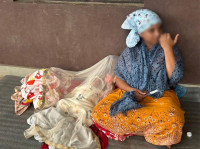
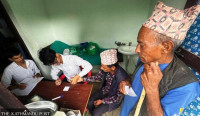
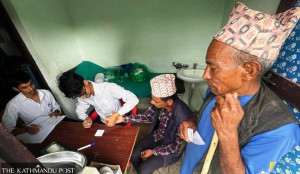
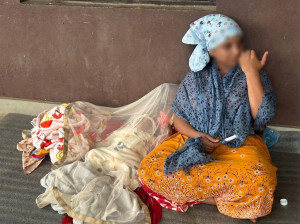
Patients from remote areas say staying in Kathmandu for days to see doctors at state hospitals makes treatment more expensive than private treatment. Post File Photo
Sanimaiya Ghalan, a local from Hetauda, had come to Kathmandu on Thursday for treatment of muscle weakness after a doctor at a local health facility suspected peripheral neuropathy and referred her to Bir Hospital.
She could not meet the doctor on Friday, as she went to hospital late, due to confusion over whether doctors would work on a public holiday.
“We heard that the health ministry has directed hospitals to examine patients on Sunday as well, but we did not find that after visiting the hospital,” said Prateek, Ghalan’s son, who accompanied his mother. “We have already spent three days in a hotel, and we are thinking of going to a private hospital, as waiting to see doctors in government hospitals is costlier than seeing them in private."
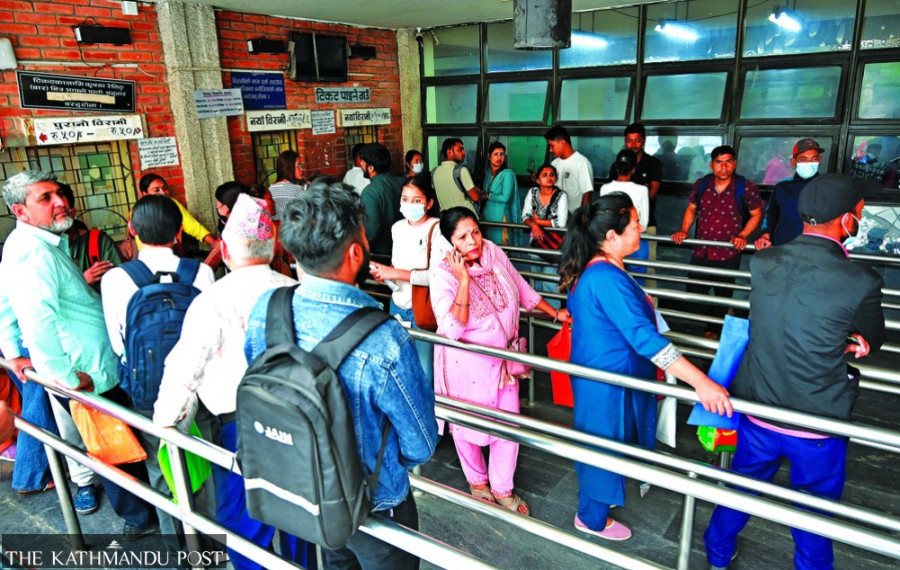
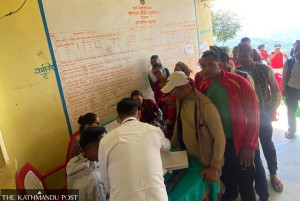
Hundreds of patients who come to the federal capital for quality care have the same complaint that they are forced to wait for several days in hotels or at relatives’ homes to see doctors at the state-run health facilities, because of the two-day weekend—Saturday and Sunday.
To address the ongoing fuel crisis triggered by the West Asian conflict, the government has decided to close offices for two days a week instead of the usual one (Saturday), and keep them open from 9 am to 5 pm on the remaining days.
After criticism of the decision being enforced in every sector, the Ministry of Health and Population directed hospitals to continue outpatient care on Sunday as well. However, most hospitals defied the ministry’s decision and gave a public holiday on Sunday.
“We haven’t run out-patient care on Sunday,” said Dr Dilip Sharma, director at Bir Hospital. “Our doctors and health workers serve full day on Friday but don’t provide outpatient care on Sunday.”
Along with Bir, other big hospitals, including the National Trauma Centre, and Tribhuvan University Teaching Hospital, where over 4,000 patients from across the country seek treatment every day, do not provide services except for emergency care and in-patient service.
“I was told to wait for another three days to show the test report to the doctor, who recommended testing for me,” said Bikas Nakarmi, a resident of Tamghas Gulmi, who had arrived at TU Teaching Hospital, Maharajgunj. “I asked the same doctor where I could meet him after duty hours to show the report, and he gave me the clinic’s address. If I waited to see him at the hospital, I would have to pay hotel charges for several more days, but for Rs 1,000 I can easily meet the doctor at his clinic and get medicine prescriptions.”
Those waiting for months and even a year for surgeries, and others coming to Kathmandu from remote areas, have been badly affected by the two-day weekend.
“Patients do not come for treatment alone; they also have their family members,” said Deepak Mudbhari, a health worker serving at Bir Hospital. “It will be very difficult for poor patients and their family members to stay in hotels for several days.”
Officials at Bir Hospital said patients generally wait at least three months for an MRI, three days for an ultrasound, and one week to 15 days for a CT scan.
Waiting times for surgeries are longer—up to a year for urology surgeries, two months for neurosurgeries, six months for ENT surgeries, and two to six months for other general surgeries.
The decision to close offices for two days a week, which has automatically stopped non-emergency services, would prolong patients’ waiting and suffering.
“Doctors can differentiate which is an emergency and which is a non-emergency case,” said Mudbhari. “But patients who are ailing think that their problems are serious and need prompt care, as with patients with a toothache, whether or not the problem is an emergency.”
Experts say the number of patients seeking care at big hospitals will not fall without improving service quality at local and provincial health facilities.
As most hospitals in the local and provincial levels lack trained human resources and equipment, laboratories and other services, it is impossible to improve services at those centres overnight.
Arjun Poudel is a health reporter for The Kathmandu Post. Before joining the Post, he worked for Sagarmatha Television, Naya Patrika, Republica and The Himalayan Times.




 19.27°C Kathmandu