Government health insurance scheme nears collapse as hospitals halt services
State-run hospitals are providing only partial services. Major hospitals like Teaching Hospital, Manmohan Cardiothoracic Vascular & Transplant Centre, and several medical colleges have completely halted services for months. Over 80 patients who are denied services file complaints every day at the Insurance Board. Post file photo
The government's health insurance scheme, the national priority programme aimed at ensuring universal health coverage, has almost collapsed, as most state-run health facilities have been providing only partial services.
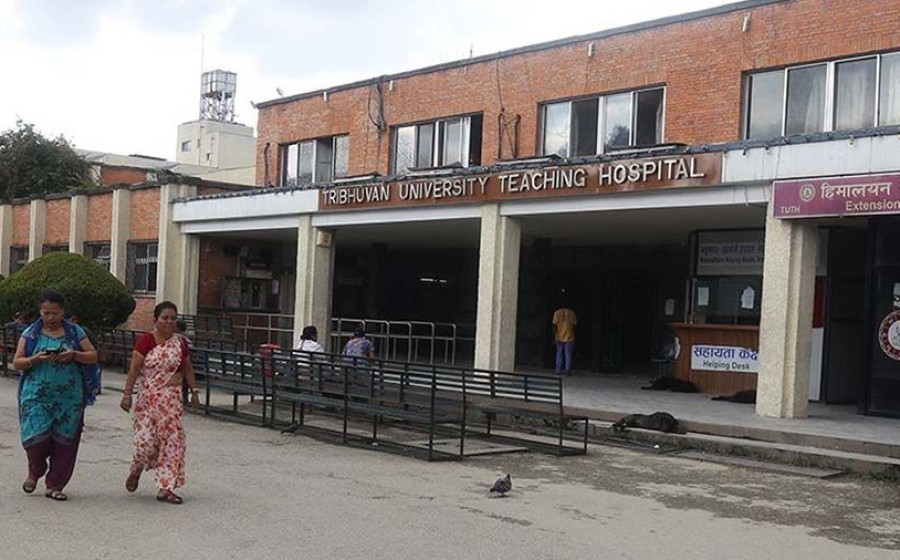
Major hospitals such as Tribhuvan University Teaching Hospital and Manmohan Cardiothoracic Vascular & transplant Centre, among others, stopped providing services under the health insurance scheme months ago. Other hospitals like Bir Hospital, Shahid Gangalal National Heart Centre and Tilganga Eye Hospital have been providing only partial services.
Bikesh Malla, information officer at the Health Insurance Board, said they get over 80 complaints every day from patients who are denied services under the health insurance scheme. “Hospitals are providing only outpatient services,” Malla said. “Many patients are forced to pay despite paying a premium for health insurance.”
Board officials said that when they inquire about service denial, the hospitals demand they clear the long-overdue dues first. They concede that even patients are denied medicines under the health insurance services by most state-run hospitals, including Bir Hospital. Patients who took the government’s health insurance policy complained to board officials that they are discriminated against by hospitals in the treatment, put them in long queues for services, give dates of surgeries months later and forced to pay for lab services and medicines.
“Yes, the board has not been able to reimburse all outstanding dues immediately but that doesn’t mean that hospitals would not get reimbursed for the services they provided under the health insurance scheme,” said Malla. “We have held multiple rounds of meetings with hospital administrations, but the issues have not been resolved yet.”
The health insurance scheme is the government’s priority programme aimed at ensuring universal health coverage. However, the programme has been mired in financial problems, and is at the verge of collapse.
Officials hoped that problems with the health insurance scheme would be resolved once the new government was formed, but the problems remain as they are. Instead, many hospitals and medical colleges stopped the services under the programme.
Officials at the board said all government funds allocated for health insurance and premiums collected from the public have already been paid to health facilities. Altogether, Rs14 billion had been paid by December. This included Rs11 billion from the Ministry of Health and over Rs3 billion collected in premiums from the public.
An additional Rs 1 billion was paid to hospitals this year after the Health Ministry transferred the budget from various health programmes.
Officials said that the dues of hospitals have reached Rs 16billion and the bill is going up every day.
“We are trying to get Rs6 billion within mid-May to reimburse the hospital,” said Malla. “We hope that there will be some relief if the Finance Ministry provides the said amount for now.”
On average, about 50,000 people use services each day, and over 10 million people are covered by health insurance.
Earlier, the board, as directed by the Health Ministry, lowered the ceiling of out-patient service to Rs25,000 for patients with health insurance coverage.
Experts questioned the government’s commitment to universal health coverage, citing both international commitments and those made while selling health insurance schemes.
“Patients can challenge the government decision to limit the ceiling in the court, and also claim compensation, as they are denied services committed while selling the insurance policy,” said Dr Senendra Upreti, former health secretary and also former director of the Board. “This is a cheating of people by the government. People may not renew their policies if the outpatient coverage is reduced.”
Under the original scheme, a family of up to five members pays Rs3,500 for treatment, including medicines, check-ups, and counselling. One family member can use the insurance coverage worth Rs100,000 per year, or the amount can be divided among five members. Families with more than five members pay Rs700 per additional member for an extra Rs20,000 in health insurance coverage.
People covered by the insurance can access healthcare services at designated facilities by presenting their identity cards. Expenses incurred by health facilities are reimbursed by the Health Insurance Board.
For patients of chronic diseases, the government provides Rs200,000 in insurance coverage, and as of this fiscal year, the board has paid over Rs50 million, officials said.
The government also covers premiums for certain groups—those living below the poverty line in 26 districts, those above 70 years, family members of people living with HIV, disabled people, and those suffering from leprosy and multi-drug resistant tuberculosis.
Currently, the government pays the insurance premiums for around 55 percent of people enrolled in the scheme.
Meanwhile, the Health Ministry has recalled the executive director of the board, Dr Krishna Prasad Paudel, to the Ministry.
Arjun Poudel is a health reporter for The Kathmandu Post. Before joining the Post, he worked for Sagarmatha Television, Naya Patrika, Republica and The Himalayan Times.




 14.76°C Kathmandu