Monsoon returns, and so do drinking water safety fears
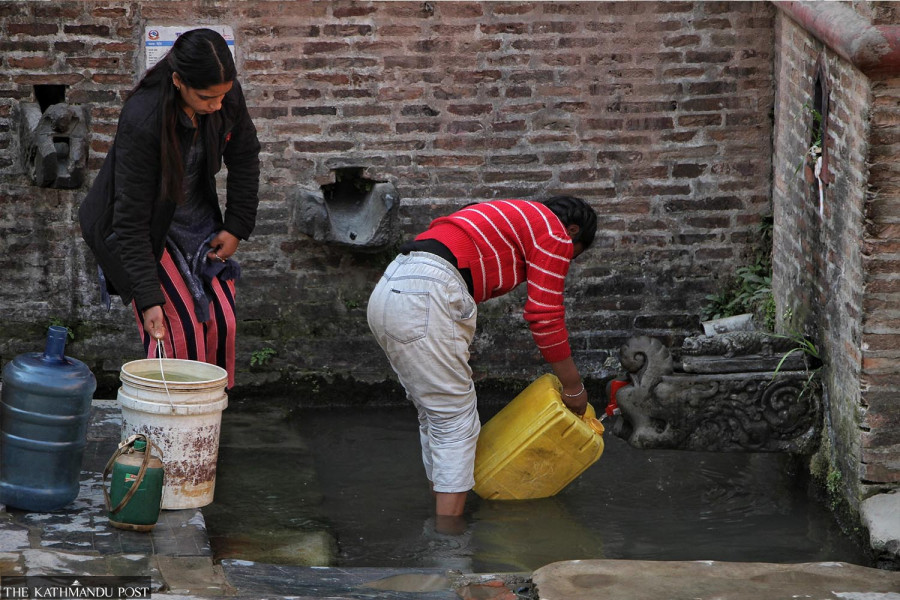
Epidemiology and Disease Control Division urges provinces and local units to stock medicines for water-borne diseases, test water quality and prepare for monsoon-related infections. Post file photo
Testing of drinking water samples collected about a month ago from various places of Kathmandu district by the Public Health Office found hazardous microbes in over one-fourth of the samples. However, the office has since stopped the testing, meaning it is unaware of the quality of water that hundreds of thousands people in the capital city are drinking every day.
“We could not continue testing of water samples due to various constraints,” said Saroj Roka, an official at the health office. “We will resume testing within our jurisdiction soon.”
Unlike the Public Health Office, Kathmandu, many local units across the country have not even considered it necessary to start examining water quality, despite it being one of their core responsibilities.
Concern is growing over the risk as premonsoon rainfall has intensified and the monsoon is just around the corner, during which most sources of drinking water become contaminated with hazardous microbes. Officials said a few weeks ago their tests found the presence of E.coli and faecal coliform in the samples of tap water collected from Kageshwari Manohara, Chandragiri, Dakshankali, Nagarjun and Kirtipur municipalities in the Kathmandu Valley.
E. coli is a microscopic organism that lives in the intestines of warm-blooded animals or their faeces. Its presence indicates that the water used by the majority of the population is contaminated with sewage.
Faecal coliform is also a microscopic organism that lives in the intestines of warm-blooded animals or in their faeces.
Contaminated drinking water is a perennial issue in Nepal, despite years of investment to improve water sources and efforts to supply safe drinking water through pipeline to every household. Nepal is highly vulnerable to water-borne diseases, including diarrhoea, dysentery, typhoid, hepatitis, and cholera, with thousands of people falling sick every year.
Every year, dozens of people are infected with deadly cholera, and thousands contract diarrhoeal diseases due to consumption of contaminated water.
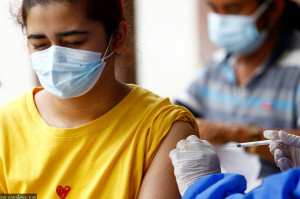
Last year, the country witnessed a massive cholera outbreak during the monsoon. Several deaths and hundreds of infections were reported in Bara and Parsa districts. Health authorities resorted to cholera vaccination to contain the spread after all efforts to stamp out the disease failed.
In 2024 also, hundreds of people were infected with diarrheal diseases, including cholera, in outbreaks in Kathmandu, Lalitpur, Kailali, Pyuthan, Makawanpur, Rolpa, Sindhupalchok, Achham, and Rautahat districts.
Health officials said the Vibrio cholera 01 Ogawa serotype was found in stool samples of the infected patients in almost all outbreaks. Despite the growing threat, authorities have yet to initiate widespread water quality testing, and this has raised concerns about potential health hazards.
Doctors at Sukraraj Tropical and Infectious Disease Hospital said the number of patients with diarrheal diseases have already started to surge.
“The number of people infected with diarrheal diseases has already risen in our hospital,” said Dr Anup Bastola, director at the hospital. “We request everyone to take precautions while drinking water and eating at roadside eateries.”
The Nepal Multiple Indicator Survey (MICS) 2024-25 shows that deadly microbes, including E. coli, have been found in over 60 percent of drinking water samples collected from households throughout the country.
Even bottled water, which is considered safe for drinking, has in the past been found to be contaminated with pathogenic microbes. Last year, bottles of water from multiple companies were recalled from markets after they were found contaminated. Some companies were sealed by local administrations due to sheer negligence in safety and quality standards.
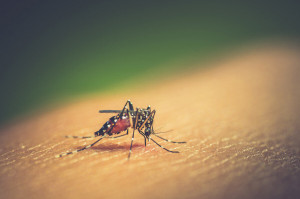
Along with water-born diseases, the country is also vulnerable to vector-borne diseases—dengue, kala-azar, malaria, encephalitis, and scrub typhus, among others. Thousands of people are infected with dengue and scrub typhus every year, and some succumb to these infections.
Meanwhile, the Epidemiology and Disease Control Division said that it has alerted health agencies in all seven provinces about the looming risk of outbreaks of water- and vector-borne diseases.
“We held an online meeting of rapid response committees recently and alerted officials about the possible risks of disease outbreaks during the monsoon,” said Dr Amrit Pokhrel, an official at the division. “We have also asked provincial and local health agencies to stock necessary medicines and allocate budgets for possible outbreaks.”
Officials said the federal government also maintains buffer stocks of medicines, but they may not be sufficient in the event of a major outbreak. The division has also asked all local units to start testing drinking water samples in their jurisdictions.
Arjun Poudel is a health reporter for The Kathmandu Post. Before joining the Post, he worked for Sagarmatha Television, Naya Patrika, Republica and The Himalayan Times.




 24.12°C Kathmandu