Nepal steps up Ebola surveillance as WHO declares public health emergency
Over 970 Nepali peacekeepers are in the virus-hit Democratic Republic of Congo, including in Bunia and Fataki in Ituri Province, the epicentre of the outbreak. Ebola is a highly contagious viral disease caused by an infection with an orthoebolavirus found in sub-Saharan Africa. Reuters
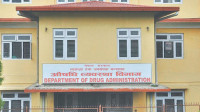
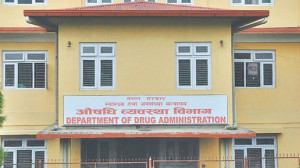
The Epidemiology and Disease Control Division has alerted all health agencies, including health desks at the Tribhuvan International Airport, about the potential risk of the spread of the Ebola virus, which has killed around 80 people in the Democratic Republic of Congo since late April.
The World Health Organisation on Sunday declared an Ebola outbreak in the Democratic Republic of Congo and Uganda a “public health emergency of international concern” following the deaths and 246 suspected cases.
Officials say they were also formally alerted under the International Health Regulations (IHR) to the risk.
“We have been planning a meeting with stakeholders to discuss the risks and measures required,” said Dr Anuj Bhattachan, director at the division. “We have taken the issue seriously and have also alerted the health desk set up at the Tribhuvan International Airport.”
Ebola is a highly contagious viral disease caused by an infection with an orthoebolavirus found in sub-Saharan Africa. According to the US Centres for Disease Control and Prevention, the virus can cause serious and often deadly disease, with a mortality rate as high as 80 per cent and 90 percent.
Officials say that, for now, all focus is on the health desks at Tribhuvan International Airport, as the risk of an infected person entering the country via land crossings is low.
“We have deployed health workers 24 hours in the health desks, to screen passengers arriving from the disease-hit countries,” said Bhattachan. “Officials have been tasked to step up vigilance.”
The UN health body said that the outbreak caused by the Bundibugyo strain does not meet the criteria for a pandemic emergency as defined by the International Health Regulations, a legally binding agreement among 196 countries.
Public health experts, as well as virologists in Nepal, say that, like many countries, Nepal is also highly vulnerable to the spread of fatal diseases due to increased global movements. As thousands of people from around the globe enter the country every day and hundreds of thousands of migrant workers continue to travel to their homeland frequently, any disease seen in any corner of the globe can enter the country.
“The growing demand for yellow fever vaccine indicates that the number of Nepalis going to African countries for employment and business purposes has been rising in recent years,” said Dr Sher Bahadur Pun, chief of Clinical Research Unit of Sukraraj Tropical and Infectious Disease Hospital. “We should not underestimate the risks of the spread of any disease, as we have already witnessed outbreaks of mpox, SARS-COV-2, Chandipura virus, and swine flu.”
Moreover, thousands of peacekeepers from the Nepal Army, Armed Police Force and Nepal Police have been serving in the African countries affected by the Ebola virus.
The Nepal Army said there are currently over 970 Nepali peacekeepers in the Democratic Republic of Congo, including in Bunia in Ituri Province, the epicentre of the outbreak.
“We have quarantined troops who went out of camp for patrolling in the virus-hit area of Bunia in Ituri Province,” said Brigadier General of Nepal Raja Ram Basnet, who is also the Army spokesperson. “So far, none of our troops have contracted or fallen ill from the Ebola virus.”
He said that the Army is aware of the risk of infection and has issued guidance on necessary precautions for its peacekeepers deployed in war-torn countries.
“Right now, we don’t have any schedule to rotate troops deployed in Congo,” said Basnet. “Even after the return of troops in the country, we keep those returning from disease-hit countries in quarantine for a certain period and allow them to go home.”
Experts ask the relevant authorities to focus on strengthening laboratory facilities and training health workers, and to step up surveillance measures to reduce the risk of outbreaks of deadly diseases, including Ebola. They say that even if the risk of the Ebola virus spreading is low in Nepal, it would be a grave mistake to rule it out and be complacent.
“Our ministers used to say that the coronavirus would not make an impact in Nepal, but we witnessed what it did. We used to say Nepal is not at risk of monkeypox infection, but the disease entered the country multiple times,” said Pun. “So, take risks seriously and start preparations for the worst-case scenarios.”
Arjun Poudel is a health reporter for The Kathmandu Post. Before joining the Post, he worked for Sagarmatha Television, Naya Patrika, Republica and The Himalayan Times.




 12.72°C Kathmandu