



 26.02°C Kathmandu
Tue, Oct 27, 2026
Culture & Lifestyle
How heritage walks invite people to experience culture beyond monuments and museums
These immersive walks encourage participants to hear, smell, and engage with living traditions while fostering deeper connection to place and community.
bookmark![]()
Youths come together to understand cultural heritage and collective identity. ![]()
These walks combine a full spectrum of sensory experiences. ![]()
![]()
Jony Nepal
Published at : June 6, 2026
Updated at : June 7, 2026 16:00
Kathmandu
Heritage interpreter Rishi Amatya begins his heritage walks through Patan by asking students to close their eyes and concentrate on what they hear–perhaps the echoes of windchimes or the bells of Patan’s temples—making them consciously aware of the sounds that are often overlooked.
For Amatya, these heritage and cultural experiences are something to be heard and felt, combining a full spectrum of sensory experiences. “Visions generally guide our senses,” says Amatya. “We tend to assume what a sound is, or what an experience means, based on what we see. With this, there are many things that people miss—be it the laughter of Mangalbazar’s children or the sound of water trickling from hitis.”
Amatya has been organising these curated walks for more than a decade. In the years following the 2015 earthquake, many of his walks centred around reconstruction and restoration. Today, his explorations range from Patan’s history and the traditions surrounding Bunga Dya (Rato Macchindranath Jatra) to educational tours designed specifically for students in grades 5 to 10 from government schools.
“The abundance of history and intangible heritage concentrated in these places is remarkable,” he says. “Beyond monumental squares, the individual and community practices equally shape this heritage, which is often skimmed over in educational practices. The whole idea of my walks, especially those centred on Bunga Dya, is to understand how these communal cultures are tied to this deity.”
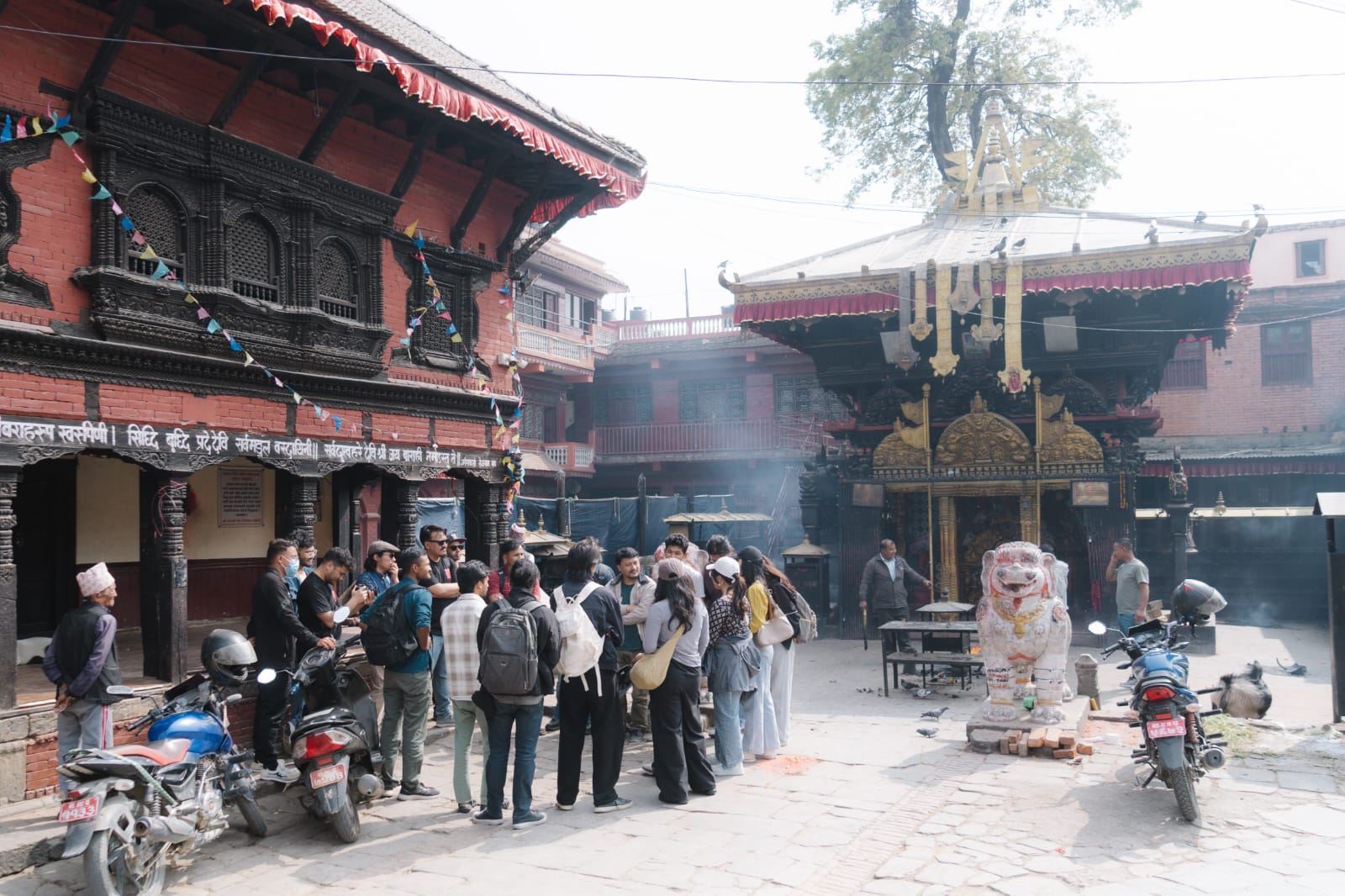
Across the Kathmandu Valley, similar efforts are defining how heritage is experienced through participatory encounters.
Srichchha Pradhan, Miss Nepal World 2023, has been organising heritage walks through her initiative ‘Deego Pranali’. The walks are mostly attended by youth and foreign participants, prompting organisers to conduct them in multiple languages. “I do this to connect ecology and culture,” she says. “It is also an effort to understand our cultural identity. These walks motivate people to know who they are, reconnect with their grandparents and find themselves in their own cultures.”
Having organised such walks in Kathmandu, Bhaktapur, Tokha and Khokana, Pradhan recalls connecting these practices to the exploration of food, agriculture, and history. “We start every heritage walk with a question,” she says. “Sometimes it is about how a city was made, or how its culture is connected to food, something that immediately grounds people in place and memory.”
For some, such encounters enhance their relationship with the cities they grew up in.
In April 2023, Rushel Shilpakar, a native of Bhaktapur, started a personal campaign to explore the historic city over 365 days, walking through its neighbourhoods, courtyards, shrines, and settlements with renewed curiosity.
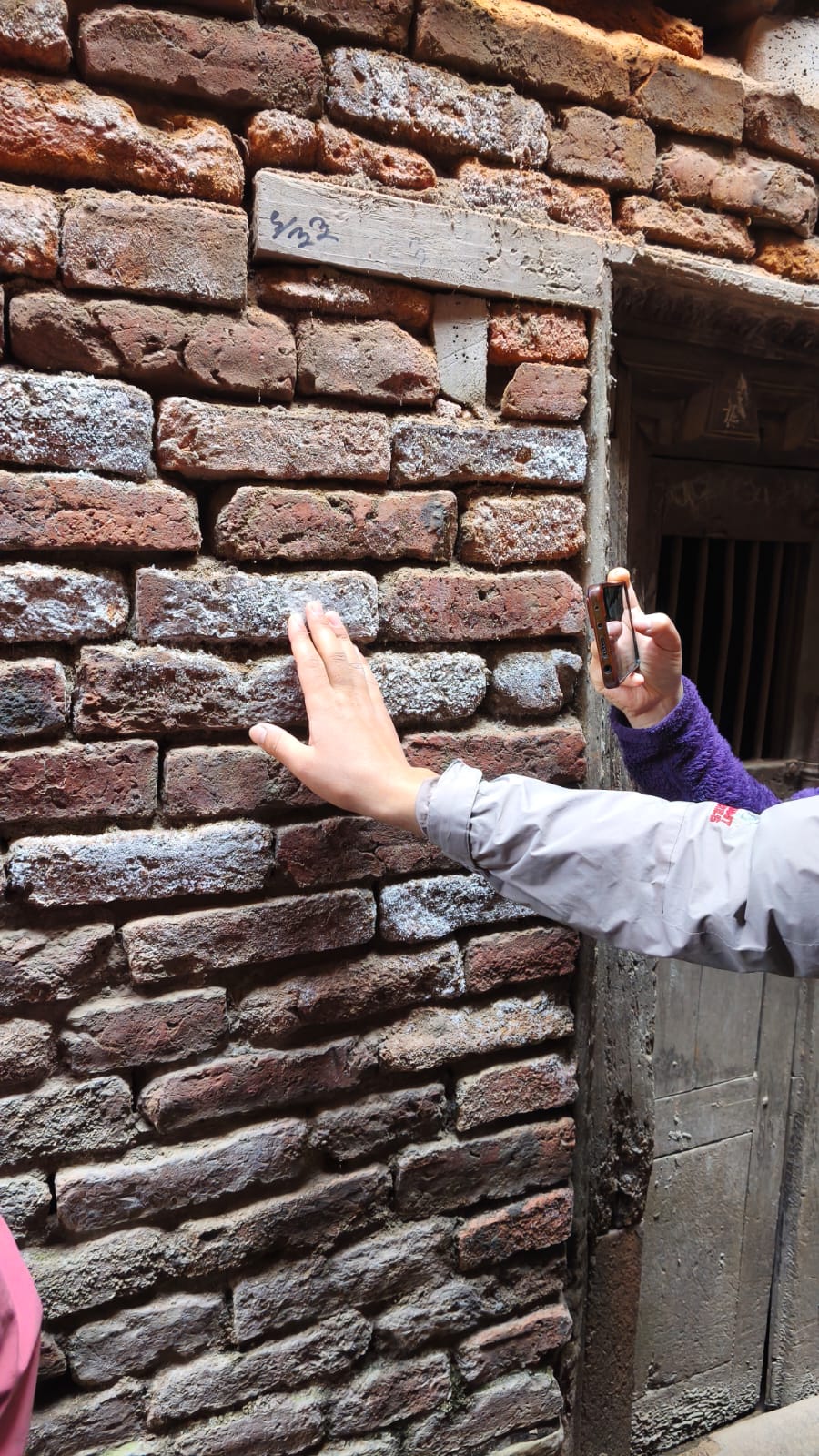
This year-long expedition soon transformed his relationship with the city. Shilpakar discovered stories embedded in unusual streets, forgotten corners and the outskirts of Bhaktapur.
“The more I explored, the more I could feel the richness of the area,” he says. “I realised that if we do not start a dialogue and narrative around them, they will gradually disappear.”
Driven by that concern, Shilpakar launched ‘Walk with Native Tourist’, a curated walk initiative that has been running for eight months. The walk brings together heritage enthusiasts from Bhaktapur, more from Patan and Kathmandu, inviting them to engage with the city through guided explorations and conversations.
For Shilpakar, the initiative is ultimately about adding value to Bhaktapur. “I appreciate the city very deeply,” he says.
Through his six-hour-long heritage guide, he hopes that affection becomes contagious, inspiring others to appreciate, preserve and start dialogues about Bhaktapur’s history, heritage and civilisation. “People come here to unlearn and relearn about Bhaktapur through interactive experiences,” he adds.
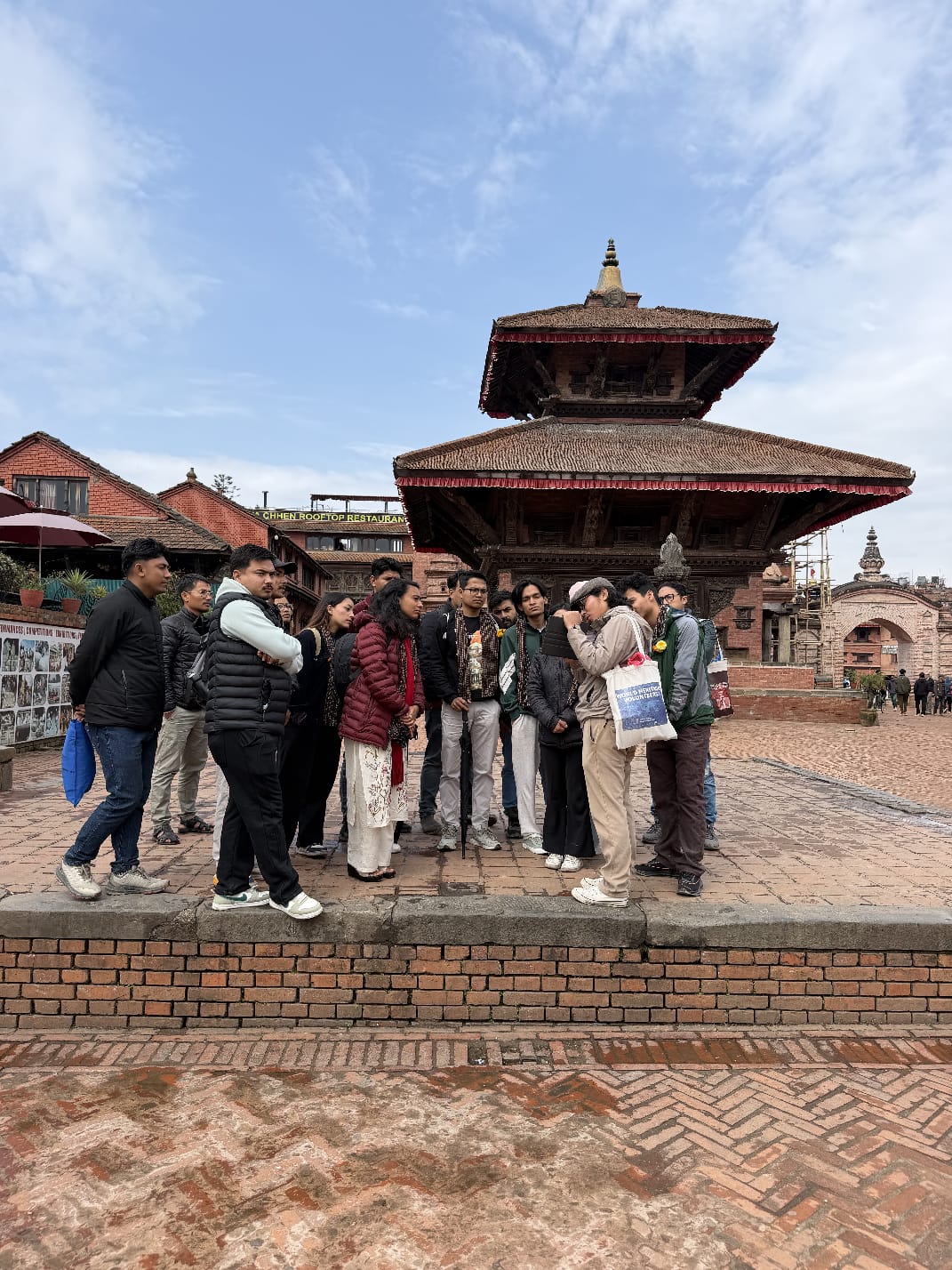
Participants also encounter the earthy scent of centuries-old bricks, the aromas of local food drifting through courtyards, and the sounds of traditional occupations such as wood carving and metal-crafting that sustain Bhaktapur’s identity.
Noor Hada, a student of culture at Tri Chandra College and a regular participant in heritage walks, says the experiences have deepened her connection to her hometown and helped her explore the meanings of iconographies that she had long encountered but never consciously reflected upon. Witnessing the heritage experts describe these places with care and reverence deepened her knowledge and interest over time.
“I was unaware of a lot of cultural elements of my own hometown before I joined these guided walks,” says Hada. “Next time, if I encounter misinformation spreading regarding these sites, I can at least stop them and make people aware of the right occurrences.”
These walks for her were also a way to understand the civilisation of urban spaces, developing an appreciation for the everyday surroundings that she grew up in.
It is this layering of lived experience that gives the heritage its distinct character. They are sensed, practised and reinterpreted.
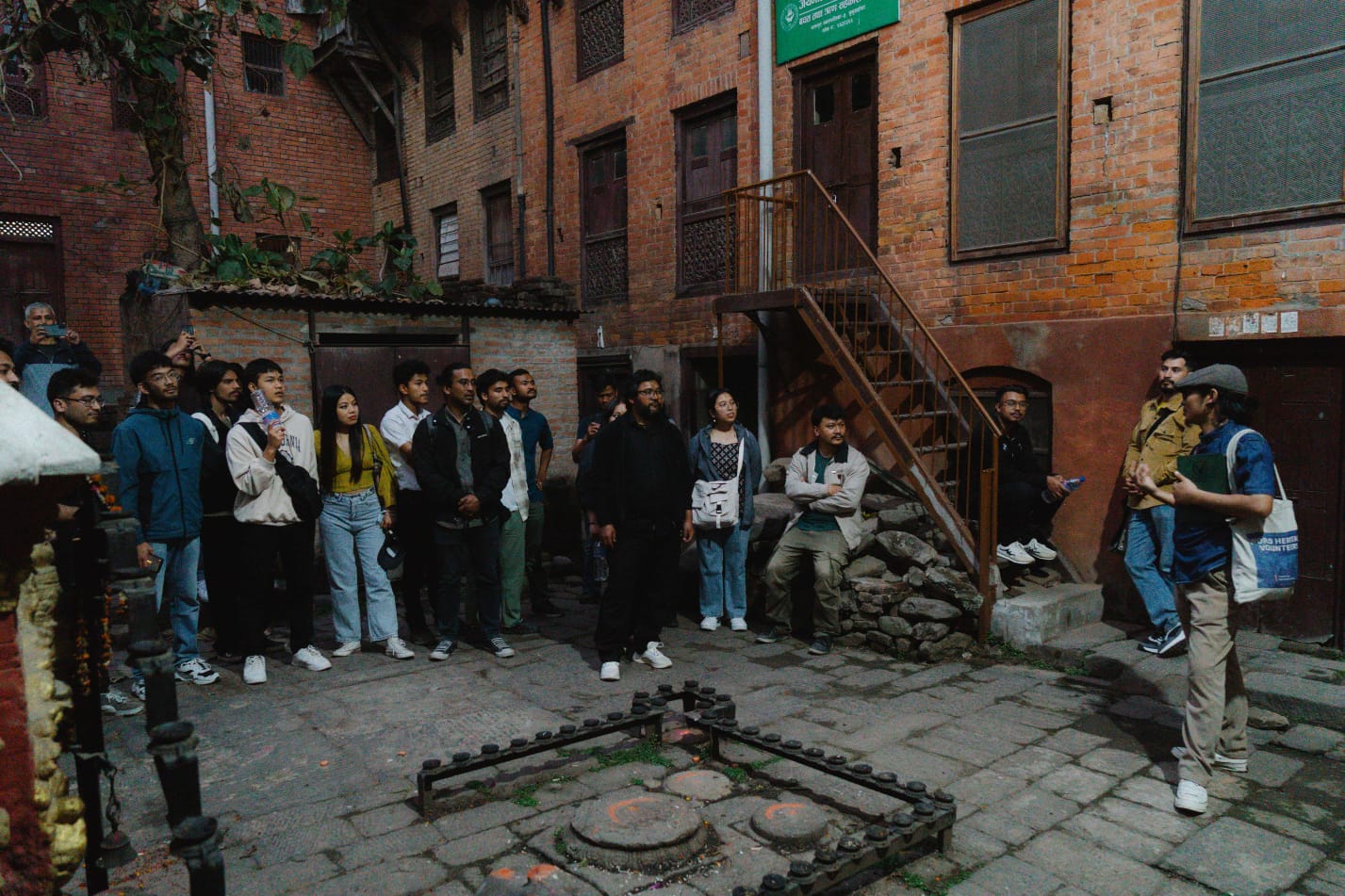
However, the promise of experiencing heritage through multiple senses is not equally accessible to everyone. While the experts are attentive to this dimension, accessibility considerations have not been fully integrated into many heritage walks. Regardless, there remains hope that these practices will gradually evolve to become more inclusive for a wider range of participants to engage with heritage.
Aashish Mishra, a regular participant of heritage walks who also offers guided tours, believes these initiatives encounter shortcomings when it comes to full-time job validation for guides and documentation of the information shared during the walks. “Quite often, heritage guides take this up as a part-time job, which raises economic concerns about the profession,” he says. “The lack of proper documentation also prevents the people who cannot physically participate, from understanding their heritage.”
Shilpakar also hopes that the government will allocate sufficient budget for the research, documentation, and storytelling of Nepal's culture and heritage.
He further expresses his dissatisfaction with the government’s neglect to address culture and heritage sector as an emerging career path. “For a culturally rich country like Nepal, the government should be developing a policy to facilitate the individuals and organisations involved in this sector financially, legally and morally,” he says.
Jony Nepal
Nepal is a culture and lifestyle reporter/sub-editor at the Post. She is also a Psychology and English literature student.




Most Read from Culture & Lifestyle

Editor's Picks

What to know about the US trial over Mamta Kafle’s disappearance
NPL returns with bigger ambitions and global recognition
What’s new in the Nepal Premier League’s third season?

After Nepal’s recent disaster, it wants to test whether COP31 can deliver climate justice

Why does an hour long flight to Dhangadhi cost more than a flight to New Delhi?
E-PAPER | October 27, 2026

×