Paras Khadka on leadership shift, squad depth and Nepal’s cricket roadmap
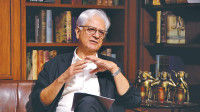
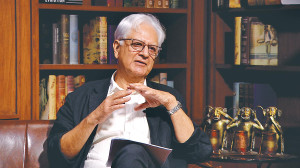
In an interview with Kantipur, the CAN secretary discusses the rationale behind the captaincy overhaul, the independence of the selection committee, and the road ahead for Nepali cricket.Post Photo
Following the Cricket Association of Nepal’s decision to restructure the national team’s leadership—appointing Sandeep Lamichhane as ODI captain and Dipendra Singh Airee as T20I captain, effectively ending Rohit Kumar Paudel’s five-year tenure—questions have surfaced regarding team stability, selection autonomy, and Nepal’s campaign in the ICC Cricket World Cup League 2.
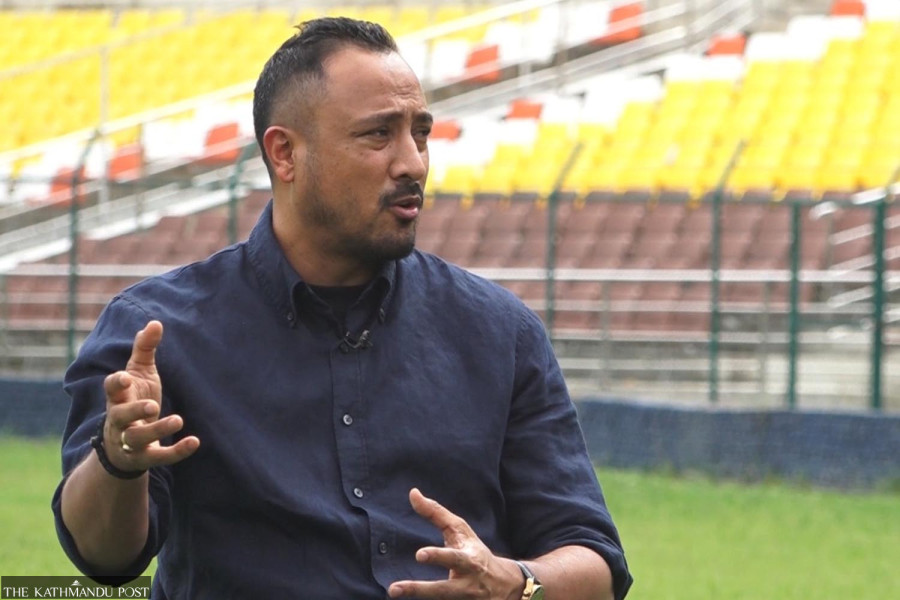
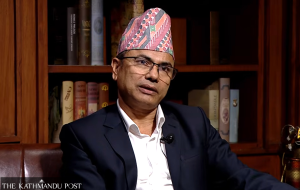
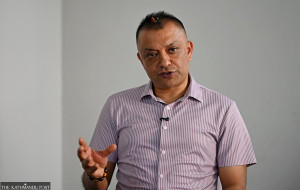
At the TU International Cricket Ground in Kirtipur, Sabina Karki caught up with CAN Secretary and former national team captain Paras Khadka on Thursday to discuss the rationale behind the captaincy overhaul, the independence of the selection committee, and the road ahead for Nepali cricket.
Sandeep Lamichhane has replaced Rohit Paudel at the helm of the ODI team. What was the core reason behind this decision from CAN’s perspective?
Rohit stepped into the leadership role during a very sensitive period around four years ago and did a remarkable job. Captaincy is evaluated on many parameters, but his dedication, integrity and work ethic in taking the team forward make CAN, the fans, and everyone involved in Nepali cricket—including myself personally—extremely proud of him.
However, change is an inevitable part of sports. Whether a decision proves right or wrong is something history will judge, but within the board, we felt that the burden of captaincy was impacting Rohit’s personal batting performance. After about four years at the helm, we wanted to give him the freedom to focus on his game as a player. Furthermore, moving forward, we wanted to explore new leadership dynamics to see if we could cultivate a fresh playing style.
This wasn’t a knee-jerk reaction to losing four consecutive matches in CWC League-2. It was an ongoing internal discussion involving assistant coaches, team managers, support staff, active and non-active players, the selection committee and the board. While respecting Rohit’s immense contribution, we felt it was time for a structural shift. He still has a long career ahead and plenty more to contribute to Nepal.
Was Rohit Paudel consulted before the decision was finalised? How did he receive the news?
To put things in perspective, when I was appointed captain to replace Binod Das, nobody gave me advance notice—it was simply announced. That said, we strive for open communication with our players.
When we made the T20I captaincy change earlier to appoint Dipendra Singh Airee, Rohit was informed beforehand. For this ODI transition, our management communicated the shift to him, and I reached out to him personally via text as well.
The underlying reality is that our overall growth had felt somewhat stagnant. If you look at Nepal's home record from 2020 through 2026, it is phenomenal across all leadership tenures. But away from home, we have consistently struggled. Over the last four to five years, the same core group of 15 to 20 players has been rotated across every format. While this group took us to the Asia Cup and the World Cup, sticking strictly to the same pool without introducing fresh competition was holding us back.
Critics often allege that CAN management interferes heavily in team selection and that the selection committee lacks independence. How autonomous is the selection process?
Following LB Chhetri’s resignation around the 2026 T20 World Cup, the selection panel has been functioning with Yunil Shrestha and Murtuja Haware. Nearly 97 to 98 percent of the time, the final squad selected is the exact team requested by the head coach and captain in coordination with the selection panel.
There is a distinction between selecting a squad and changing national captaincy. Historically, appointing or changing a national captain is a direct board decision made after evaluating broad feedback from coaches, managers, and support staff—it is not solely a selection committee call.
When I captained the national team for ten years, there was zero board interference in squad selection; the captain and coach sat down with selectors to finalise the team. That culture remains intact. The board’s involvement here was specifically regarding the overarching strategic decision on captaincy.
Dipendra Singh Airee was the ODI vice-captain and was recently handed the T20I leadership. Many expected him to take over the ODI team as well. Why appoint Sandeep Lamichhane specifically for ODIs instead of having a single captain across formats?
We wanted two distinct perspectives for two different formats. When a single leadership mindset governs all formats, domestic performers and emerging players end up getting very limited opportunities, despite CAN’s heavy investment in grassroots cricket.
By appointing Dipendra for T20Is and Sandeep for ODIs, each captain, together with the head coach and selectors, will independently identify the best 15 players required for their respective formats.
In professional cricket, accountability is essential. If you don't score runs or pick wickets, you have to step aside. Splitting the leadership forces healthy internal competition, broadens our talent pool, and ensures that playing for the national team remains earned through consistent performance.
Nepal’s ODI status is under severe pressure with only four matches remaining in the current CWC League 2 cycle and a playoff spot looming. Is CAN confident that these squad overhauls will help retain ODI status?
ODI cricket is not easy. In this cycle alone, we lost five or six close matches by margins of just two or three runs. It isn't that we lack a good team, but rather that we have historically been in a 'management phase' rather than a true structural 'development phase'.
We are realistically preparing for the CWC playoffs. Instead of throwing inexperienced players into high-stakes playoff matches without preparation, we are using the upcoming fixtures—including the ACC Premier Cup and our tour to Australia featuring Top End T20 and three 50-over games—to test combinations. We will have around 12 matches prior to the crucial League-2 fixtures to evaluate who earns a spot in the primary 15-man squad.
If we want to transition from merely surviving in ODI cricket to becoming the top Associate nation, creating squad competition and giving young players international exposure right now is vital.
There are persistent rumours that CAN is also considering changes to the head coach and support staff. Is there any truth to this?
No, for now, I think we should stick to the next tours. Modern-day cricket has changed. Because unlike in the past, if a player says they will play for 10, 12, or 15 years, it might be rare. If a player has a period—whether it's six months or two years—we need to identify where they can give their best. And at that point, who are the decision-makers? In our cricket team, again, it's the coach and the captain that decide who plays and almost who gets selected in the 15.
So putting all those things together, for now, we are—let's say—we just made the change in captaincy. Regarding the coach, it has barely been a year since he arrived. We have evaluated him as well and taken feedback from everyone, including teams, especially the players.
Decisions aren't made solely on wins or losses. For instance, our previous coach, Monty Desai, delivered incredible results by winning 11 out of 12 ODIs in his first year, but won only 2 out of 10 the following year, leading to his change after gathering everyone's feedback. Our decision-making evaluates on-field performance alongside off-field factors, including the code of conduct, teamwork, and the broader framework. For now, we are focusing on the captaincy transition—resting a few players while giving young and existing players a chance to prove themselves and foster healthy competition. While we are currently only changing the captain, if the situation requires it, we are fully prepared to make changes to the coach and captain, because even the board itself gets changed timely.
Finally, speaking not as CAN Secretary but as a former national captain, what do you expect from Sandeep in this new role?
ODI cricket is important, ODI status is important, but now we need to move into a development phase. Sandeep is one of our leading performers, and this is an opportunity for him to inspire others and bring the team together, building team spirit and bonding.
Rather than asking whether ODI cricket survives under Sandeep’s captaincy, the question should be whether Nepal cricket can retain its ODI status. Everyone has to support the captain on the field. Nepal cricket is bigger than any individual.
We all want to help the team win, and we all want to grow as a cricketing nation together. We have to go beyond ODI status. The quality of players we have can save our status. But going beyond that, we need to create a better cricketing environment in the country.
On a different topic, regarding this discussion currently taking place among Associate nations about the ODI World Cup format pathway, Scotland and Netherlands have already expressed their dissatisfaction, haven't they? What is CAN's stand on that?
When Bangladesh did not qualify for the World Cup, Scotland got a direct entry into the World Cup, right? I think ICC did that as well. Normally, direct entry doesn't happen in World Cups.
Obviously, there have been many discussions about the ODI cricket format, and coordination among ODI nations has taken place. But for that, there are also representatives of Associate nations, who were recently selected from the AGM, and after the ODI status format came out, there has been a lot of discussion underneath regarding what should happen.
First, we have to recognise the commercial reality of modern cricket. The ICC is prioritising the T20 format to expand the game globally because it generates strong commercial returns—granting T20I status to all international matches was a key part of that strategy. While we all want more teams in 50-over cricket, expanding ODIs to 18–20 nations involves heavy broadcast and operational costs that require massive financial backing.
As for the statements from Scotland and the Netherlands, that is their independent board decision. At CAN, we prefer working through official channels. Nepal helped elect three Associate representatives to the ICC Chief Executives' Committee (CEC) who coordinate directly with the ICC CEO and Board. Rather than issuing public complaints, we rely on our designated CEC representatives to raise our structural concerns directly at the decision-making table.
Finally, where have the preparations for NPL reached, and now, right from before the season starts, there was this question of whether we will get ICC's sanction, whether we get T20 recognition or not—what is the status as this season arrives?
It's true people say CAN is solely focused on the NPL and T20s, but the NPL is a marquee tournament. It commands higher investment, massive interest, and has built a distinct international profile for Nepali cricket. Having successfully delivered two editions through immense hard work, the operational preparation is now moving forward naturally. We’ve taken extensive steps with the ICC regarding official sanction and recognition, and we are awaiting good news.
But our focus extends far beyond just the NPL. The next 10 months are crucial for Nepali cricket—we are hosting the U19 Women's T20 World Cup, preparing for the CWC League-2 playoffs, running the NPL, and hosting the India 'A' series. Because we have to manage multiple major tournaments simultaneously, our immediate priority is executing the NPL while finalising our broader policies and next year's cricketing calendar to deliver an even higher standard across all formats.




 20.18°C Kathmandu